Idea gallery · 8 ideas
Adhesive hooks for renters: 8 light-duty ideas and their limits
Idea gallery 1 source
Adhesive hooks work for light things on smooth, clean, sound surfaces: keys, towels on glazed tiles, light frames, utensils on a backsplash. Whatever the pack states is the limit, not a suggestion; we cannot state one for you, because it differs between products and surfaces. How well they hold depends on the surface, its preparation and waiting before you load them, and removal can lift paint even when done as described.
-
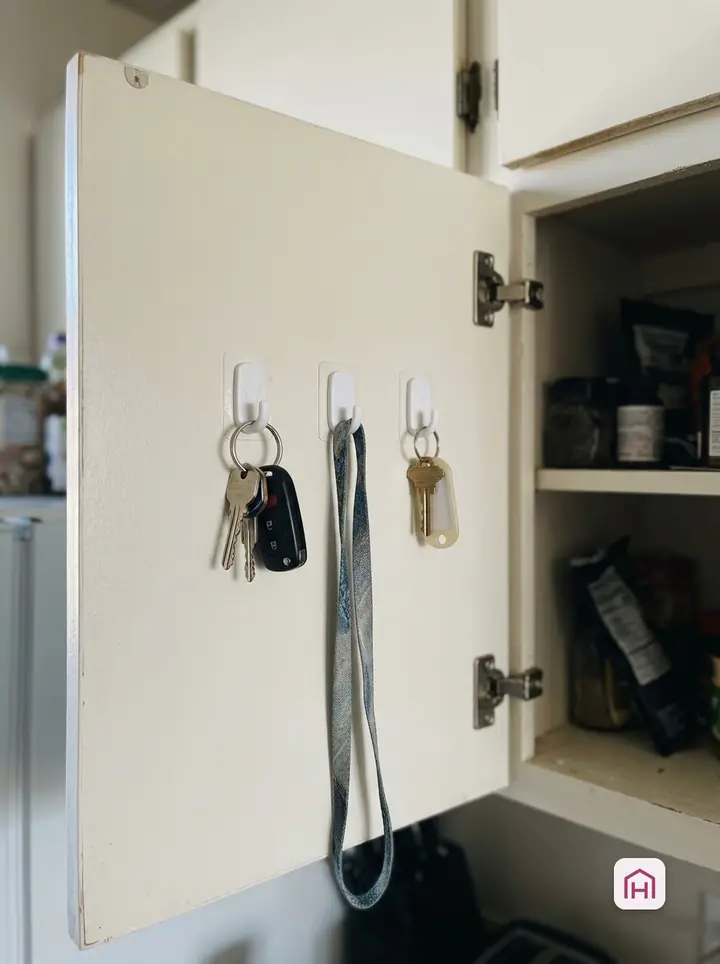
Key hooks on the inside of a cabinet door
Keys out of sight, but always in the same place.
Why it works
Keys are light, which suits adhesive hooks well. Inside a cabinet door near the entry they stay out of view from the front door and still have a fixed place.
Materials and furniture
- Small adhesive hooks rated above the weight of your key bunch
- Cleaning wipe for the surface
Check first
- Cabinet doors are often smooth laminate or paint; check your pack's surface list.
- Check the hooks do not hit the shelves when the door closes.
- Key bunches swing: a hook with a lip keeps them on.
-
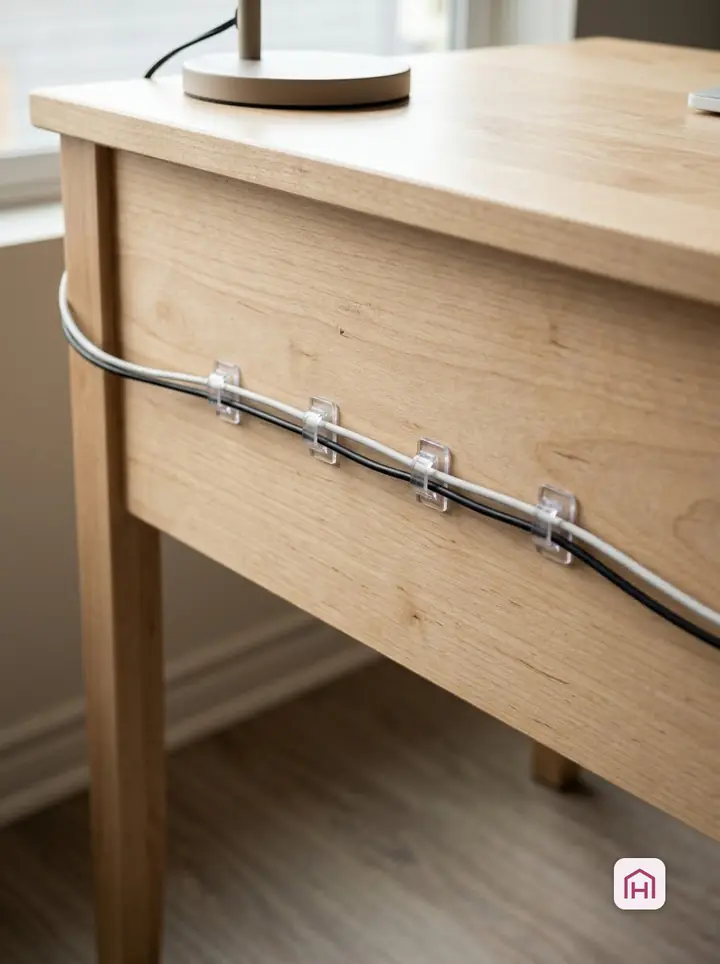
Cable clips along the back of a desk
Two cable runs follow the desk instead of hanging loosely behind it.
Why it works
Clips give a cable a defined route along the desk back. Leave a relaxed loop where a device moves, rather than pulling the cable taut.
Materials and furniture
- Cable clips matched to the surface and cable diameter
Check first
- Unfinished wood and rough undersides hold adhesive poorly; stick to smooth, finished surfaces.
- Do not pinch power cables tightly or route them where they get hot.
- Remove clips the way the pack describes to avoid lifting the finish.
-
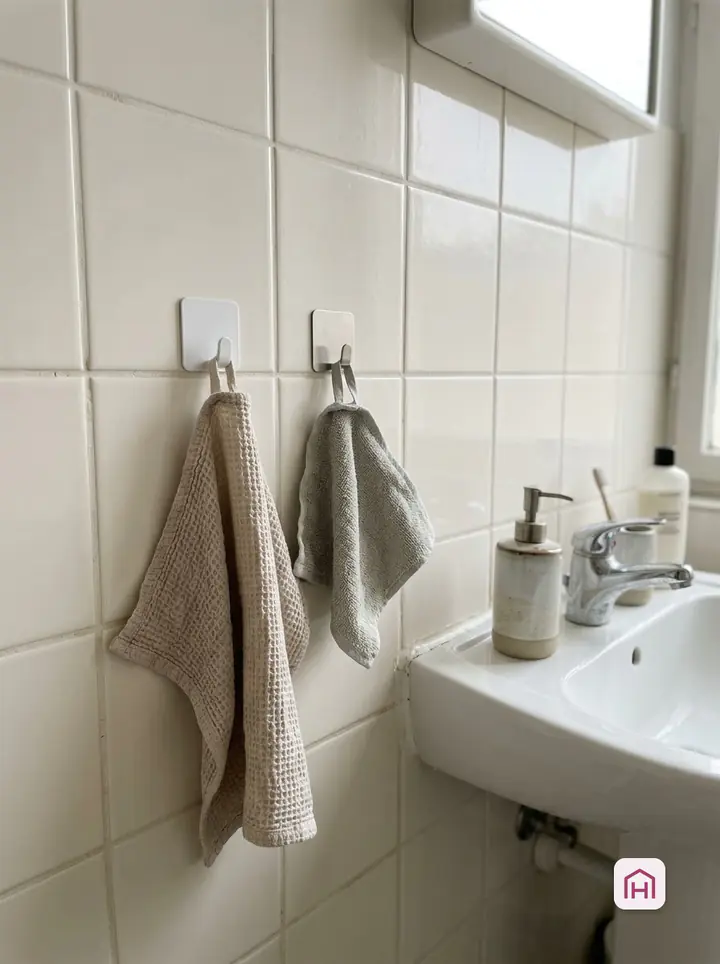
Towel hooks on glazed tiles
Hand towels where you need them, without drilling a tile.
Why it works
Drilling tiles is risky for renters. Smooth glazed tiles are a surface many adhesive products list as suitable, and a hand towel and a face cloth are light; check your product's rating and surface list.
Materials and furniture
- Adhesive hooks made for bathrooms or damp rooms
Check first
- Use products rated for bathrooms; ordinary strips may fail in steam.
- Stick them to the flat tile face, not across grout lines.
- Wet towels weigh more than dry ones; keep within the rating.
-
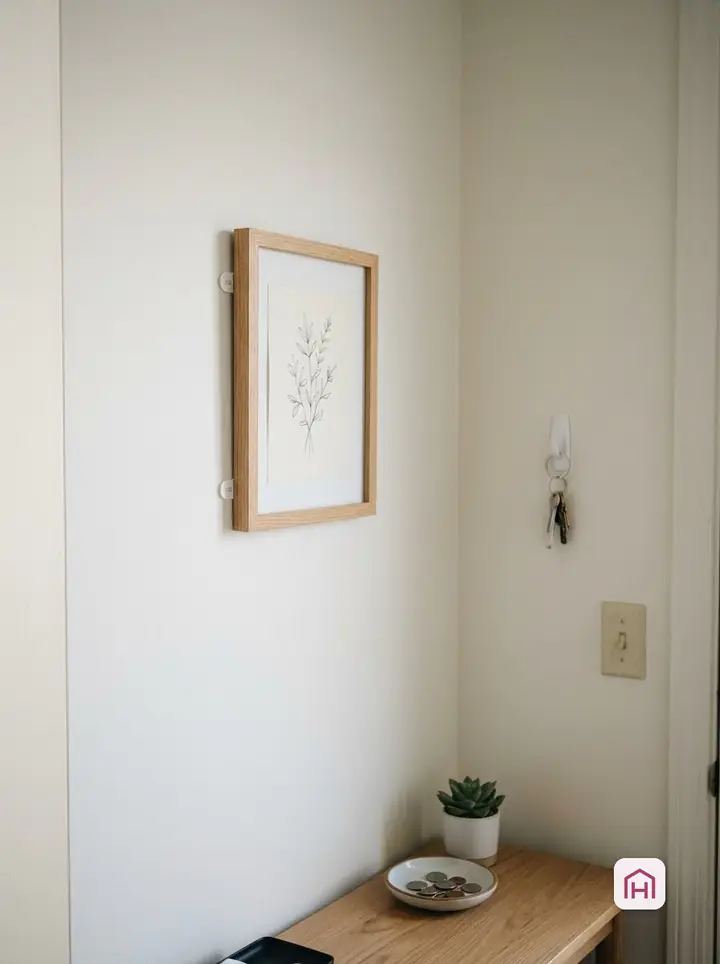
A light framed print on picture-hanging strips
Art on the wall in a rental without a nail.
Why it works
Picture-hanging strips hold light frames flat to the wall. For small prints in light frames, they can replace a nail; removal can still mark the paint.
Materials and furniture
- Picture-hanging strips rated for the frame's weight
- Spirit level
Check first
- Weigh the frame; glass frames are heavier than they look.
- Painted walls must be fully cured, clean and in good condition; check the pack for waiting times after painting.
- Not for valuable or irreplaceable pieces: if it falls, it falls.
-
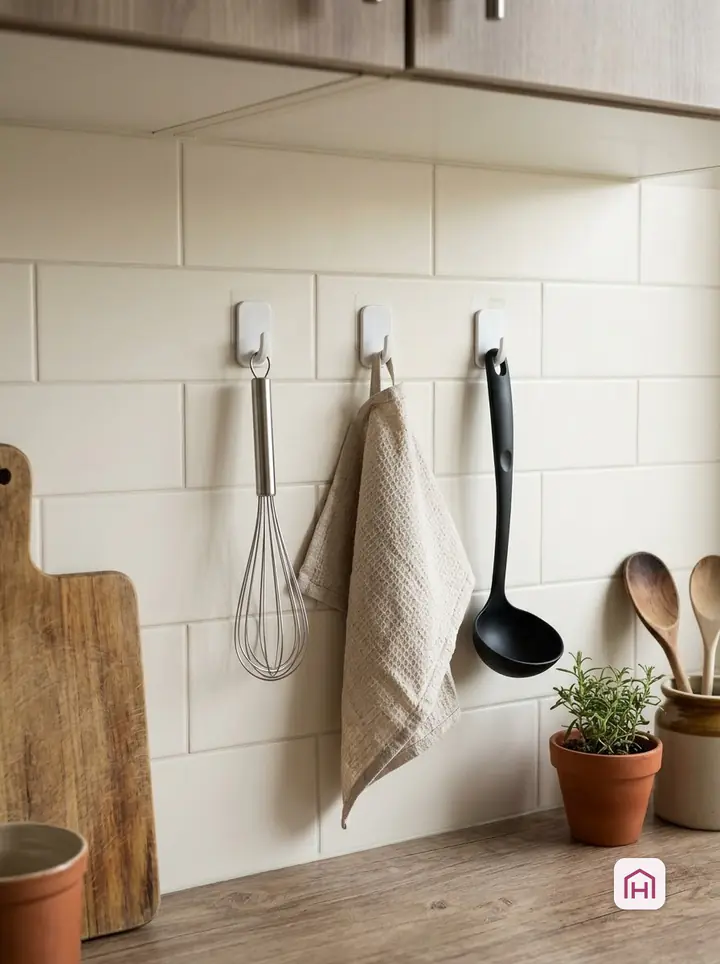
Utensil hooks on a smooth backsplash
Ladle and whisk in reach, drawer space freed.
Why it works
The most used utensils are easier to grab from a hook than from a crowded drawer. A smooth tiled or glass backsplash takes small hooks for light tools and a tea towel.
Materials and furniture
- Adhesive hooks rated for kitchens
Check first
- Keep hooks away from the hob: heat weakens adhesive and can melt plastic.
- Grease stops adhesive sticking; clean the surface as the pack describes first.
- Light utensils only; no pans.
-
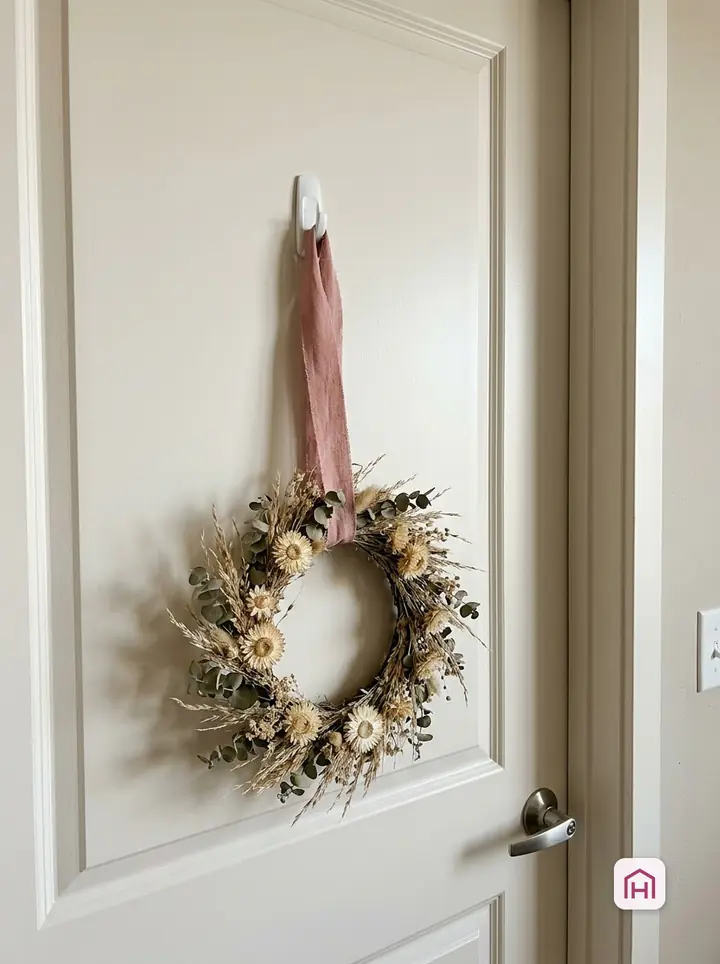
A light wreath on an interior door
Seasonal decoration on a door, without hooks over the top.
Why it works
A dried or light faux wreath on an interior door marks the season without hooks over the top that stop the door closing. One adhesive hook at the top of the door holds a light ribbon.
Materials and furniture
- One adhesive hook rated above the wreath's weight
- Ribbon
- Light dried or faux wreath
Check first
- Use on smooth painted doors in good condition; panelled grooves and textured surfaces hold poorly.
- Fresh, heavy wreaths are too much for one adhesive hook.
- Door slamming shakes the hook: keep the wreath light.
-
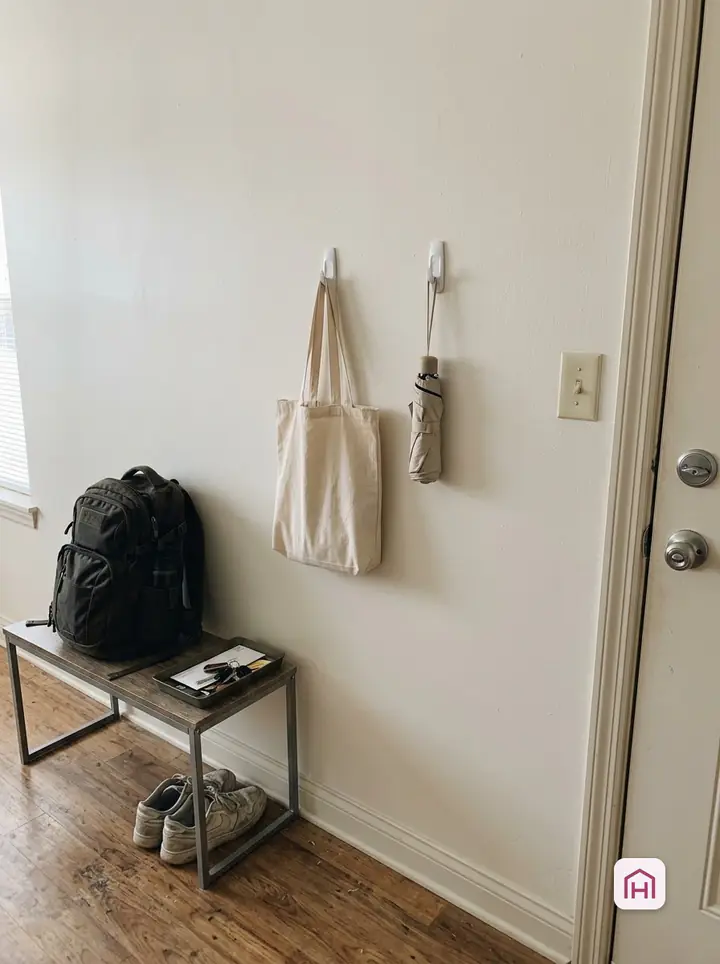
Hooks for a light tote and an umbrella by the door
Light things on hooks; heavy bags stay on the bench.
Why it works
Adhesive hooks by the door work for the light things you grab on the way out: an empty tote, a folded umbrella, a dog lead. Heavy bags and coats need screwed hooks or a freestanding stand.
Materials and furniture
- Adhesive hooks rated above each item's weight
- Bench or shelf for heavier bags
Check first
- A coat or a full bag is beyond most adhesive hooks; use a screwed rail or a coat stand for those.
- Pulling outward rather than downward loosens adhesive: hang things so they pull straight down.
- Check the paint is sound; adhesive can lift flaking paint when removed.
-
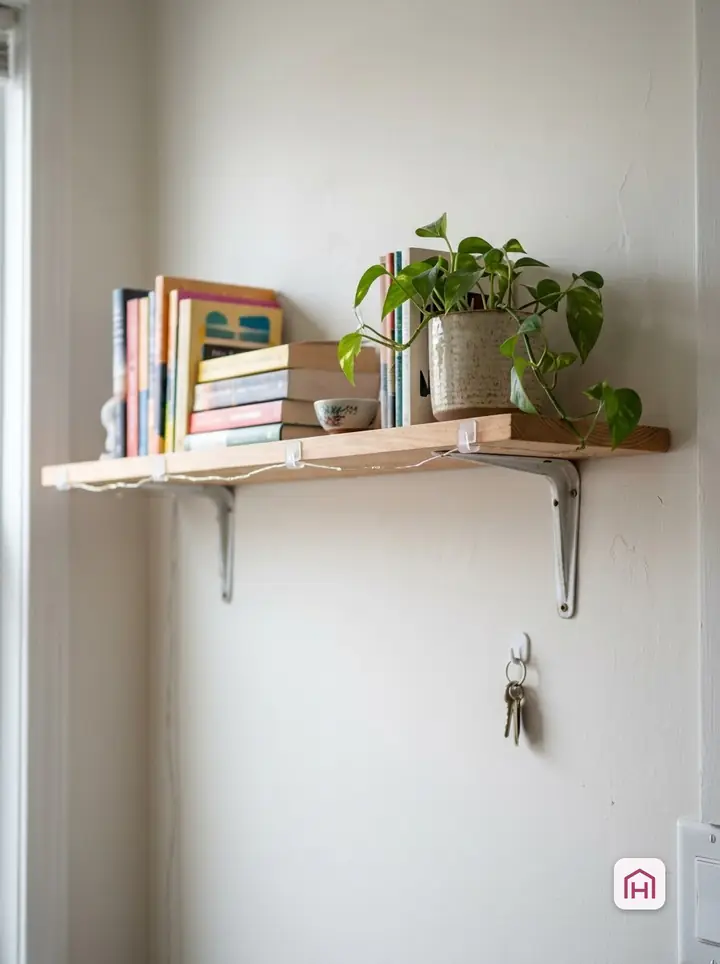
Small clips for fairy lights along a shelf
The lights follow the shelf edge instead of sagging between books.
Why it works
Small clips follow the shelf edge and keep a fine light wire away from book spines. Plan access to the power source separately; it is not shown here.
Materials and furniture
- Small adhesive clips
- Light string suitable for its intended position
Check first
- Battery packs get swapped: put the pack where you can reach it.
- Keep lights away from curtains and paper decorations.
- Remove the clips the way the pack describes to avoid marking the shelf.
Choose the surface before the hook
Start with one small annoyance: keys that migrate, a towel with no home, or a charging cable that slips behind the desk. Choose a spot within reach, then read the exact product instructions for the surface, item weight, preparation and removal method [1]. Adhesive products are not interchangeable: a picture strip, cable clip and bathroom hook can have different requirements.
The eight examples below use different parts of a home. They are starting points for a placement decision, rather than a shopping list of one universal hook. Check doors in their closed position as well as open: a hook inside a cabinet can strike a shelf even when it looks tidy from outside.
Which solution fits your problem?
| Problem | Start with | Check before buying |
|---|---|---|
| Keys have no fixed place | Hooks inside a cabinet door | Door clearance, key-bunch weight, finish |
| Cables hang behind a desk | Clips along the desk back | Cable diameter, relaxed movement loop |
| A hand towel occupies the basin | A hook on a suitable tile | Damp-location suitability, loaded weight |
| A print needs a wall position | A matching picture-strip system | Frame weight and supported surface |
| Seasonal decoration is temporary | A light wreath on an interior door | Door finish and movement |
Your five-minute placement test
- Weigh the item as used, including everything attached to it. A tote with groceries is a different load from an empty tote.
- Photograph or note the surface type and compare it with the selected product's supported surfaces.
- Mark the proposed position with a removable paper template. Open the cabinet or room door fully and check nearby switches.
- Leave room to reach any removal tab later. A hook hidden behind furniture can be difficult to remove as instructed.
- Follow the preparation, pressing and waiting steps for that product. Keep its instructions for moving day.
Make a small system, not another collection of hooks
Try one location before repeating it across a room. Keep the light tote on its hook and the loaded backpack on a bench. Route cables without stretching or pinching them. The shelf in the light-string example supports the books and plant; the small clips support only the wire.
Save the two ideas that solve your actual problem with “Save on this device”. After a week, keep the one you use consistently. If the surface or item does not suit the chosen adhesive, compare a freestanding or screwed alternative rather than adding more strips.
Filter ideas by room and fixing
Sources
- How to use strips and hooks , Command / 3M. checked