Calculators
Tile calculator
Runs in your browser · does not check building standards
How many tiles and boxes to buy for a floor, wall or backsplash, from the area in square feet, the tile size in inches, the grout joint and the overage for your layout.
Result
–
How it was calculated
How to use
- Measure the surface: Length and width (or height for a wall) in feet, or the total area.
- Enter the tile: Tile size in inches and the grout joint you will use.
- Choose overage: 10% for a straight grid, more for offsets, diagonals and herringbone.
- Count boxes: Add the coverage per box from the carton to get whole boxes.
How to measure for tile
Measure the floor or wall in feet and multiply length by width. Split an L-shaped floor into rectangles and add them, then enter the total area. For a backsplash measure the length of the wall and the height from the counter to the cabinets or the top of the tiled area.
Overage by layout
Daltile highly recommends buying approximately 10% more tile than you expect to need, as attic stock for broken tiles and for later repairs from the same dye lot. Bob Vila's guide gives 10 to 20%, notes that 2 to 3% of boxed tiles may arrive broken or chipped, and budgets up to 20% for herringbone or a diagonal offset.
Daltile also advises mixing tiles from several cartons as you set, because shade variation is inherent to ceramic tile. Buy everything at once so the cartons share a lot.
Tiles per box
A carton states the square feet it covers. Divide the area to order by that figure and round up: 100 sq ft at 12.5 sq ft per box is 8 boxes, Bob Vila's example. The box method ignores the joint, so it is a cross-check; the tile count above includes it.
How it is calculated
- Area (sq ft) = length × width, or the total you enter
- One tile with its joint = (tile length + joint) × (tile width + joint) ÷ 144 sq ft
- Tiles = area ÷ (tile + joint) × (1 + overage), rounded up
- Boxes = area × (1 + overage) ÷ coverage per box, rounded up
Examples
5 × 8 ft bathroom floor, 12 in tile
40 sq ft. A 12 in tile with a 1/8 in joint takes 12.125 × 12.125 = 147.02 sq in, 1.021 sq ft, so 39.2 tiles; with 10% overage 43.1, so buy 44 tiles. At 15% it is 46, at 20% 48.
Same floor by the box
40 sq ft plus 10% is 44 sq ft. With 10.76 sq ft per box that is 4.09, so buy 5 boxes.
Frequently asked questions
How do I calculate how much tile I need?
Multiply length by width for the area in square feet, divide by the area of one tile plus its grout joint, add overage and round up. For tile sold by the box, divide the area plus overage by the coverage printed on the box and round up.
How much extra tile should I buy?
About 10% for a straight grid. Daltile recommends buying approximately 10% more tile as attic stock; Bob Vila budgets up to 20% for herringbone or a diagonal offset, because they leave more offcuts.
How many 12 × 12 tiles do I need for 100 square feet?
100 tiles if you ignore the joint, about 98 with 1/8 in joints, and 108 with 10% overage.
How many tiles are in a box?
Divide the box coverage by the area of one tile: a 12.5 sq ft box of 6 × 6 in tiles (0.25 sq ft each) holds 50. The count is printed on the carton and differs by product.
Does the grout joint change the count?
A little for large tiles and noticeably for small ones, because the joint takes a bigger share of every square foot. For 2 × 2 in mosaics on sheets, use the sheet coverage instead.
Should I subtract the toilet or vanity?
Only large built-ins that the tile will not run under, such as a fixed vanity or a tub. Keep the overage: cuts around obstacles use more tile, not less.
Sources
- Daltile FAQs, Daltile
- Wall Tile Installation Guide, Daltile
- How Much Tile Do I Need for a Floor or Wall? Solved!, Bob Vila
Keep planning with your measurements
Related ideas
-
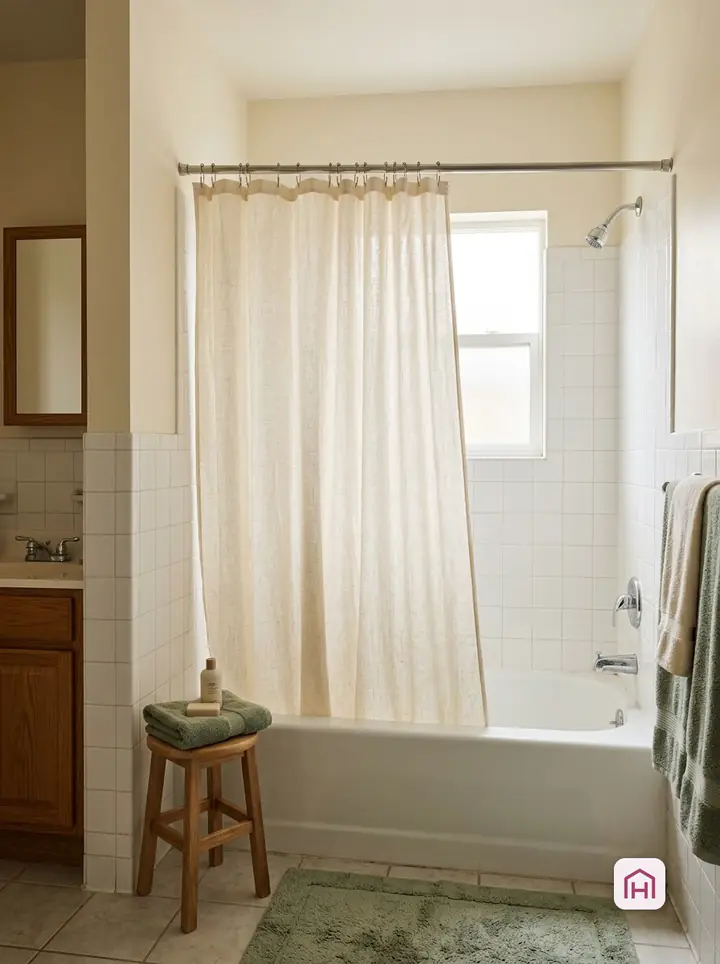
Small bathroom ideas for renters: 8 changes without retiling
Eight reversible changes for a small rental bathroom: a shower curtain hung high, matching towels, a mirror swap, a rechargeable light, plants, sealed art, an over-toilet shelf unit and accessories in one material. Moisture and electrical safety included.
-
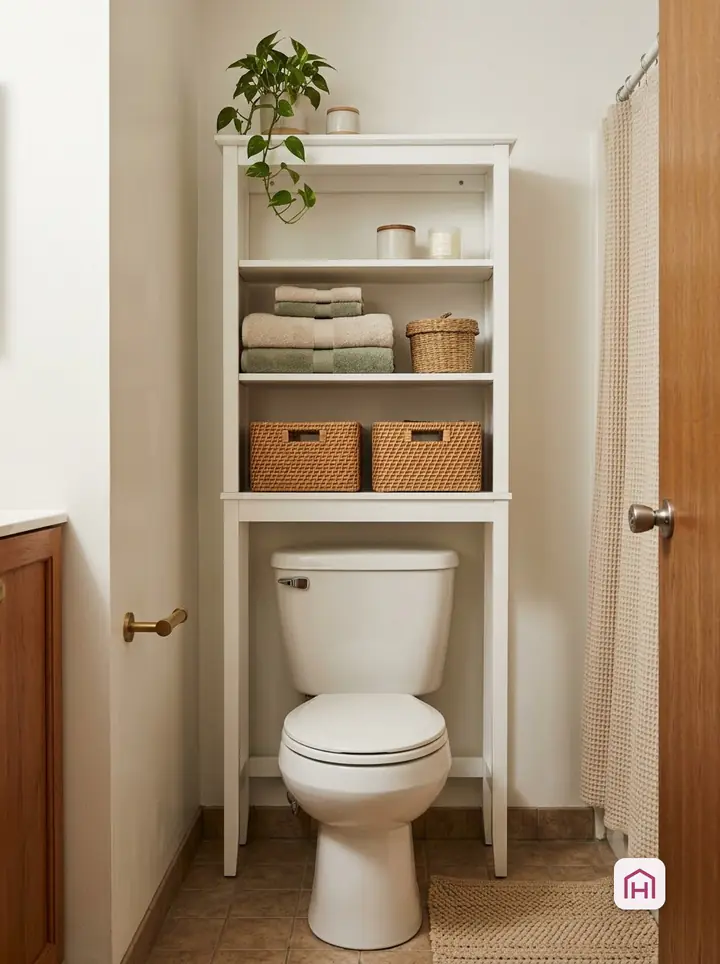
Small bathroom storage ideas: 8 that work for renters
Eight small bathroom storage ideas sorted by how they are fixed, from freestanding to screwed: an over-the-toilet shelf, a tension pole caddy, door hooks, under-sink drawers, a rolling cart, baskets and a floating shelf, with moisture notes.
-
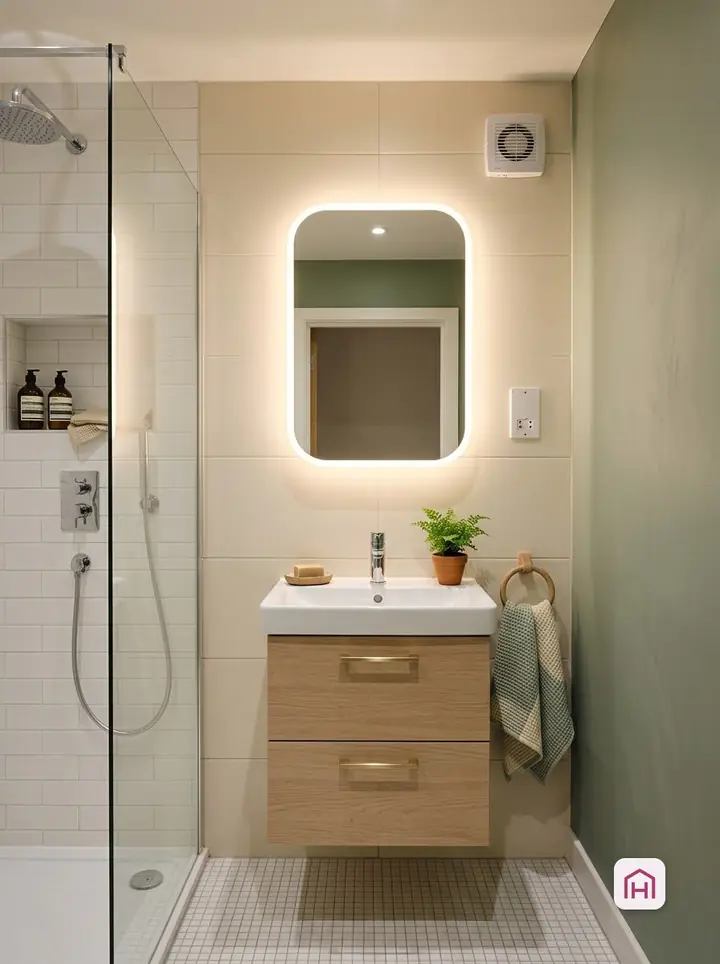
Windowless bathroom ideas: 8 ways to make it feel bright and fresh
Eight ideas for a bathroom without a window: better light at the mirror, light paint with a sheen, a large mirror, tile stickers on a test area, tolerant plants, a properly used extractor fan, light towels and neutral-white bulbs. Light and humidity in every idea.