Idea gallery · 8 ideas
Small bathroom ideas for renters: 8 changes without retiling
Idea gallery 1 source
You can change a rental bathroom a lot without touching the tiles: textiles, a mirror on the existing fixings, cable-free light, plants, a little art and a shelf unit over the toilet. Keep the original fittings to put back, keep anything electrical away from water, and keep the room well ventilated so the new textiles do not go mouldy.
-
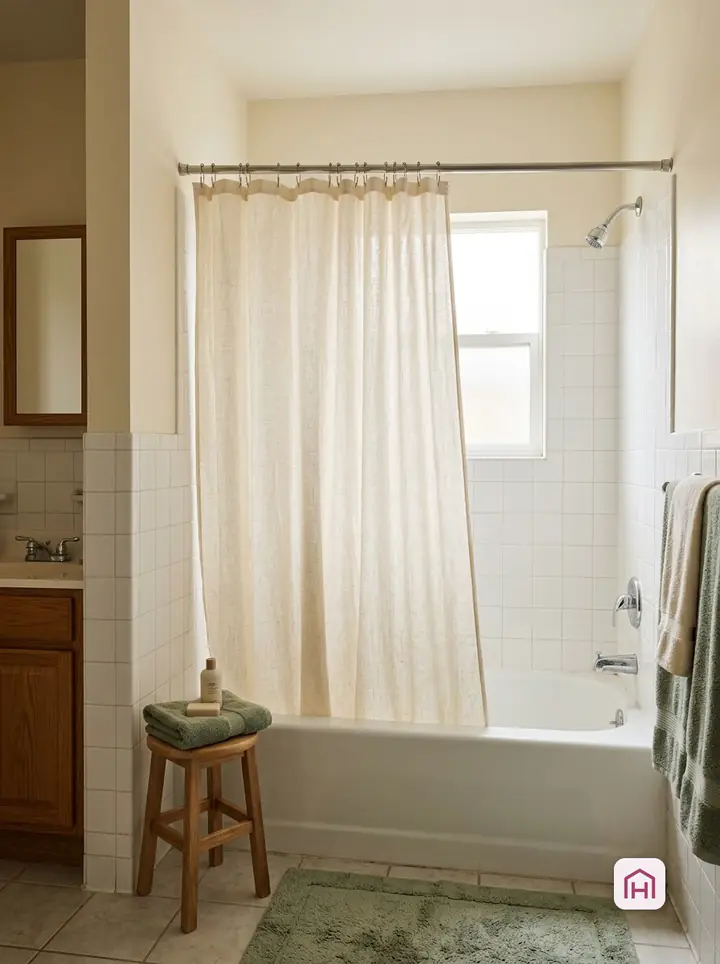
A shower curtain hung high and floor length
Hung high, a curtain makes the room look taller and hides dated tiles.
Why it works
A shower curtain hung just below the ceiling draws the eye up and covers more of the old tiles. A linen-look fabric makes the room feel softer. The picture does not show how the rod is fixed.
Materials and furniture
- Tall tension rod or a rod on existing fixings
- Long shower curtain with a water-repellent liner
Check first
- Keep the curtain or liner hem inside the bath, as in the picture, so water runs back in.
- A tension rod needs two solid, parallel walls; follow the maker's limits.
- Wash curtain and liner regularly to prevent mould.
-
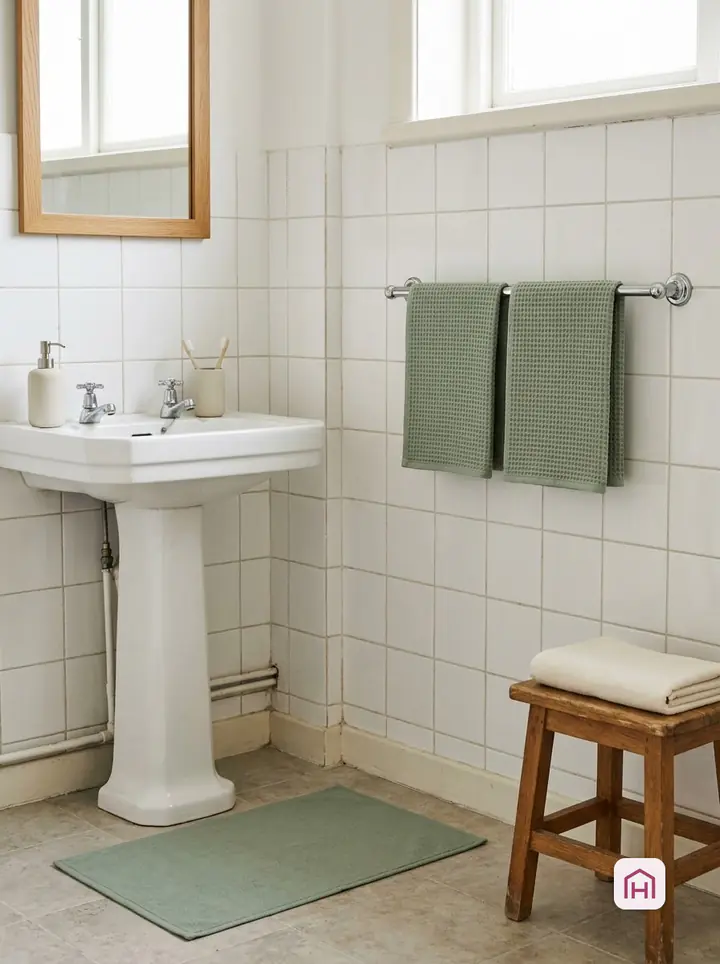
Matching towels and bath mat in one colour
The quickest refresh: one colour, everywhere textiles show.
Why it works
Mixed towels in every colour make a small bathroom look busy. One calm colour for towels and bath mat is the quickest, cheapest way to change the whole room.
Materials and furniture
- Towels and bath mat in one colour
Check first
- Choose a colour that works with the tiles you cannot change.
- Light colours show make-up and stains; mid tones are forgiving.
- Dry them fully between uses to avoid smells.
-
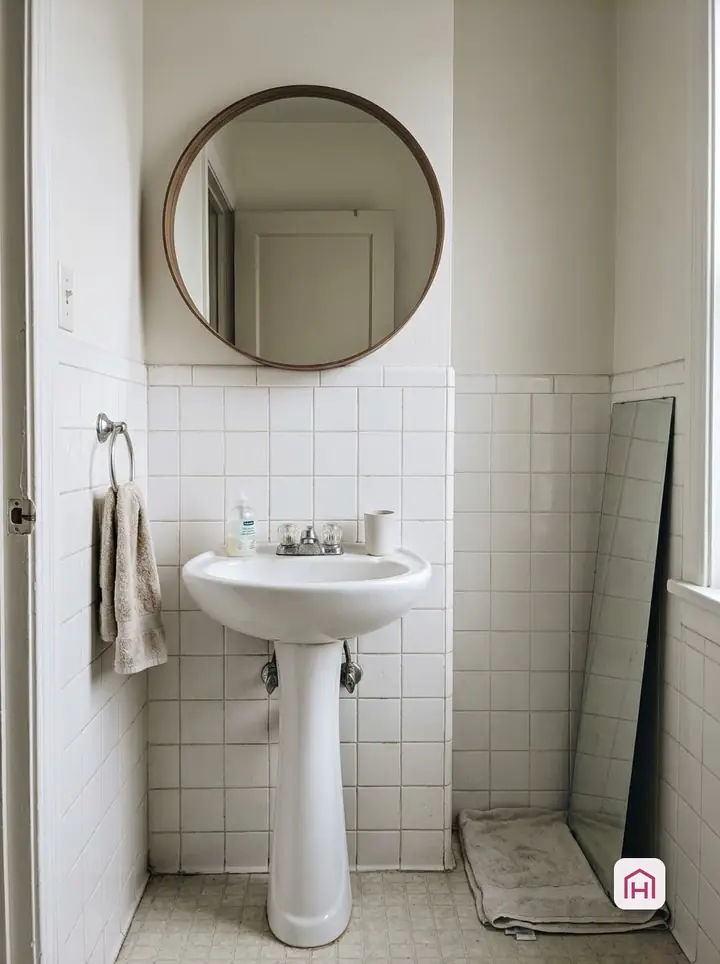
Swap the mirror, and keep the original
Same fixing points, and the original goes back when you leave.
Why it works
A plain bathroom mirror is often the most dated thing in the room. Hanging your own mirror on the existing fixings and storing the original makes a big change you can undo. The picture shows the original leaning on the floor for a moment; store it flat and wrapped, not propped up.
Materials and furniture
- Mirror suited to bathrooms
- Existing fixings or ones the landlord allows
Check first
- Store the original mirror wrapped, flat and out of the way, with its fixings in a labelled bag; glass leaning against a wall can slide and break.
- Use the existing holes where possible; ask before drilling tiles.
- Check the new mirror's weight against the existing fixings and choose one suited to bathrooms.
-
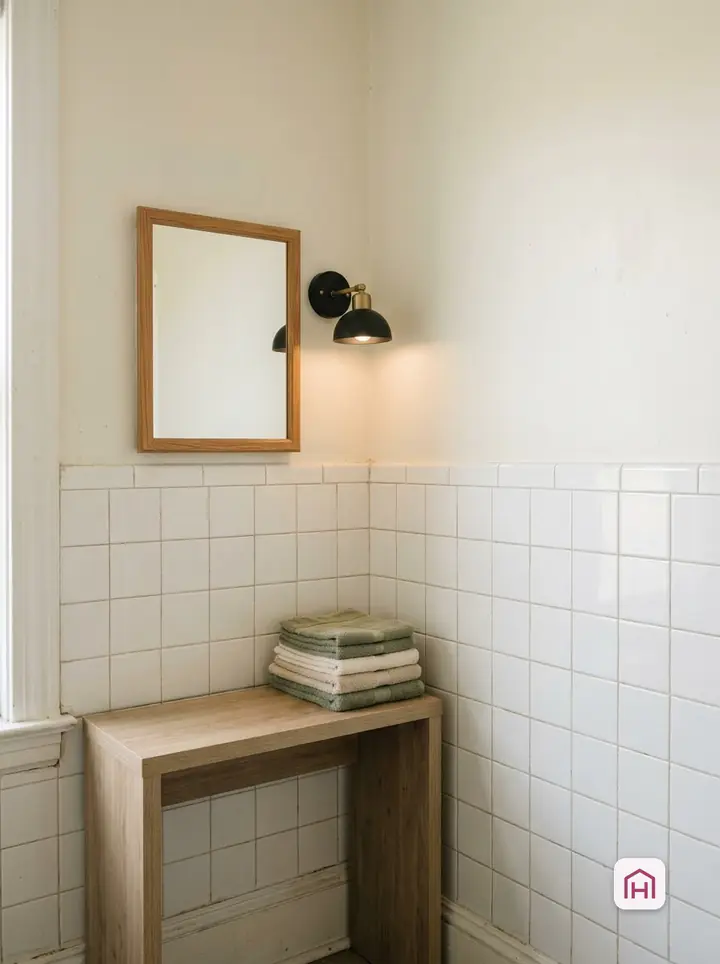
A cable-free wall light beside the mirror
Softer light at the mirror, with no visible cable.
Why it works
A harsh ceiling light is unflattering. A rechargeable or battery wall light beside the mirror adds softer light where you need it without electrical work. The picture shows no cable but cannot show whether the lamp runs on a battery or is suitable for a bathroom.
Materials and furniture
- Rechargeable wall light rated for the bathroom zone
- Fixing as the maker specifies
Check first
- Choose a light rated for the bathroom zone it goes in; keep it away from the bath, shower and basin.
- No plug-in lamps or extension leads in a bathroom; fixed electrical work is a job for an electrician.
- Charge it outside the bathroom.
-
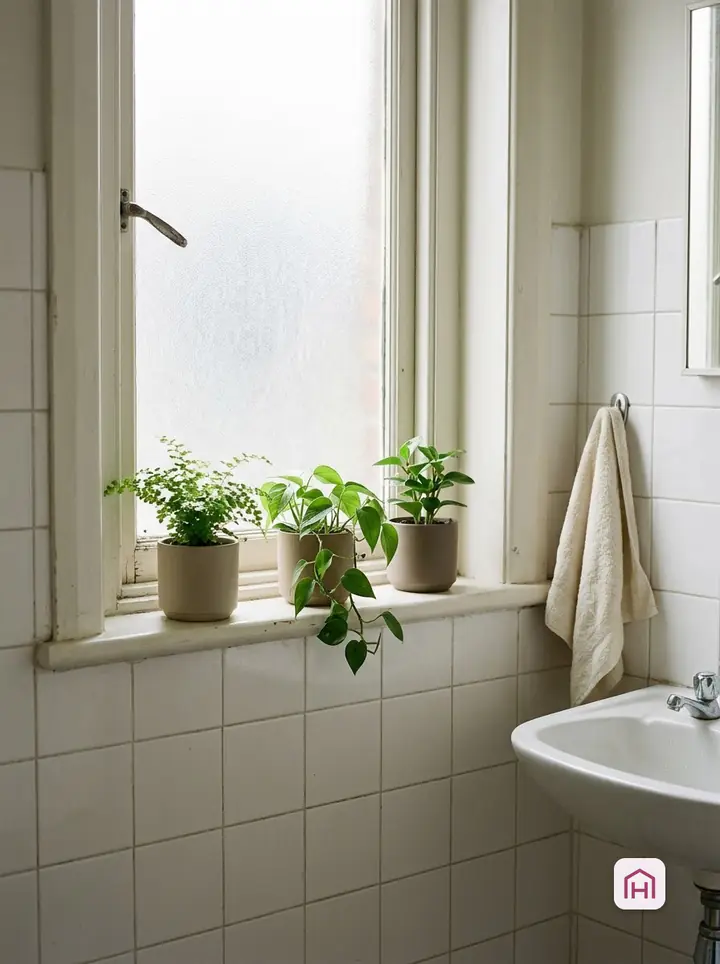
Plants that like a humid room
Green against white tiles, and the plants enjoy the steam.
Why it works
A bathroom with some daylight suits plants that like humidity. A few pots on the windowsill or a shelf soften hard tiles more than any accessory.
Materials and furniture
- Plants suited to humidity and the available light
- Pots with saucers
Check first
- Without daylight, most plants will not thrive; choose very tolerant ones or skip them.
- Saucers stop water marks on sills; keep the window handle free, as in the picture.
- Keep pots away from the edge of the bath.
-
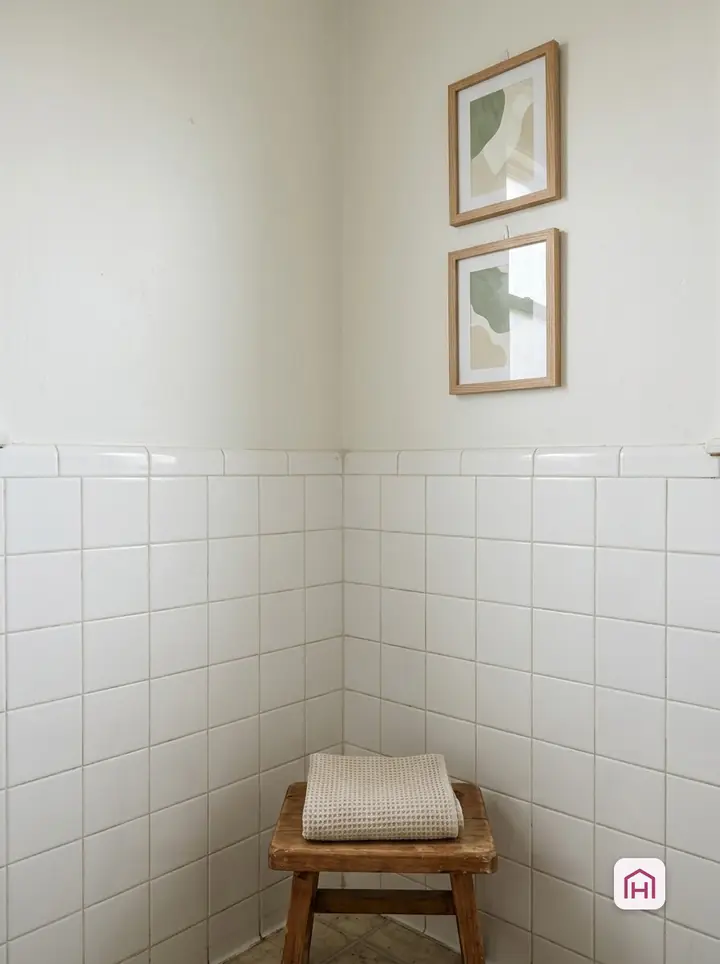
Small framed art away from the shower
One small picture makes a bathroom feel like a room, not a utility.
Why it works
Art is rare in rental bathrooms, which is why one or two small pieces make such a difference. Glazed frames help against splashes; whether a frame is sealed against steam, a picture cannot show, so use prints you do not mind replacing.
Materials and furniture
- Small frames with glazing
- Picture strips or hooks suited to tiles
Check first
- Paper waves in steam: sealed frames, or prints you do not mind replacing.
- Keep art well away from the shower and splash zones.
- Adhesive strips on tiles: check the pack for bathroom use.
-
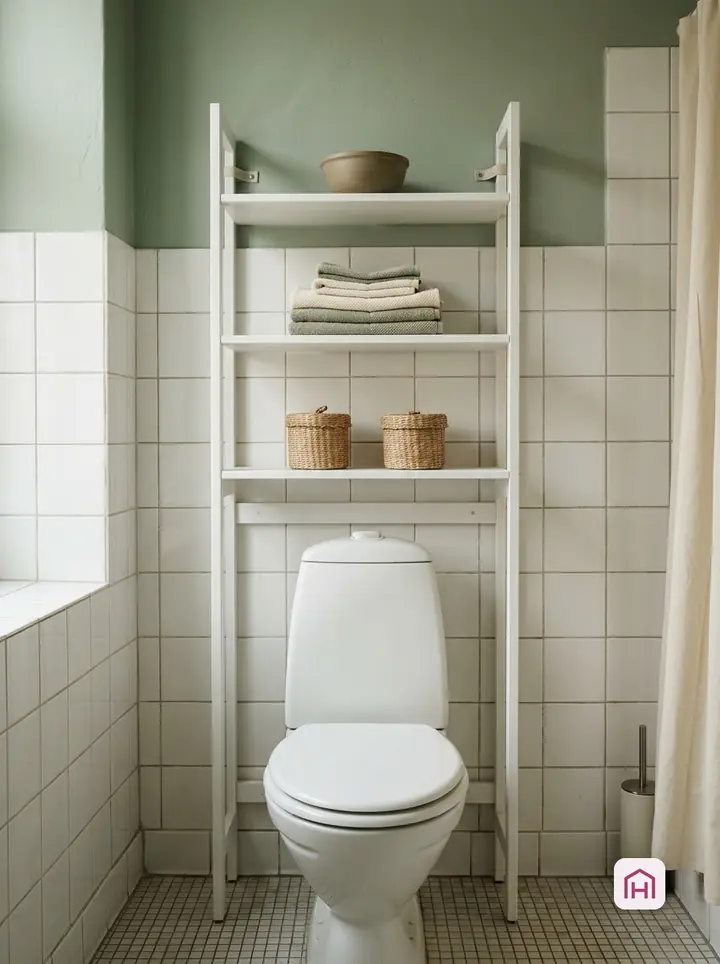
A shelf unit over the toilet, strapped to the wall
Three shelves above the cistern, secured with two straps.
Why it works
The wall above the toilet is usually empty. A unit that straddles the toilet adds shelves without fitting each shelf to the wall. The unit in the picture is held by two straps at the top, so it is not drill-free.
Materials and furniture
- Over-toilet shelf unit with anti-tip fixings
- Baskets
Check first
- Secure it against tipping with the maker's wall fixings, as in the picture; ask your landlord about the holes.
- Leave room to lift the cistern lid and reach the flush.
- Light items on the top shelf.
-
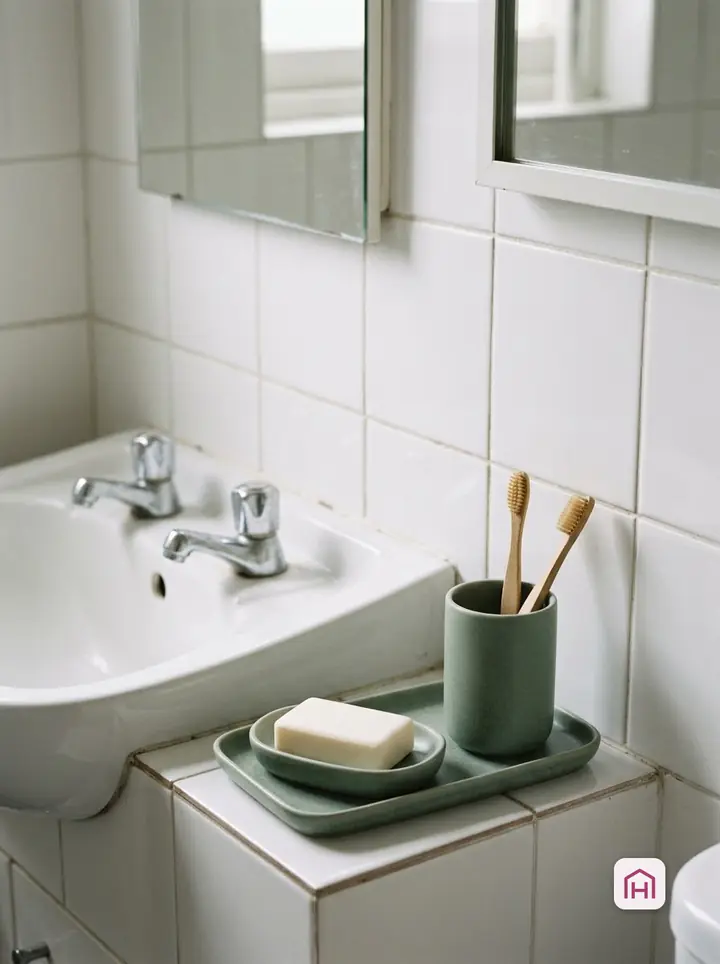
Accessories in one material
A matching tray, soap dish and cup turn clutter into a set.
Why it works
Toothbrush cups, soap dishes and trays in different plastics look like clutter. In one material, such as ceramic or wood, they look like a set and calm the whole basin area.
Materials and furniture
- Soap dish, cup and small tray in one material
Check first
- Wood needs drying out between uses or it marks.
- Ceramic can break; keep it away from the bath edge.
- Fewer items on the basin is the bigger change.
Reversible changes
Everything here can be undone when you move out. The rule of thumb: textiles, accessories, plants and art are yours to change; tiles, sanitaryware and fixed electrics belong to the landlord. Where you replace something, such as the mirror, keep the original and its fixings safe, and use the existing holes where you can. Ask before drilling into tiles.
Moisture
Bathrooms are the dampest room in most homes, and new textiles, art and plants add things that can go mouldy. Air the room after every shower, use the extractor fan if there is one, and dry condensation on windows and walls quickly. The US Environmental Protection Agency recommends keeping indoor humidity below 60 percent, ideally between 30 and 50 percent [1]. Wash shower curtains and bath mats often, and hang art away from the shower, in frames you do not mind replacing.
Electrics
Keep plug-in devices out of the bathroom and away from water. Rechargeable lights that charge outside the room add light without any cable. Anything fixed to the electrical installation in a bathroom is a job for an electrician, and in a rental also needs your landlord's agreement.
Keep the originals
Put the original shower curtain rod, toilet seat or accessories in a labelled bag or box, and store the original mirror wrapped and flat, not leaning against a wall. On moving day, putting the bathroom back is then much quicker.
Filter ideas by room and fixing
Sources
- A Brief Guide to Mold, Moisture and Your Home , US Environmental Protection Agency (EPA). checked