Calculators
Curtain size calculator
Runs in your browser · does not check building standards
Curtain rod width, how many panels and which standard length to buy (63, 84, 95/96, 108 or 120 in), from your window, the fullness you want and sill, floor, break or puddle length.
Result
–
How it was calculated
How to use
- Measure the window: Width across the outside of the trim, in inches.
- Set the rod: Choose how far the rod extends past the frame on each side.
- Choose fullness and panel: Pick the fullness and enter the width of one panel from the package.
- Measure the drop: From where the panel hangs to the floor, or to the sill for short curtains, and pick the length style.
- Buy: Order the panel count and standard length shown, or custom panels if none fits.
How to measure for curtains
Measure the window width across the outside of the trim. Decide where the rod goes: Home Depot suggests letting it extend 8 to 10 in past the frame on each side, which makes the rod the window width plus 16 to 20 in, and hanging it anywhere from a few inches above the trim to a few inches below the ceiling.
Measure the drop from where the curtain hangs, not from the window: the top of the rod for rod-pocket and grommet panels, the bottom of the rings for ring-top or clip curtains. Measure in two or three places, because floors are rarely level, and use the shortest figure for floating curtains.
Fullness: how much fabric
Fullness is the total panel width divided by the rod width. The Shade Store recommends 1.5 to 2 times for a full, tailored look and 2.5 to 3 times for sheer fabrics; Home Depot's guide says two to three times the rod. Less fabric looks flat when closed; more makes a bigger stack when open.
Sill, float, break or puddle
Sill-length curtains end at the sill or an inch below it. Floor-length curtains that float stop just above the floor: The Shade Store subtracts ¼ to ½ in from the rod-to-floor measurement. A break lets the fabric rest on the floor with a slight bend; Home Depot adds 1 in. A puddle adds 3 in for a restrained look and up to 6 in for a lavish one, and collects dust.
Standard ready-made lengths are 63, 84, 96, 108 and 120 in (some brands label the 96 in size as 95 in). Buy the shortest that reaches your finished length; if it is an inch or two too long, raise the rod instead of hemming.
How it is calculated
- Rod width = window width + extension on both sides
- Fabric width = rod width × fullness
- Panels = fabric width ÷ panel width, rounded up to an even number (one pair or more)
- Length = rod to floor − ½ in (float), + 1 in (break) or + 4 in (puddle); or rod to sill for sill length
- Buy the shortest standard length (63, 84, 95, 96, 108, 120 in) that is at least the finished length
Examples
48 in window, floor length
Rod 48 + 2 × 10 = 68 in. At 2× fullness that is 136 in of fabric, so three 52 in panels, rounded up to four for a pair. The rod hangs 96 in above the floor; floating ½ in clear gives 95.5 in, so buy 96 in panels.
Wide living room window
A 96 in window with 10 in each side needs a 116 in rod and 232 in of fabric at 2×: five 52 in panels, so six. A rod 84 in up with a 1 in break needs 85 in, so buy 95 or 96 in panels and hem them, or raise the rod.
Frequently asked questions
How wide should curtains be for my window?
Together, the panels should be about 2 times the rod width for a standard look, 1.5 times for heavy drapes and 2.5 to 3 times for sheers. The Shade Store gives 1.5 to 2 times; Home Depot says two to three times the rod.
How far past the window should a curtain rod extend?
Home Depot suggests 8 to 10 in on each side, so the rod is the window width plus 16 to 20 in; The Shade Store gives 6 to 12 in. More extension lets open curtains clear the glass and let in more light.
What are standard curtain lengths?
Ready-made panels are usually 63, 84, 96, 108 and 120 in long; some brands sell 95 in instead of 96. Choose the shortest one that reaches your finished length and hem or raise the rod for the rest.
How do I measure curtain length?
Measure from where the panel will hang (the top of the rod, or the bottom of the rings) down to the floor or the sill, then adjust: subtract about ½ in to float, add about 1 in for a break and 3 to 6 in to puddle.
How high should a curtain rod be?
Anywhere from a few inches above the window trim to a few inches below the ceiling. Hanging it higher makes the window look taller but needs longer panels.
How many curtain panels do I need?
Divide the rod width times the fullness by the width of one panel and round up to an even number. A 68 in rod at 2× needs 136 in of fabric: four 52 in panels.
Sources
- How to Measure Curtains, The Home Depot
- How to Measure for Curtains in 5 Steps, The Shade Store
Keep planning with your measurements
Related ideas
-
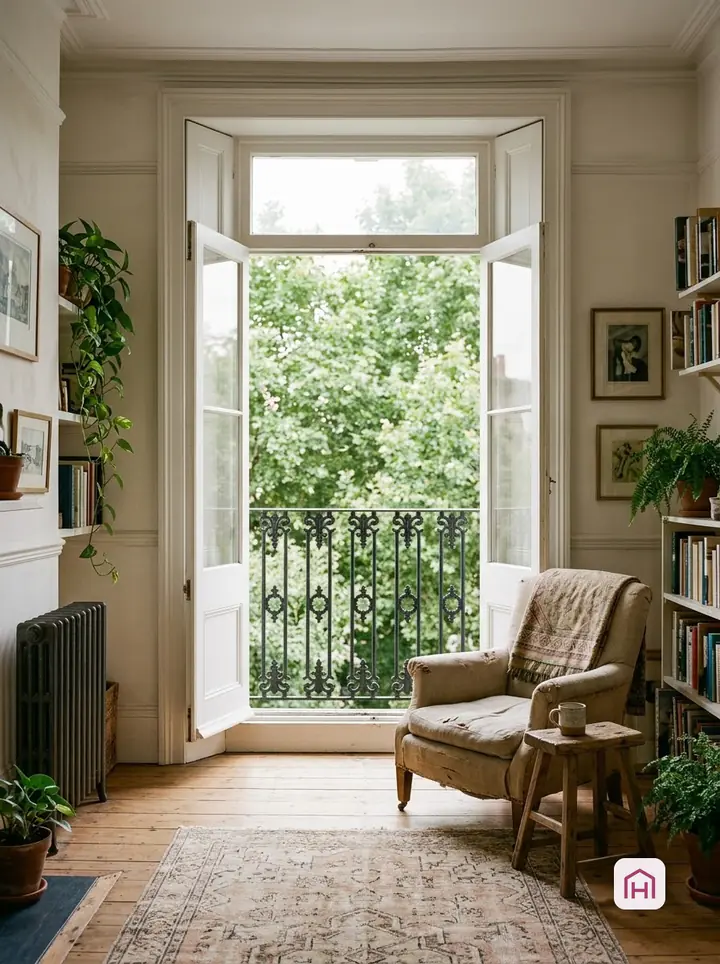
Juliet balcony ideas: 8 ways to enjoy a balcony you can't stand on
Eight ways to enjoy the room beside Juliet doors: an armchair, freestanding flower boxes, a leafy planter, sheer curtains, floor cushions, a side table, frame lights and an indoor trellis. Compare layouts without needing an exterior deck.
-
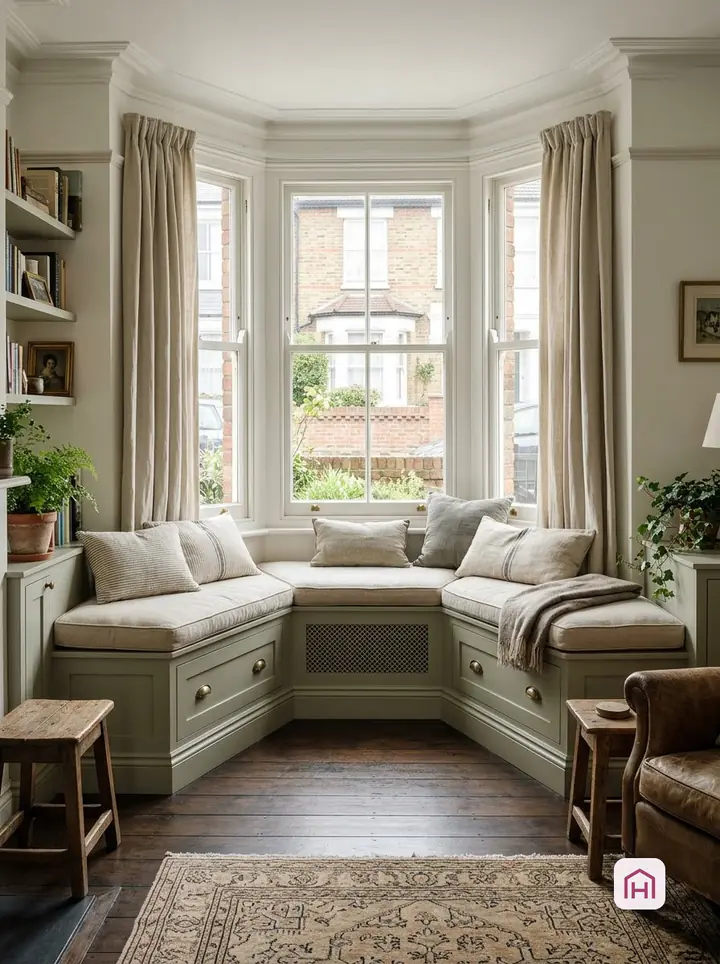
Bay window ideas: 8 ways to use the bay in a small living room
Eight ways to use a bay window in a small living room: a window seat with storage, a round dining table, a desk across the bay, two armchairs and a side table, a plant stage on tiered stands, a reading daybed, a curved curtain track and low shelving under the windows.
-
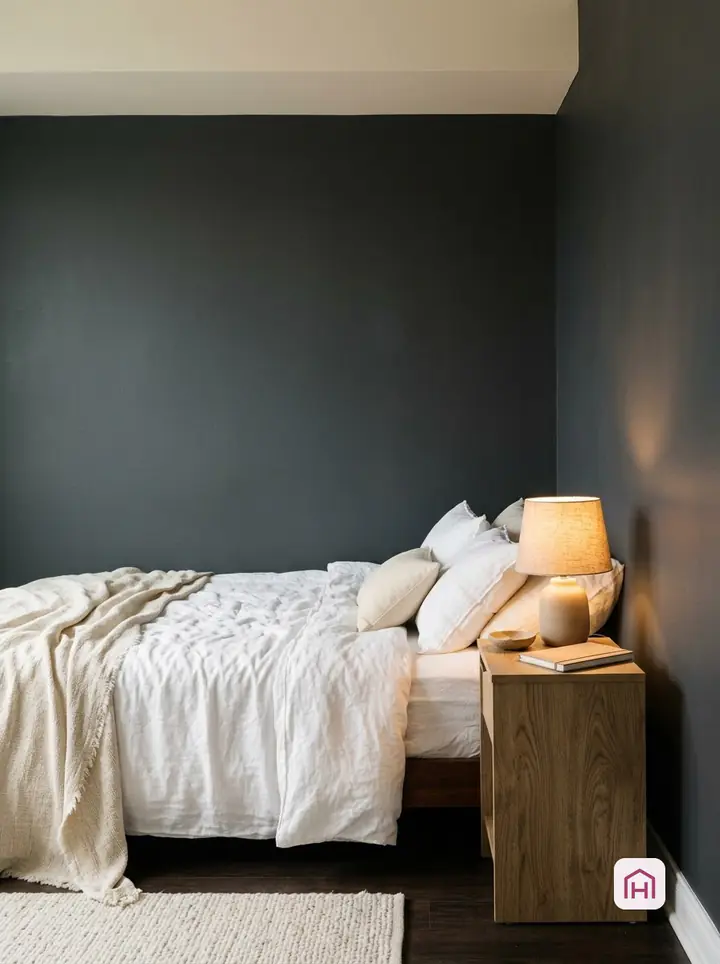
Romantic moody bedroom: 25 dark and cozy small bedroom ideas
25 dark and moody ideas for a small bedroom: charcoal, deep green, navy, plum and oxblood walls, a four-poster with sheer drapes, dark wood panels, a dark gallery wall, burgundy check bedding, a smoky blue attic, mushroom lamps, velvet and low warm lamps. With notes on testing colours and renting.