Idea gallery · 8 ideas
Juliet balcony ideas: 8 ways to enjoy a balcony you can't stand on
Idea gallery 0 sources
A Juliet balcony gives you a view and opening doors rather than an outdoor floor. Arrange the room just inside it: start with one movable seat and table, then choose plants or curtains that leave the doorway and door swings clear. Freestanding indoor boxes can frame the opening without using the railing.
-
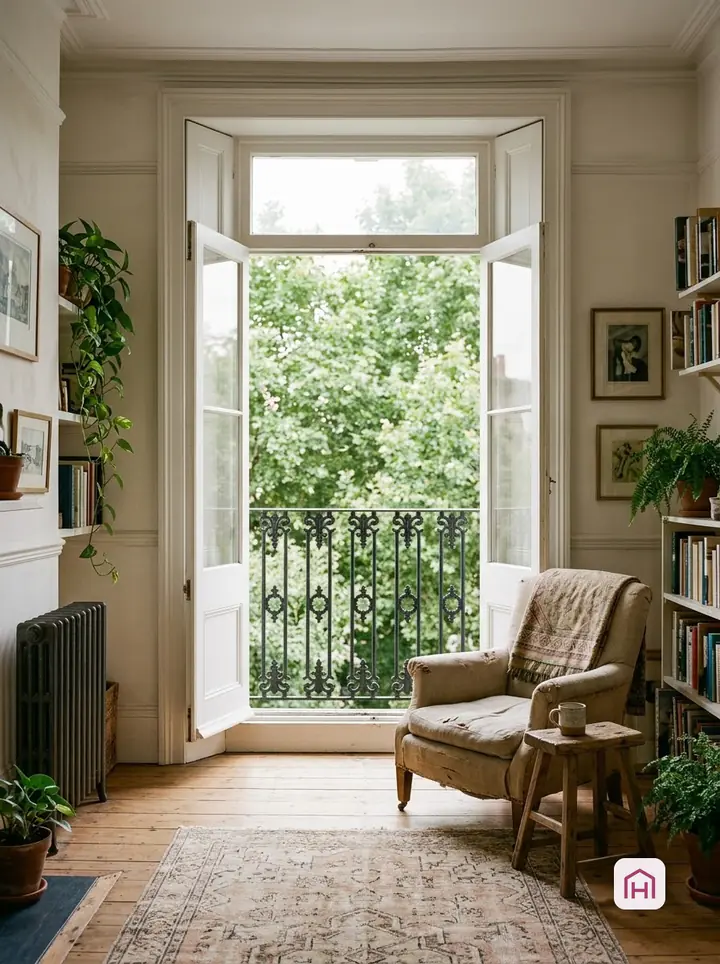
A chair facing the open doors
The best seat is facing out.
Why it works
One comfortable chair turned to face the open doors makes the Juliet balcony a place to sit with a coffee and the view.
Materials and furniture
- Armchair or lounge chair
Check first
- Set it back from the railing, not against it.
- Keep the doors free to open fully.
- Rain: close the doors.
-
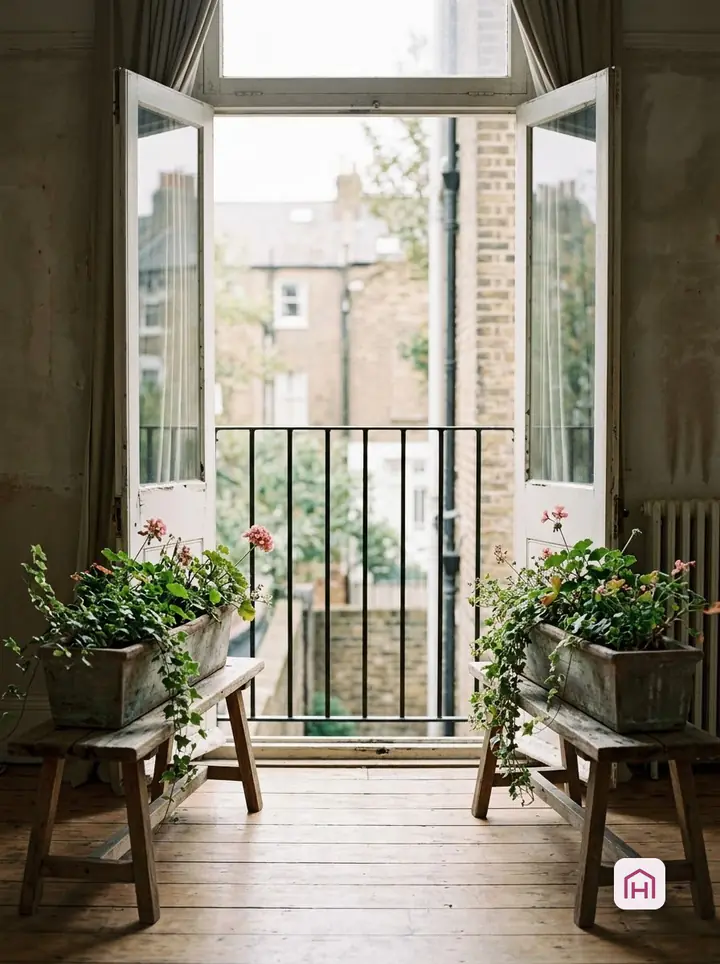
Freestanding flower boxes inside the doorway
Flowers frame the view while the railing stays bare.
Why it works
Two long boxes on separate indoor benches frame the doorway. They create a planted view without hanging containers from the railing; leave the central route and both door swings clear.
Materials and furniture
- Two freestanding flower boxes
- Stable benches or stands
- Water-catching trays
Check first
- Keep both boxes fully inside the room.
- Measure each door swing before placing the stands.
- Protect the floor from water and keep the route between the boxes clear.
-
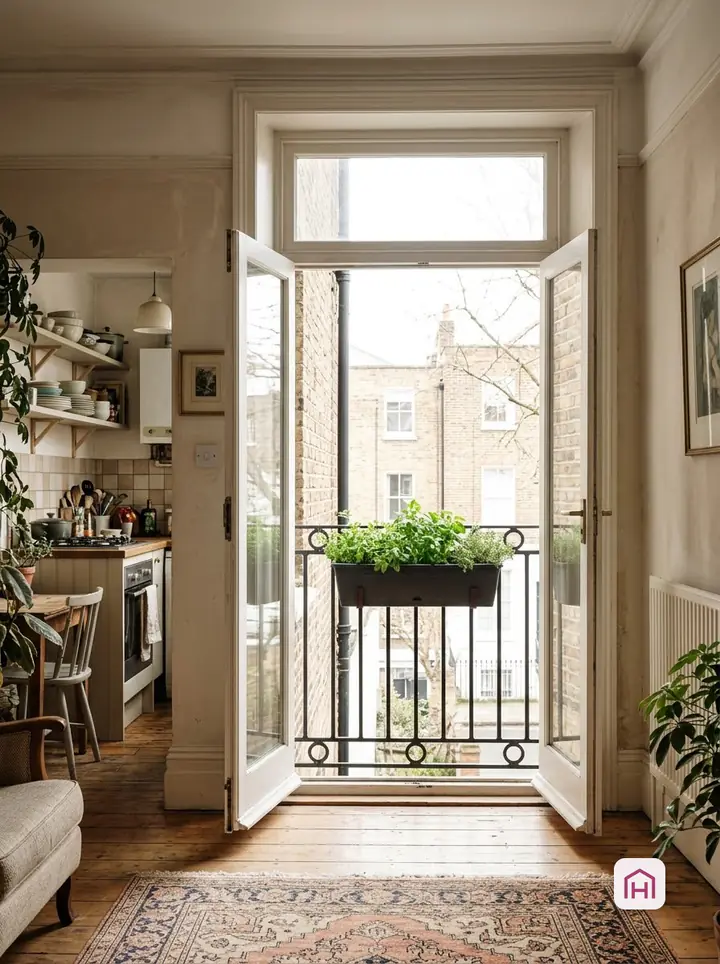
A leafy planter near the kitchen
Greenery at the window, with access for watering.
Why it works
One leafy planter brings greenery into the view from the kitchen. The plants cannot be identified reliably from the image: choose species for the actual light and temperature at your doorway.
Materials and furniture
- Suitable planter and tray
- Plants for the available light
Check first
- Use a freestanding indoor placement if railing attachments are not permitted or suitable.
- Keep the door swing and central route clear.
- Catch drainage water; do not let it run down the facade.
-
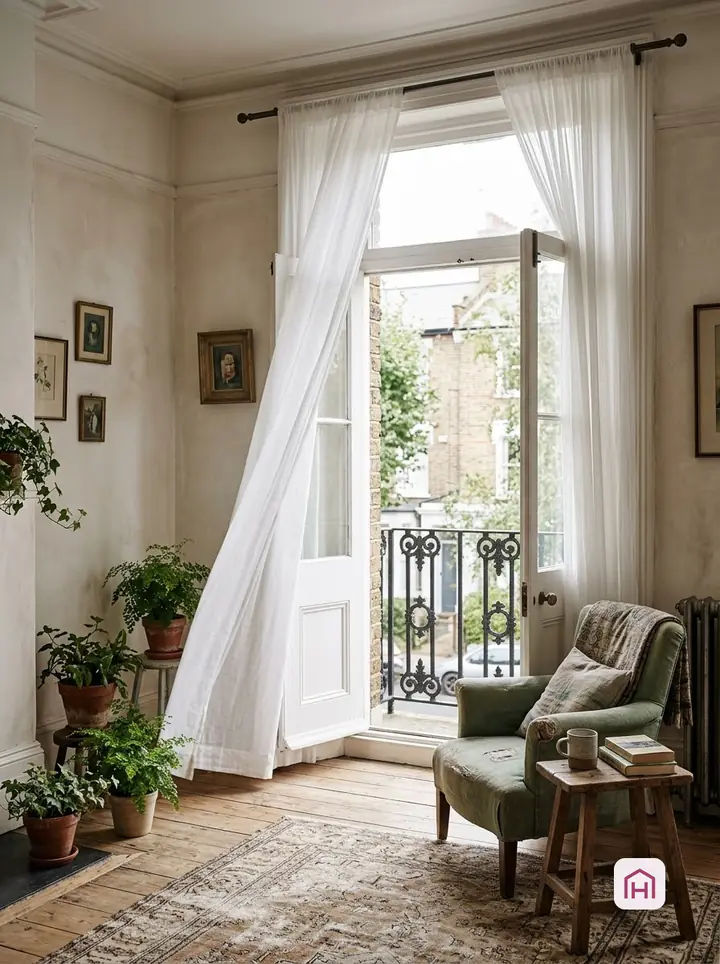
Sheer curtains that move in the breeze
Open the doors, let the curtains float.
Why it works
Sheer curtains in front of the Juliet balcony filter light and move softly when the doors are open.
Materials and furniture
- Sheer curtains
- Rail or track
Check first
- Tie them back in strong wind.
- Keep them clear of candles and lamps.
- Washable fabric.
-
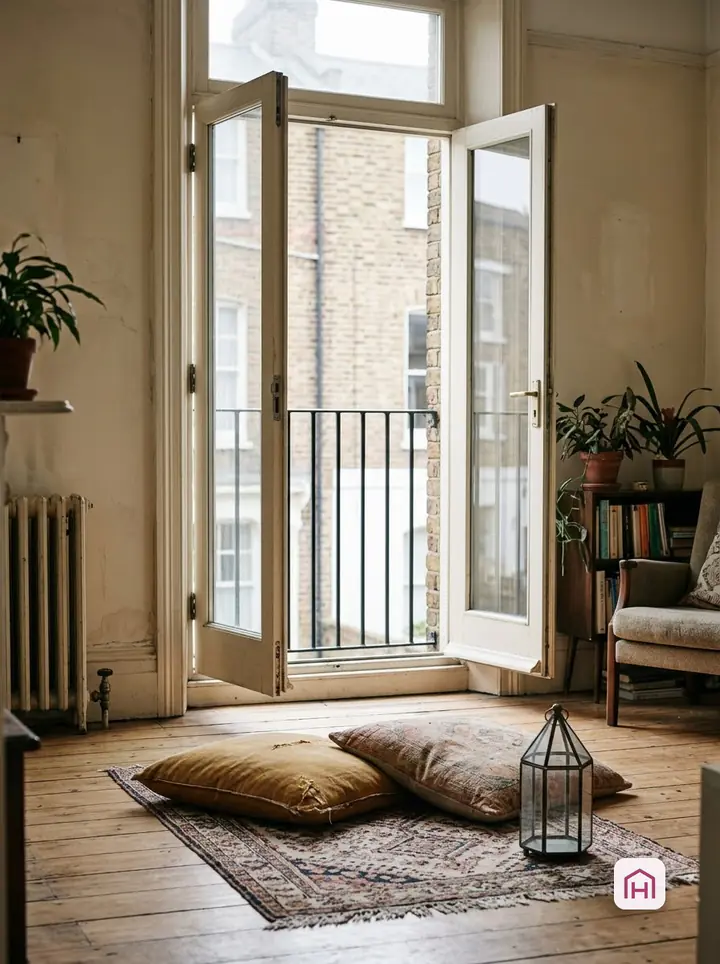
A rug and cushion zone
A balcony floor inside the room.
Why it works
A small rug and floor cushions just inside the doors make a place to sit and feel the air, without any balcony floor.
Materials and furniture
- Small rug
- Floor cushions
Check first
- Not right against the railing.
- Bring cushions in from rain.
- Keep the doors free to close.
-
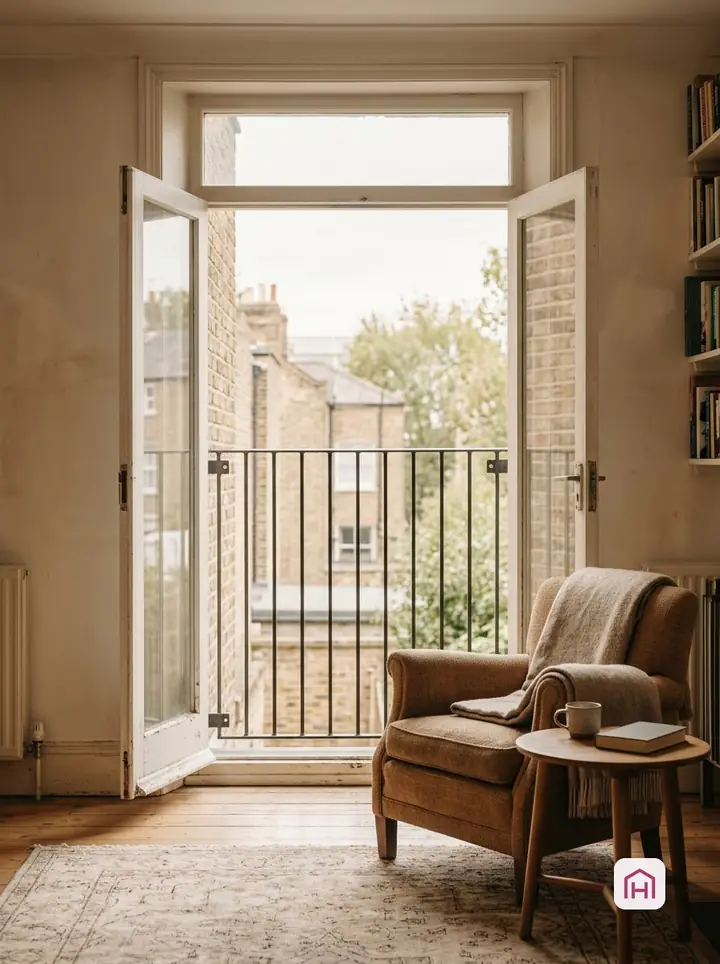
A small side table for coffee
Somewhere to put the cup.
Why it works
A small side table beside the chair holds a cup, a book or a plant within reach of the view.
Materials and furniture
- Small side table
Check first
- Inside the room, not against the railing.
- Stable and low.
- Out of the door swing.
-
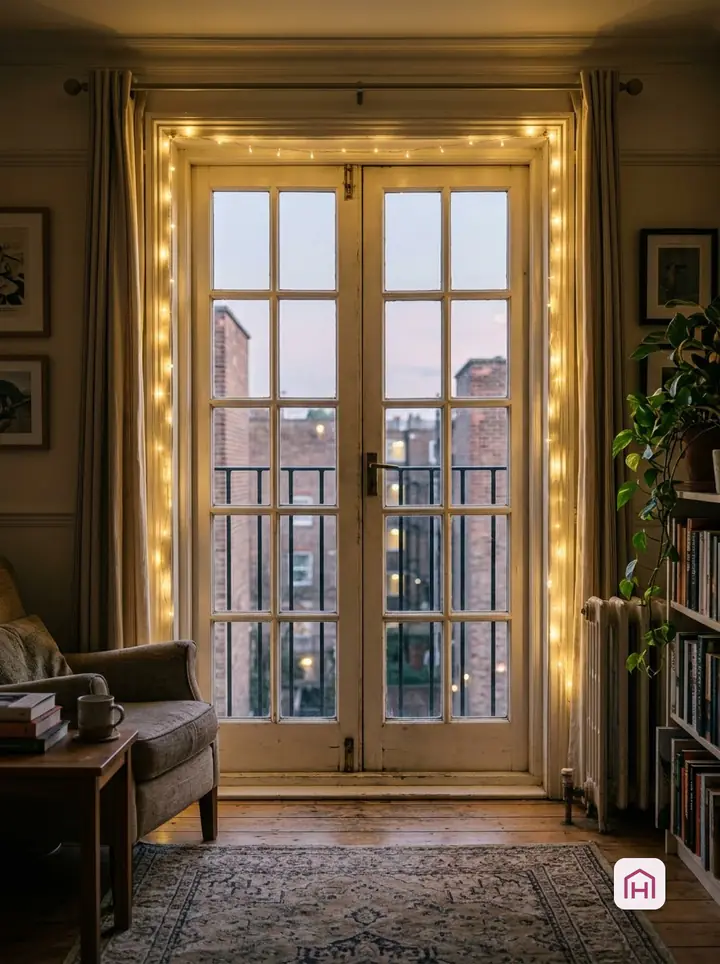
String lights inside the frame
A warm glow around the doors at night.
Why it works
A light string around the inside of the door frame gives the Juliet balcony a glow in the evening.
Materials and furniture
- Indoor light string
- Removable clips
Check first
- Indoor lights stay inside; outdoor use needs outdoor-rated lights.
- Lights in good condition; cord along the wall.
- Close the doors in rain.
-
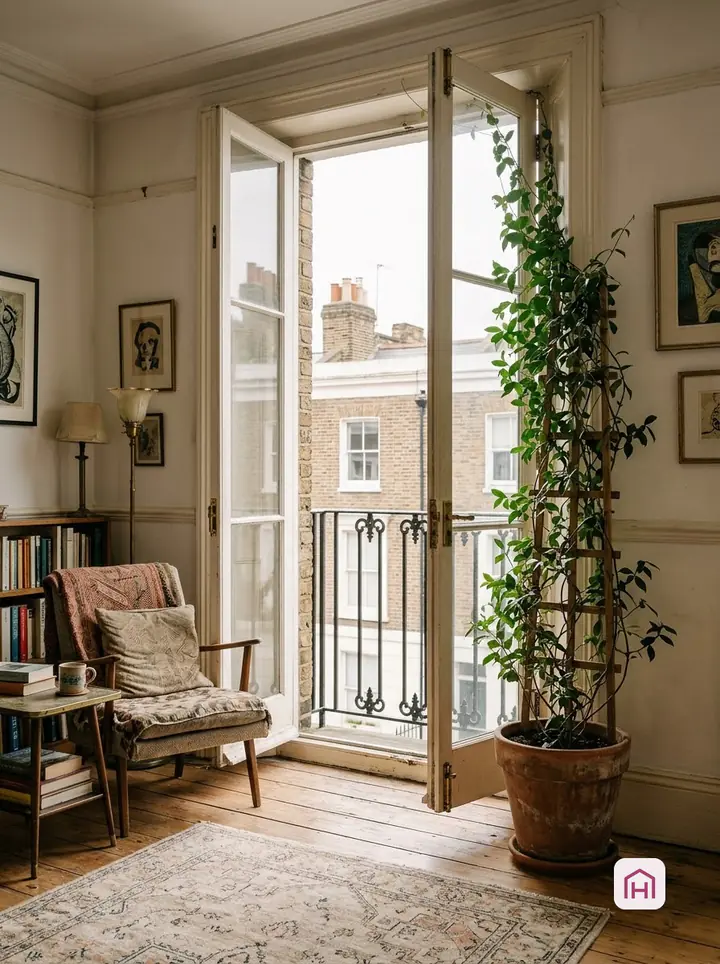
A climbing plant on a trellis inside
Green framing the doors.
Why it works
A climbing plant in a large pot with a trellis beside the doors frames the Juliet balcony with green from inside.
Materials and furniture
- Large pot with trellis
- Climbing plant
- Saucer
Check first
- Saucer under the pot.
- Choose a plant for indoor light.
- Do not train it onto the railing.
The room beside the doors does the work
Treat the space just inside the opening as a usable part of the room. It can become a coffee seat, a reading spot or a planted view. Begin with one purpose; combining a large chair, floor cushions, two planters and a table can fill the very doorway you wanted to enjoy.
The railing is not an exterior deck. Plan every seat and standing position inside the room. Before moving furniture, open each door fully and mark its swing with a temporary floor template. Keep that area available for opening and closing the doors, including when curtains are drawn.
Pick a layout for your everyday use
| Your priority | Try first | Check in the room |
|---|---|---|
| Coffee with a view | Armchair and small side table | Reach to the cup and open-door clearance |
| Greenery without railing attachments | Two indoor flower boxes on stands | Central route, watering access and floor protection |
| An easily cleared spot | Rug and movable floor cushions | Storage when the doors need to close |
| Filtered daylight | Sheer curtains | Track position and gathered curtain width |
| Evening atmosphere | Lights inside the frame | Power route away from hinges and closing edges |
Three measurements before shopping
Measure the width of each door leaf, the depth available outside its swing, and the side-wall area where a chair or planter could stand. Put a cardboard chair footprint in the chosen place. Sit there temporarily and check the view: a chair angled slightly toward the opening can work better than one directly facing it.
For a pair of flower boxes, test two separate rectangles rather than one full-width bench. The freestanding example leaves the railing bare and puts the boxes on indoor benches. The planter shown in another image is a different arrangement; do not assume every container uses the same fixing system.
Keep it easy to maintain
Use water-catching trays and leave room to remove them. Choose indoor plants for the light actually reaching the leaves, not for a plant name guessed from an image. Curtains should remain easy to tie back and clear of heat sources. Bring the arrangement back inside its normal positions before closing the doors.
Keep climbable furniture away from the guard where children use the room. If you want railing attachments, first establish whether the building and chosen system allow them. A freestanding indoor arrangement avoids making that the starting point.
Save one seating option and one plant option, then test their footprints together. The winning layout is the one that still lets you use the doors normally.