Idea gallery · 8 ideas
Small bathroom storage ideas: 8 that work for renters
Idea gallery 1 source
In a small bathroom, add storage above the toilet, on the back of the door and under the sink before adding anything to the floor. Renters can do most of this with freestanding, tension or over-door pieces; keep everything easy to dry so moisture does not build up.
-
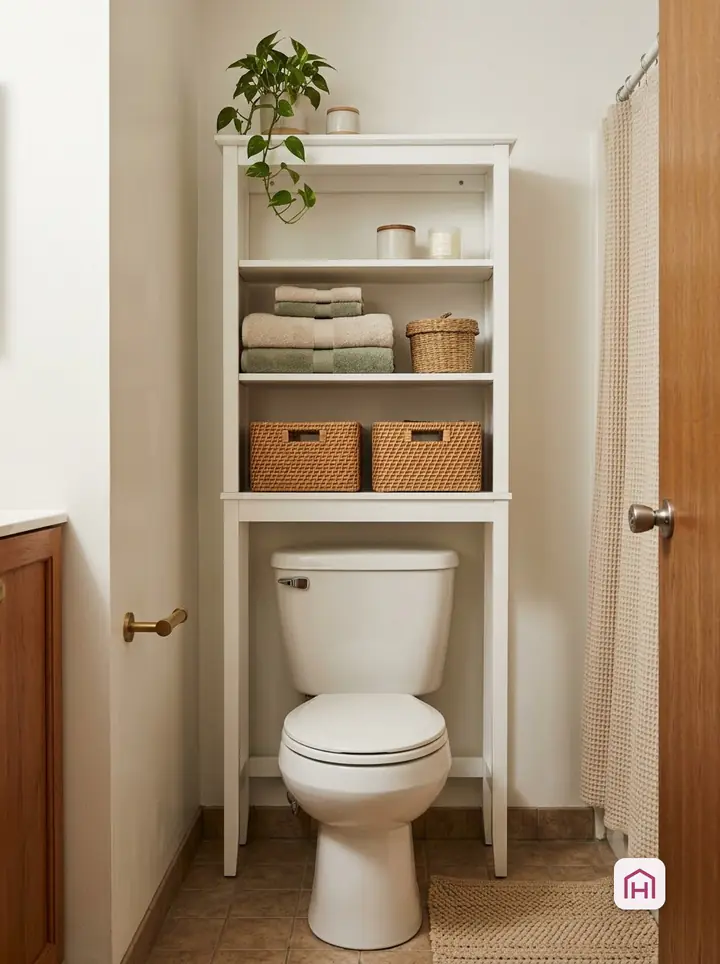
A freestanding shelf over the toilet
The wall above the toilet is often the only free space.
Why it works
A freestanding unit that straddles the toilet uses the empty wall space above the cistern without any drilling. Open shelves with baskets keep it tidy.
Materials and furniture
- Over-the-toilet shelving unit
- Baskets
Check first
- Follow the shelving unit instructions, including any required wall securing; freestanding appearance does not establish stability.
- Leave toilet fittings and access for maintenance usable.
-
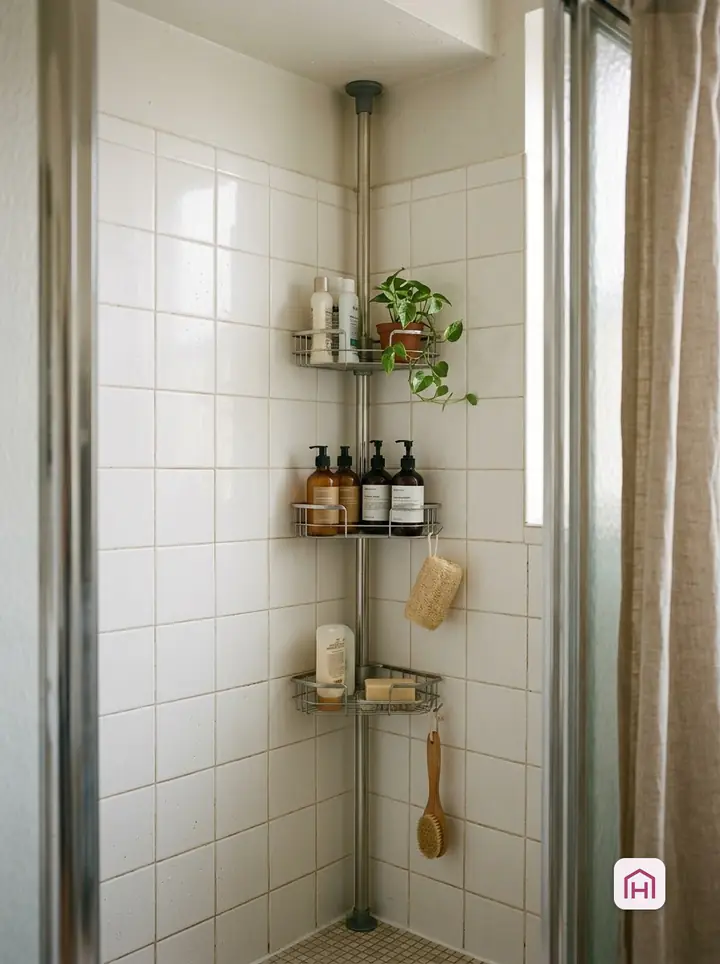
A tension pole caddy in the shower corner
Floor to ceiling storage, held only by tension.
Why it works
A tension pole with shelves wedged between the floor of the shower and the ceiling holds bottles without drilling into tiles.
Materials and furniture
- Tension pole shower caddy
Check first
- Check the pole is firm before loading it.
- Choose rust-resistant materials.
-
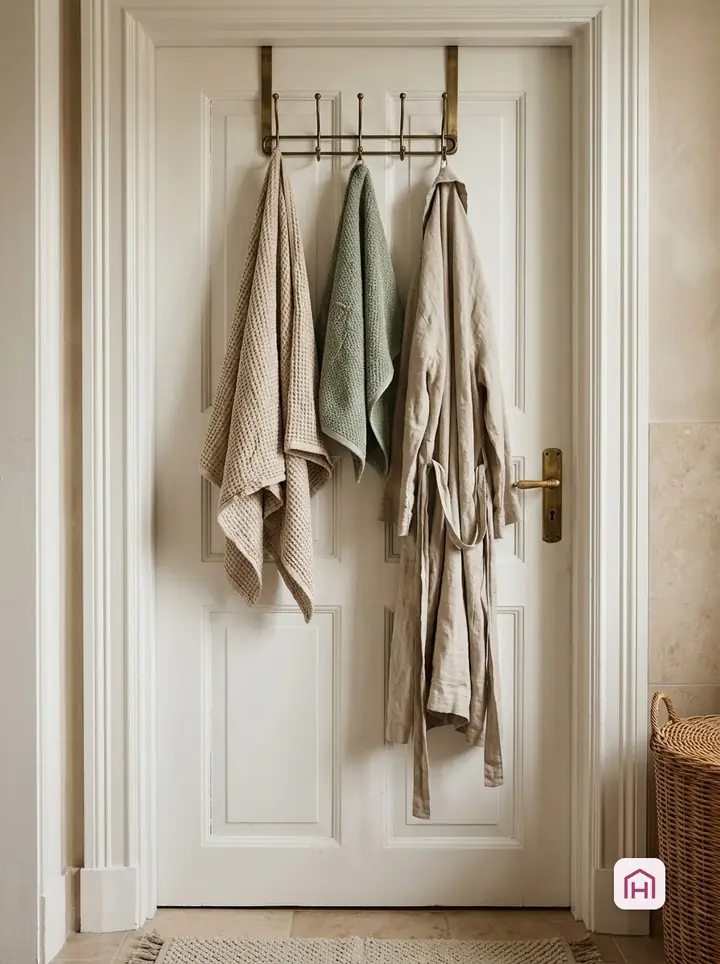
Hooks on the back of the door
Towels and robes off the floor and out of sight.
Why it works
Over-door hooks hang towels and robes on the back of the bathroom door, where they dry and take no wall space.
Materials and furniture
- Over-door hook rack
Check first
- Check the door still closes with the rack fitted.
- Leave space between towels so they dry.
-
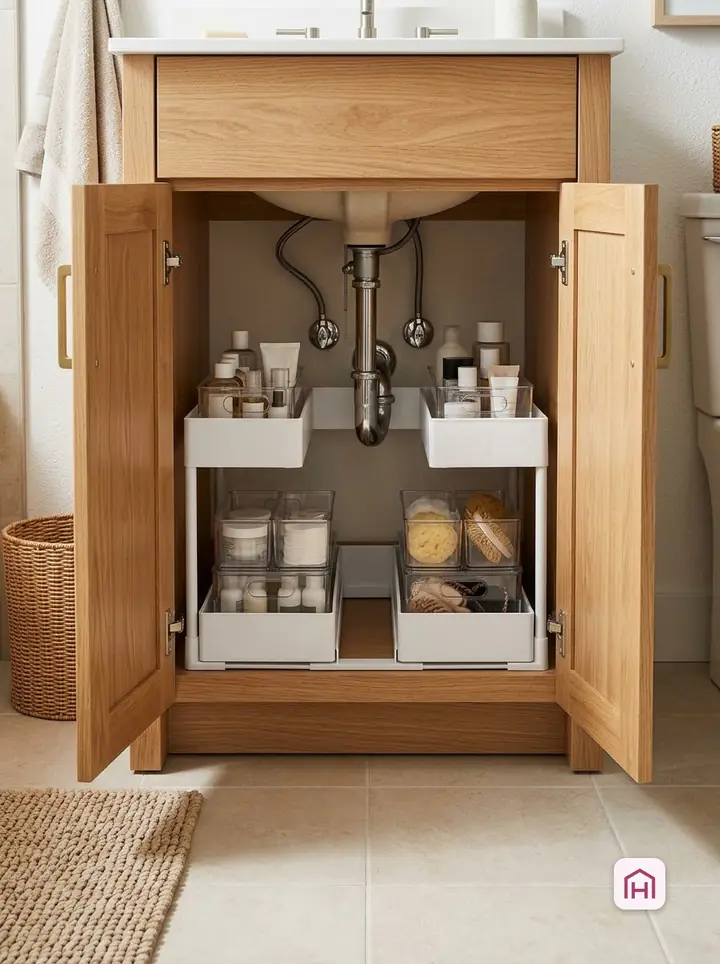
Drawers under the sink
Separate organizers sit beside the plumbing; compare the actual pipe positions before choosing an insert.
Why it works
Stackable drawers or a U-shaped organizer that fits around the pipes turns the cupboard under the sink into usable storage.
Materials and furniture
- U-shaped under-sink organizer or stackable drawers
Check first
- Measure pipe positions and clearance for the chosen organizer; the image does not establish a particular mechanism.
- Keep plumbing and shut-off access available.
-
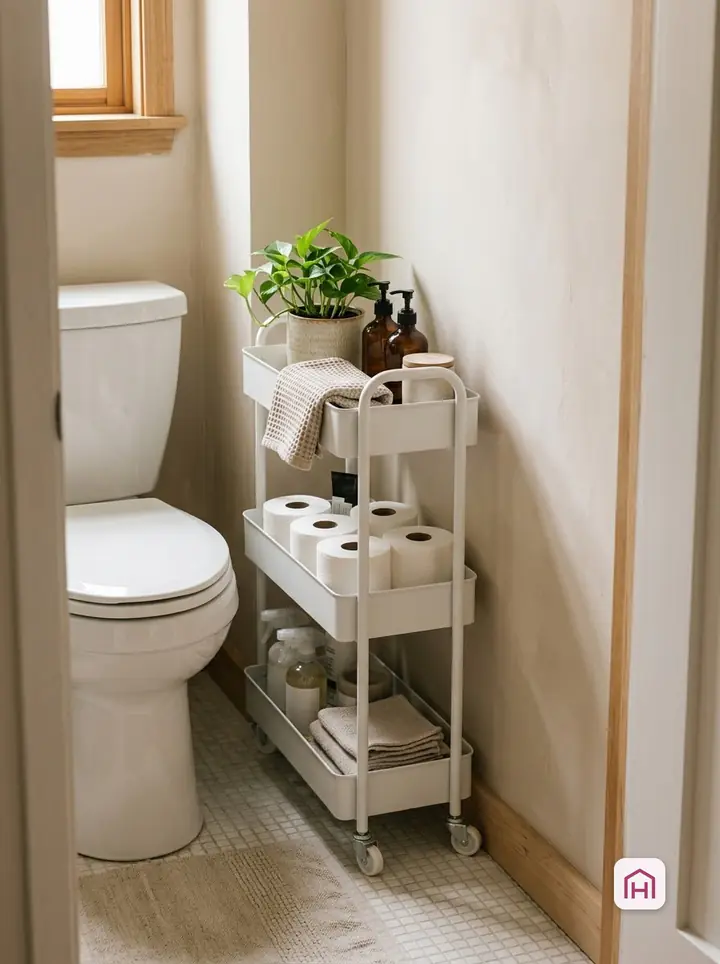
A slim rolling cart
Fits in the gap beside the toilet or washing machine.
Why it works
A slim cart on wheels slides into the narrow gap beside the toilet, sink or washing machine and rolls out when you need it.
Materials and furniture
- Slim rolling cart
Check first
- Measure the gap width and height.
- Choose wheels that lock.
-
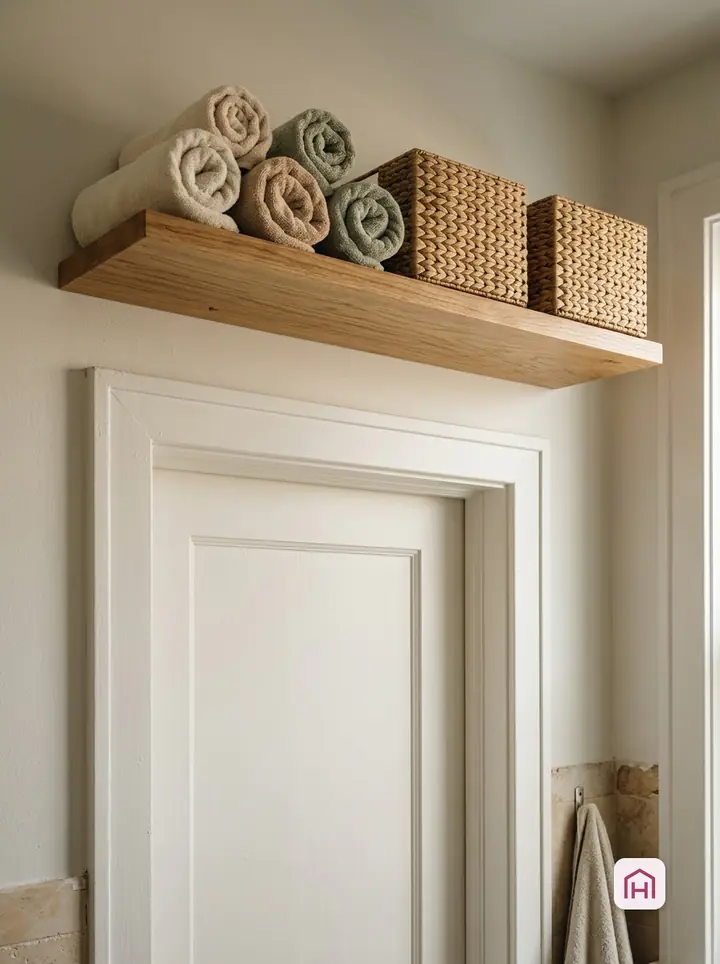
A floating shelf above the door
Storage at a height nobody uses.
Why it works
A shelf fixed above the bathroom door holds spare towels and toilet paper in a place that is otherwise wasted.
Materials and furniture
- Floating shelf
- Fixings for the wall type
- Baskets
Check first
- Use fixings suitable for the wall and shelf load; avoid heavy or fragile objects above the doorway.
- Plan a suitable safe way to reach the shelf; do not stand on the toilet.
-
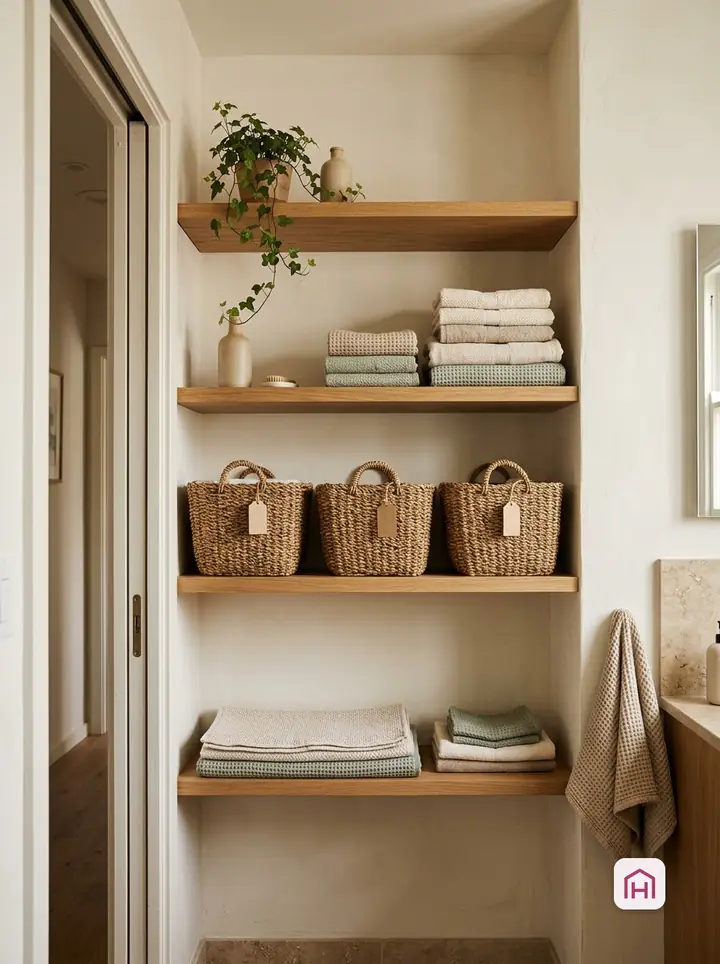
Matching baskets on open shelves
Hide the clutter, keep the shelf.
Why it works
Open shelves look tidy when small items go into matching baskets or boxes. Label them so everything goes back to the same place.
Materials and furniture
- Matching baskets
- Labels
Check first
- Choose materials that can handle bathroom moisture.
- Let baskets dry if they get wet.
-
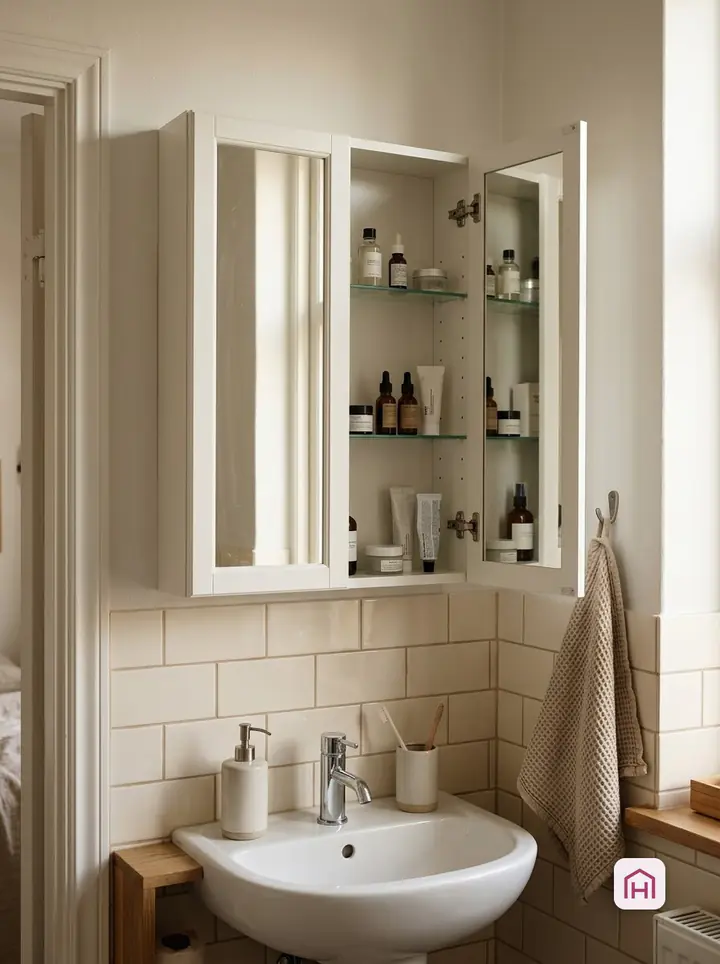
A mirror cabinet instead of a plain mirror
Same wall, hidden storage.
Why it works
Replacing a plain mirror with a mirror cabinet adds storage behind the glass on the same wall.
Materials and furniture
- Mirror cabinet
- Fixings for the wall type
Check first
- Check the existing mirror and outlet positions.
- In a rental, ask before replacing fixtures.
Sort by how it is fixed
In a rental, how a storage piece is fixed matters as much as how much it holds. Start with freestanding, tension and over-door pieces; screwed fixtures come last and may need the landlord's agreement.
| Fixing | Ideas | Check first |
|---|---|---|
| Freestanding | Over-the-toilet unit, rolling cart, baskets | Gap sizes, stability |
| Tension | Shower pole | Firm fit before loading |
| Over the door | Hooks, racks | The door still closes |
| Screwed | Floating shelf, mirror cabinet | Wall type, rental agreement |
Moisture
Storage that lets things dry is better than closed boxes in a damp room. The U.S. Environmental Protection Agency recommends running the fan or opening a window when showering and drying wet surfaces quickly to prevent mold.
Count what needs a home
Separate daily bottles, replacement supplies, towels and cleaning products before choosing a unit. A shallow shelf works for visible daily items; a closed low unit can hide replacements. The useful measure is the largest item plus the space needed to lift it out, not the photograph's apparent cabinet width. Test the bathroom door, cabinet doors and access to plumbing with the proposed unit in place.
Keep the room easy to dry
Leave surfaces accessible for wiping and follow product instructions for a damp location. Moving storage away from a wet patch does not fix a leak. The EPA identifies moisture control as the key to preventing mold; report persistent leaks or dampness rather than hiding them behind a cabinet. [1]
Choose a removable basket before rebuilding storage around every bottle. When the basket becomes difficult to lift or the door no longer closes easily, reduce what you keep there rather than adding another shelf into the same gap.
Filter ideas by room and fixing
Sources
- A Brief Guide to Mold, Moisture and Your Home (last updated February 18, 2026) , U.S. Environmental Protection Agency. checked