Idea gallery · 8 ideas
No closet in the bedroom? 8 clothes storage ideas
Idea gallery 1 source
Start from what you own: count what has to hang (coats, dresses, shirts) and what can fold. Hanging things need a rail or an armoire; folded things fit drawers, underbed storage or shelves. Anchor any tall or drawer-filled furniture to the wall, and keep a curtain or doors in front of open storage if you want the room to feel calm.
-
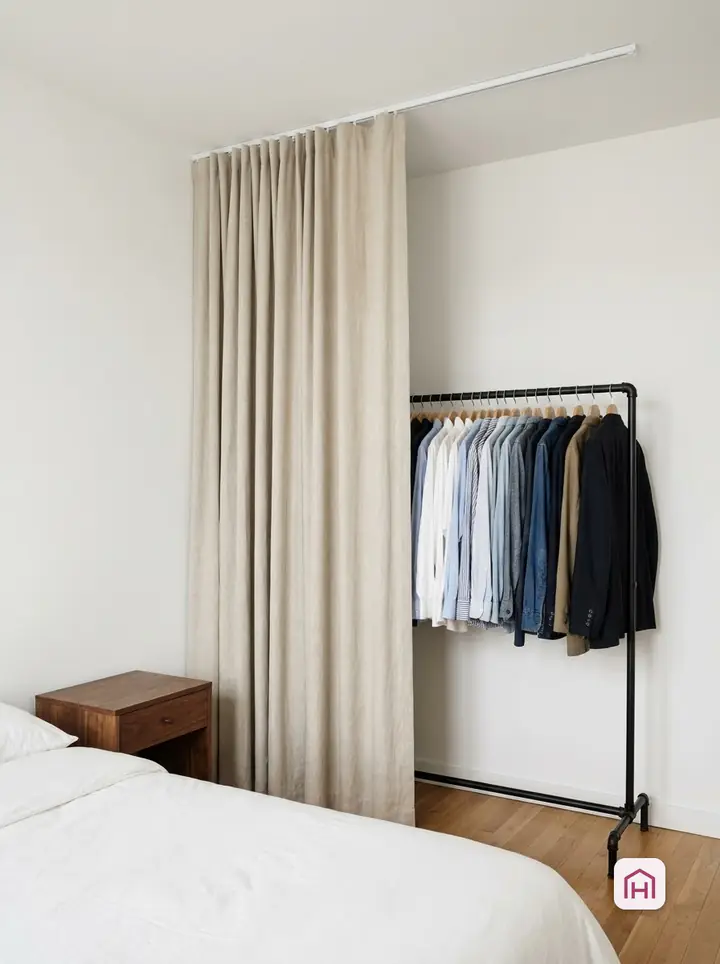
A clothes rail behind a curtain on a ceiling track
All the hanging space of a wardrobe, and a soft wall in front of it.
Why it works
A freestanding rail gives a lot of hanging space without drilling, but it looks busy in a bedroom. A curtain on a ceiling track in front of it turns it into a soft closet you can close.
Materials and furniture
- Freestanding clothes rail
- Ceiling curtain track
- Floor-length curtain
Check first
- The ceiling track is screwed in; ask your landlord first in a rental.
- Leave a little space between clothes and curtain so the fabric hangs straight.
- Open rails collect dust: the curtain helps; covers for rarely worn things help more.
-
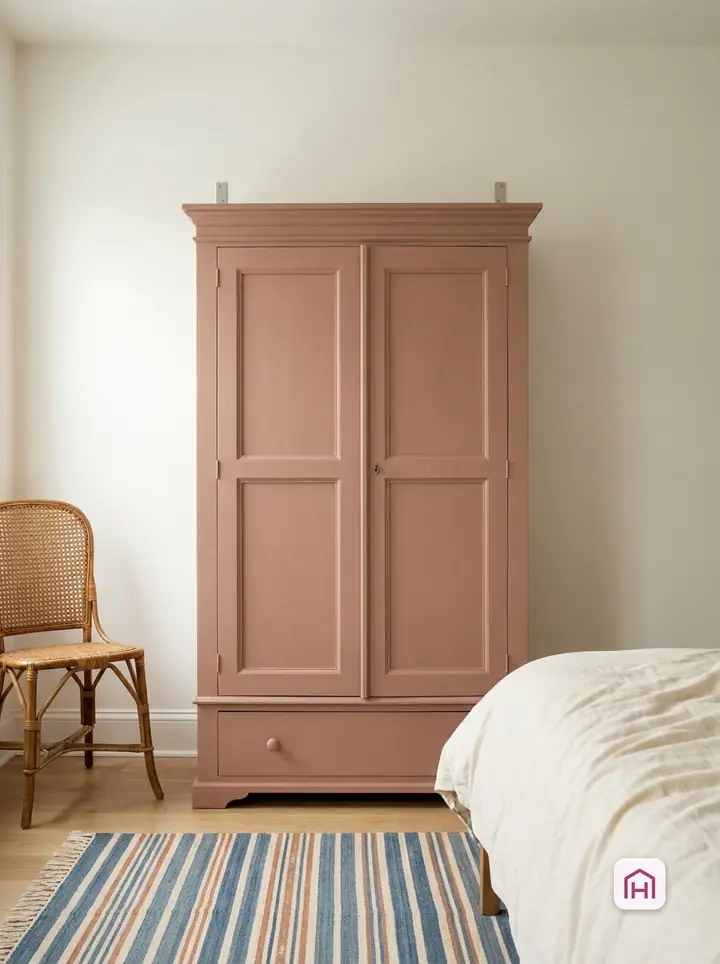
An armoire, secured to the wall at the top
Closed storage that stands on its own, held back by small brackets at the top.
Why it works
An armoire is the classic answer to a bedroom without a closet: hanging space and shelves behind doors, in one piece of furniture you can take with you. Second-hand ones are often solid and deep.
Materials and furniture
- Armoire or wardrobe
- Anti-tip kit suited to the furniture and your wall
Check first
- Anchor it to the wall so it cannot tip forward, especially with children in the home.
- Its doors need room to open in front of it; check against the bed and the room door.
- Leave a little gap in front of a cold outside wall so air can move behind it.
-
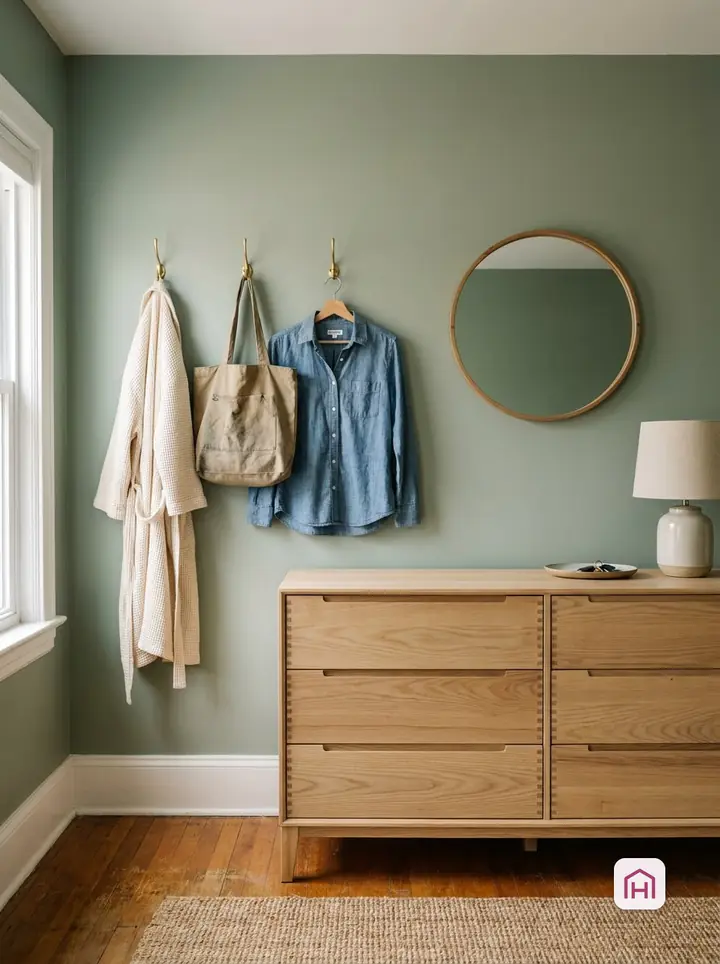
A chest of drawers with hooks above it
Folded things in drawers, today's things on hooks, and no wardrobe at all.
Why it works
Most clothes fold. A chest of drawers takes them, and a few hooks above it hold what you wear again tomorrow, a dressing gown and a bag, so nothing ends up on a chair.
Materials and furniture
- Chest of drawers
- Three to five wall hooks
- Anti-tip kit for the chest
Check first
- Chests of drawers can tip when drawers are pulled out: anchor them.
- Hook height: above the chest's top, below your comfortable reach.
- Hooks are screwed in; check your lease.
-
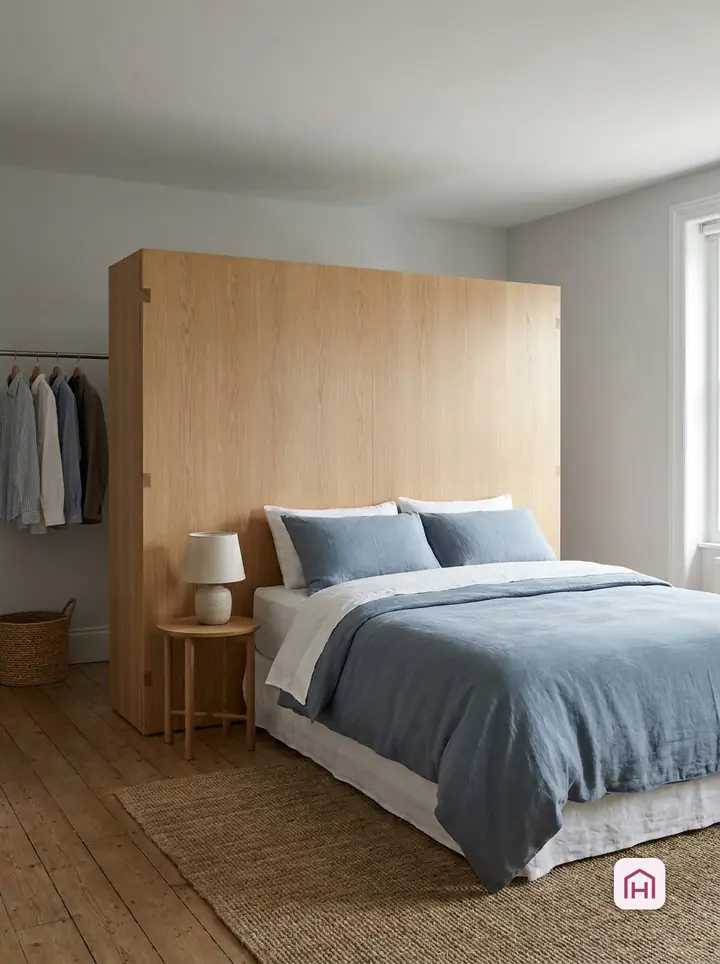
A tall partition behind the bed with clothes on the far side
The bed side stays calm; the clothes live behind the headboard.
Why it works
In a long room, a tall partition behind the bed creates a walk-in strip on the other side. The bed gets a solid headboard wall, and clothes on a rail behind it stay out of sight.
Materials and furniture
- Partition or tall headboard panel
- Hanging rail
- Lighting for the walk-in side
Check first
- This needs a room long enough for the bed, the partition and a walkway behind it.
- A tall freestanding partition must be fixed so it cannot fall; usually a job for a carpenter. The image does not show how it is fixed.
- Check daylight: a partition can darken the far side of the room.
-
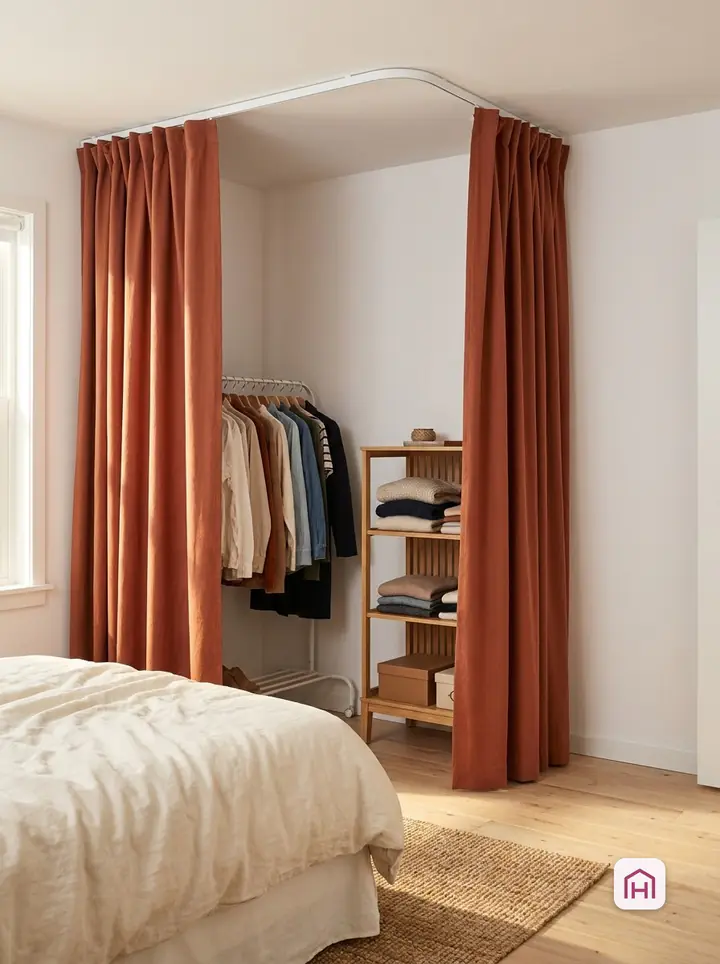
A curtained corner closet on a curved ceiling track
A corner becomes a closet with one curved curtain track.
Why it works
A curtain on an L-shaped ceiling track closes off a corner, and inside there is room for a rail and some shelves. It uses the corner, which furniture rarely uses well.
Materials and furniture
- Bendable ceiling curtain track
- Curtain
- Clothes rail and shelves inside
Check first
- Ceiling track and rail are screwed in: check the ceiling material and your lease.
- Leave enough room inside to reach the rail; a corner that is too shallow does not work.
- No heat sources or lamps behind the curtain.
-
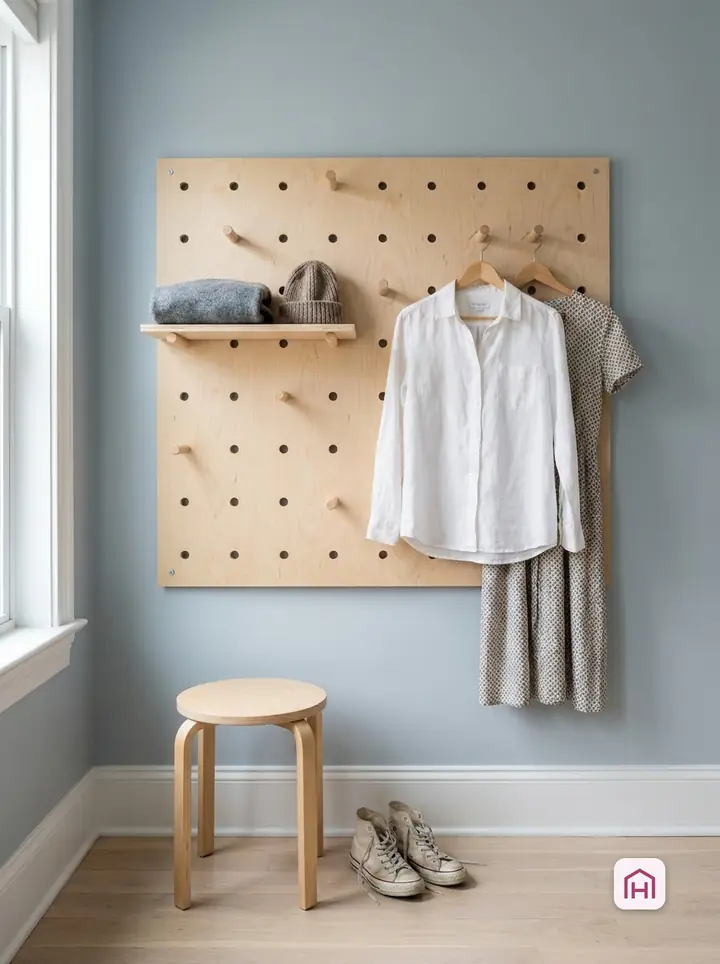
A wooden pegboard for hangers, a shelf and hooks
Pegs, a shelf and hangers move wherever you need them.
Why it works
A pegboard is a wall of possible hooks. Move pegs and a small shelf around as your wardrobe changes, and hang tomorrow's outfit on a hanger from two pegs.
Materials and furniture
- Wooden pegboard with spacers
- Pegs
- Small shelf
- Fixings for your wall
Check first
- The board needs spacers so pegs can go through; fix it into studs or solid wall.
- It is open storage: a few things look good, a full board looks cluttered.
- Hangers on pegs stick out further than hooks; check the walkway past it.
-
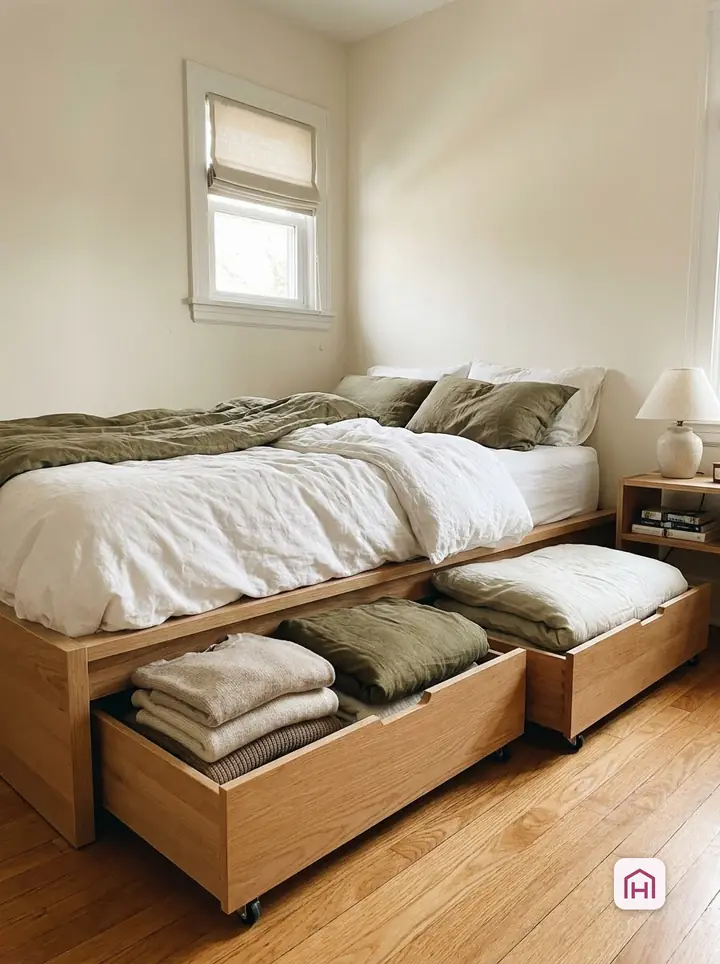
Wide drawers under the bed for folded clothes
Off-season jumpers and spare bedding live under the bed, not in a closet.
Why it works
The space under a bed is often the largest empty volume in a small bedroom. Wide drawers or boxes on castors take folded clothes and bedding, and keep them cleaner than open space under the bed.
Materials and furniture
- Underbed drawers or lidded boxes on castors
- A bed with enough clearance
Check first
- Measure the clearance under your bed, and check the bed frame's legs or slats do not block the drawers.
- Leave room beside the bed to pull the drawers fully out.
- Lidded or closed drawers keep dust out.
-
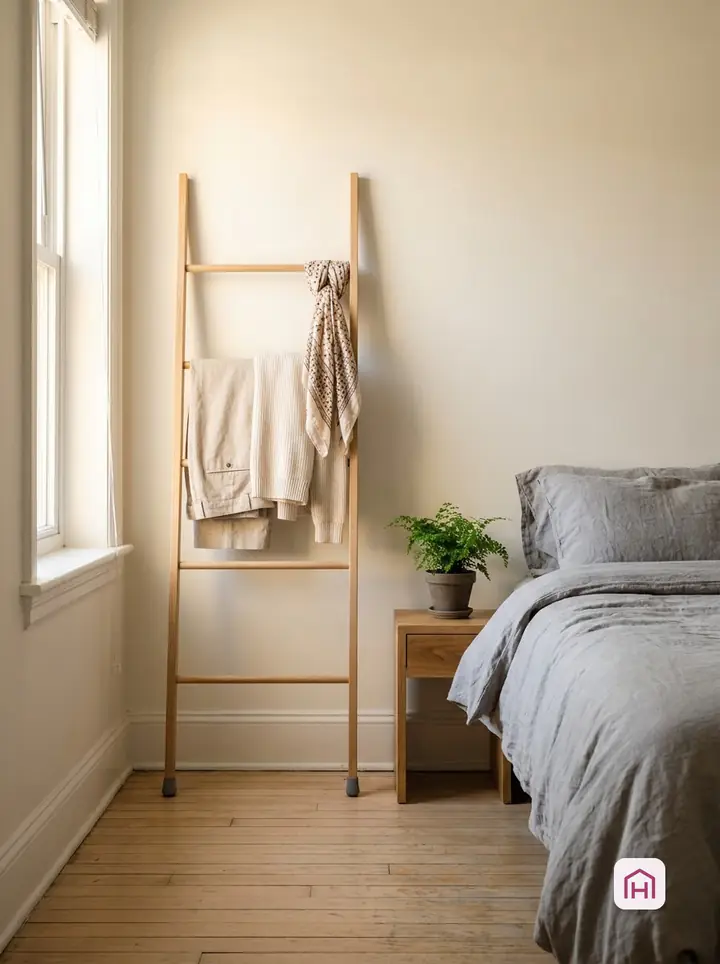
A leaning ladder for tomorrow's outfit
Tomorrow's outfit on the rungs, instead of on the chair.
Why it works
Clothes worn once and not ready for the wash usually pile up on a chair. A ladder against the wall gives them a place to air, and it doubles as the place to lay out tomorrow's outfit.
Materials and furniture
- Wooden ladder for indoor use
- Anti-slip caps
Check first
- A leaning ladder can slip or tip: anti-slip caps, and check the maker's advice on securing it.
- Light clothes only; it is not a coat rack.
- Keep it out of a child's climbing reach, or secure it.
They do not show load ratings or how furniture is anchored.
What do you need to store?
Before choosing furniture, sort what you own into three groups:
- Must hang: coats, dresses, suits, shirts that crease. This decides how much rail you need.
- Can fold: jumpers, T-shirts, trousers, sportswear, underwear. These fit drawers, shelves and underbed storage, which take less wall than a rail.
- Rarely used: off-season clothes and spare bedding. These can go under the bed or high up.
The smaller the "must hang" group, the more of the ideas below work for you.
With or without drilling
- No drilling: a freestanding clothes rail, a chest of drawers, underbed drawers and a leaning ladder.
- Small holes: an anchor bracket for an armoire or a tall partition, which is worth asking your landlord about.
- Fixings needed: ceiling curtain tracks, a pegboard and wall hooks. They need fixings suited to your wall or ceiling, and in a rental, permission.
Dust and light
Open rails and pegboards are cheap and flexible, but clothes on them collect dust, and sunlight fades dark fabrics over time. A curtain in front of a rail, covers for rarely worn things and keeping open storage out of direct sun all help.
Anchoring
Wardrobes, armoires, chests of drawers and tall partitions can tip forward when doors are opened, drawers pulled out or a child climbs them. Anchoring them to the wall helps prevent tip-over injuries, and children are most at risk [1]. Use the anti-tip kit for your furniture with fixings that suit your wall; in a rental, the small holes for an anchor are worth asking your landlord about.
Filter ideas by room and fixing
Sources
- Anchor It! , US Consumer Product Safety Commission (CPSC). checked