Idea gallery · 8 ideas
Bookcase room dividers: 8 storage walls that split a studio
Idea gallery 1 source
A bookcase divider splits a studio into zones and adds storage at the same time. Open units let light through; backed units give more privacy. A freestanding divider stands away from the wall, so it must be secured, to the floor, to the ceiling or to a side wall, and heavy books go on the lowest shelves.
-
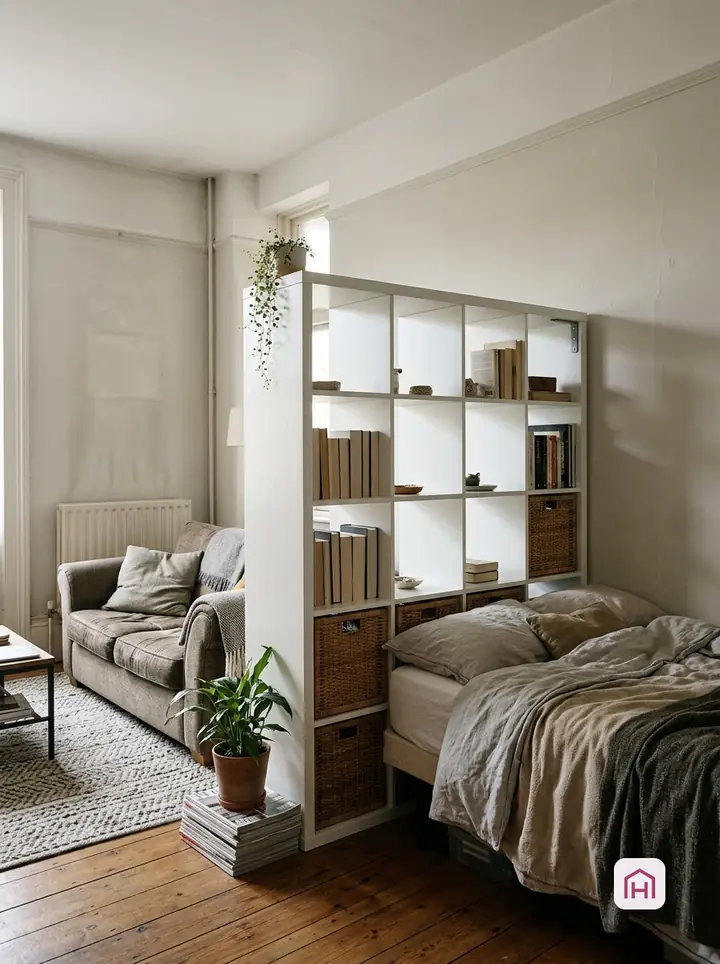
An open cube unit, used from both sides
Storage for both rooms, light for both.
Why it works
An open cube shelving unit at right angles to the wall divides bed and living area; both sides can use the cubes, and light passes through.
Materials and furniture
- Open cube shelving unit
- Fixing to the side wall
Check first
- Fix one end to the wall. The fittings in the picture are illustrations, not tested anchoring; use the maker's anti-tip kit.
- Heavy items in the bottom cubes; nothing heavy on top.
- Baskets for things you don't want on show.
-
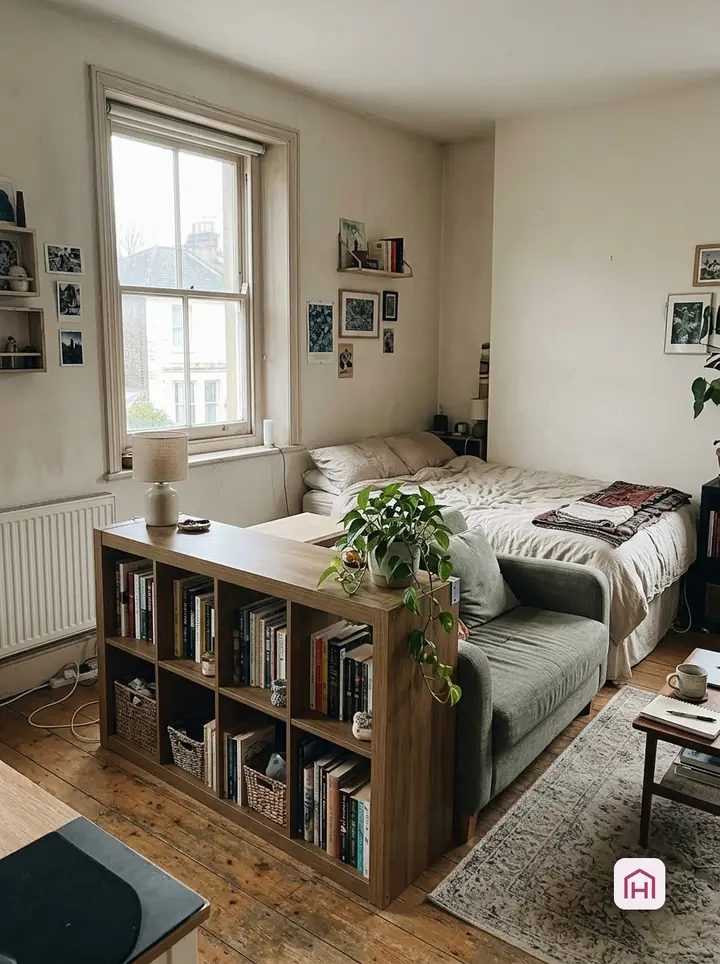
A half-height bookcase beside the sofa
Marks the living area, keeps the view.
Why it works
A low bookcase beside the sofa marks the edge of the living area without blocking the view across the studio. A lamp on top needs a tidy cable route; in the picture a cable loop lies on the floor.
Materials and furniture
- Low bookcase
- Anti-tip fixing
Check first
- Low units can still tip if climbed; secure them.
- Lamps on top need a cord path.
- Leave a walkway at the end.
-
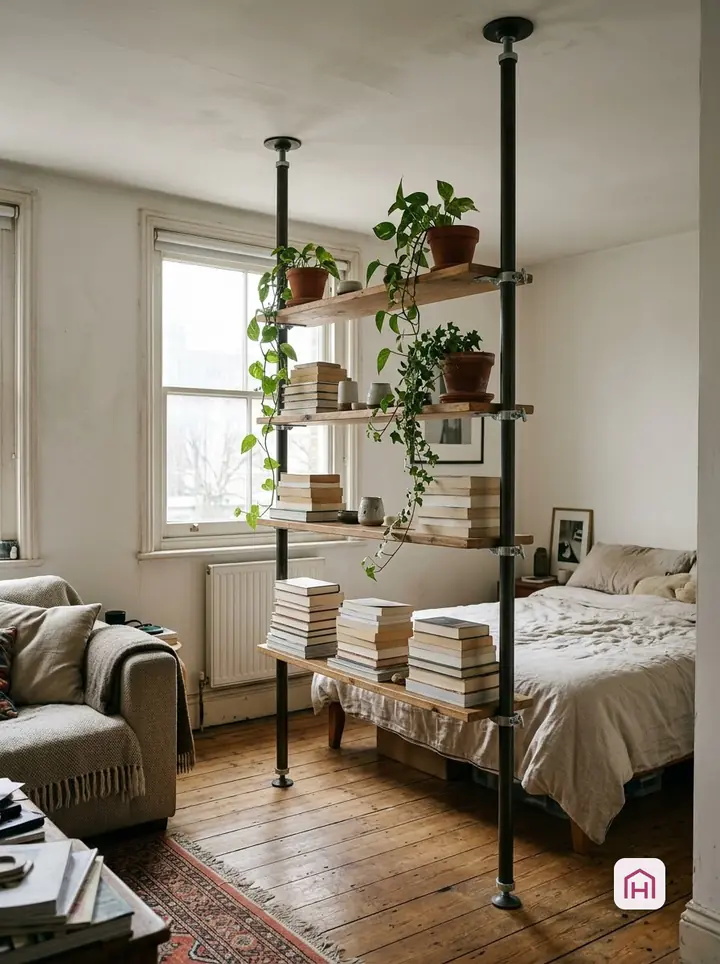
A floor-to-ceiling pole shelf
Poles between floor and ceiling, shelves in between.
Why it works
A shelving system on poles pressed between floor and ceiling can stand in the middle of the room. Whether it holds without drilling depends on your ceiling and the maker's limits; the picture does not show a tested mount.
Materials and furniture
- Tension pole shelving system
Check first
- Only within the maker's ceiling heights and loads.
- Check the tension regularly.
- Needs a solid ceiling.
-
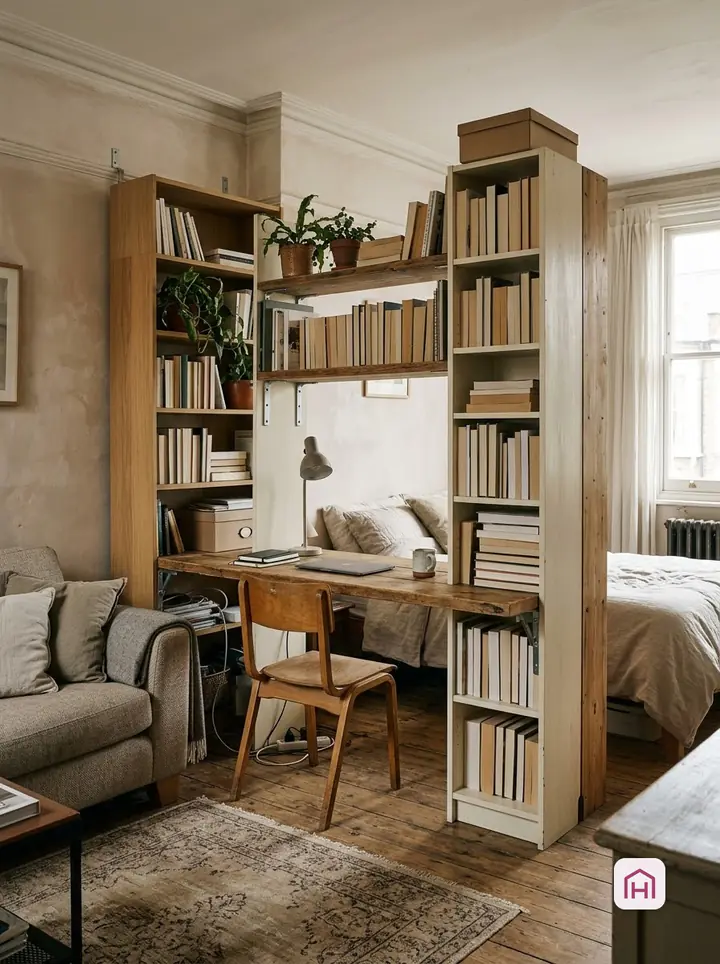
Two bookcases bridged by a desk
A desk built into the divider.
Why it works
Two bookcases with a desktop and shelves bridging the gap between them make a divider with a built-in workspace.
Materials and furniture
- Two bookcases
- Desk top
- Fixings
Check first
- Join the units securely to each other and fix the divider. The fittings in the picture are illustrations, not tested anchoring; use the maker's anti-tip kit.
- Cables tidy along the units, not loose on the floor as in the picture.
- Heavy books on the lowest shelves.
-
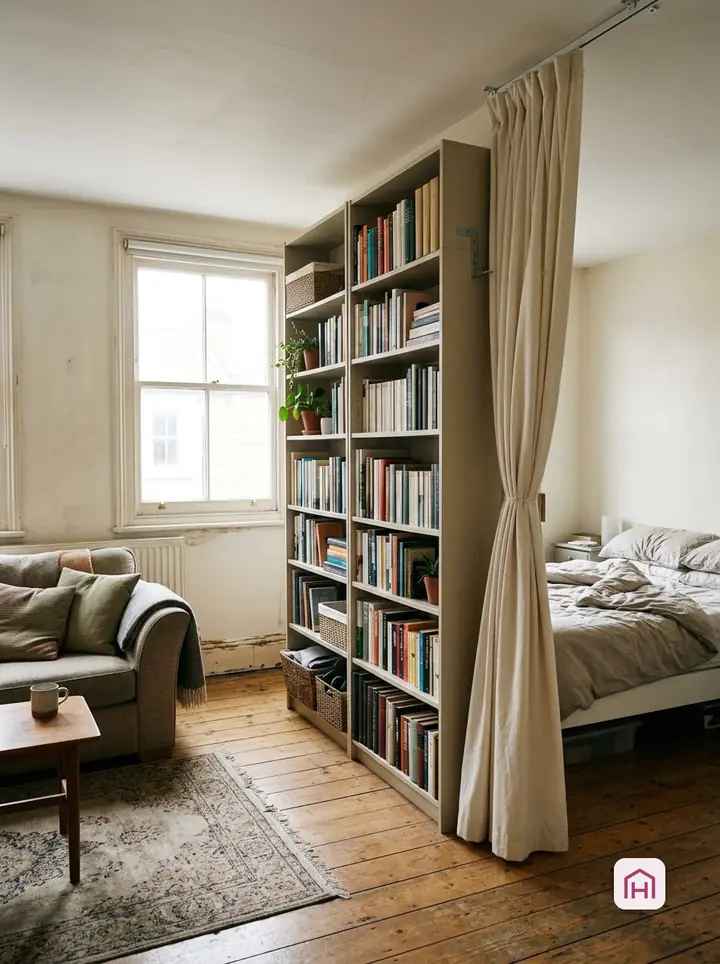
A bookcase with a curtain on one side
A curtain beside it closes the bed off at night.
Why it works
A curtain on a ceiling track beside the bookcase can close off the bed area at night; in the picture it is tied back for the day.
Materials and furniture
- Bookcase
- Ceiling track
- Curtain
Check first
- Curtain clear of lamps and heaters.
- Fix the track securely.
- Secure the bookcase. The fittings in the picture are illustrations, not tested anchoring; use the maker's anti-tip kit.
-
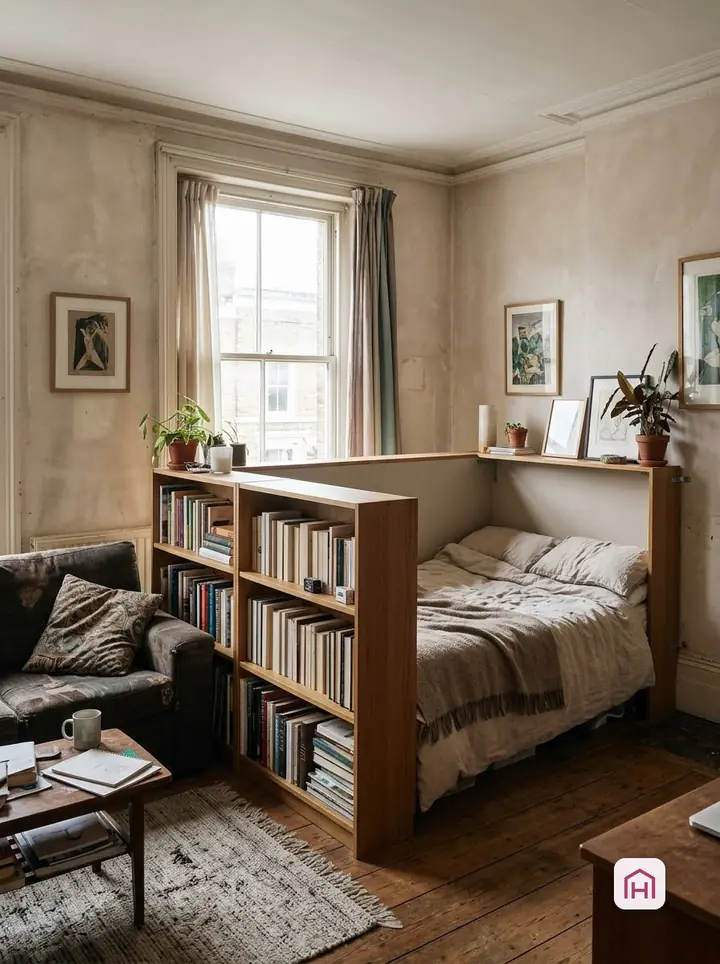
An L-shaped arrangement around the bed
Two bookcases make a bedroom.
Why it works
Two bookcases in an L around the bed form a nook, with books on the outside. In the picture the ledge above the bed holds plants and frames; above a bed only light, secured things belong.
Materials and furniture
- Two bookcases
- Fixings
Check first
- Secure each unit. The fittings in the picture are illustrations, not tested anchoring; use the maker's anti-tip kit.
- Nothing heavy or loose above the bed.
- Keep a gap for air and access.
-
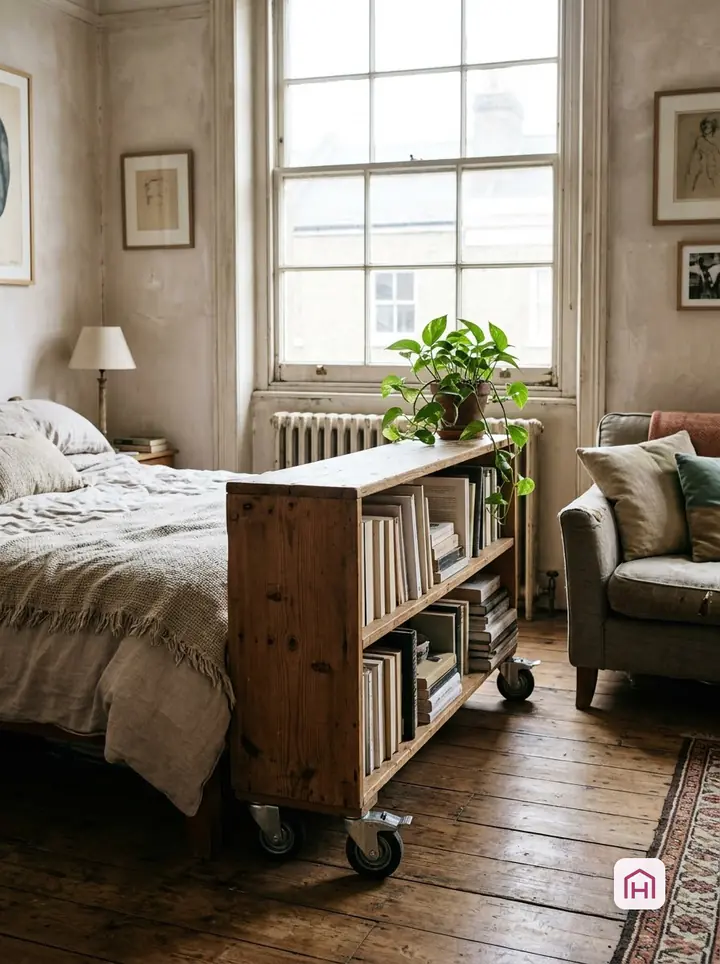
A low unit on castors
Move the wall when you need to.
Why it works
A low bookcase on castors can move to open up the room or close off the bed. Choose castors that lock; whether these do, the picture does not show.
Materials and furniture
- Low bookcase on locking castors
Check first
- Low units only; tall ones on wheels tip.
- Lock the castors and keep loads light.
- Do not park it against a radiator.
-
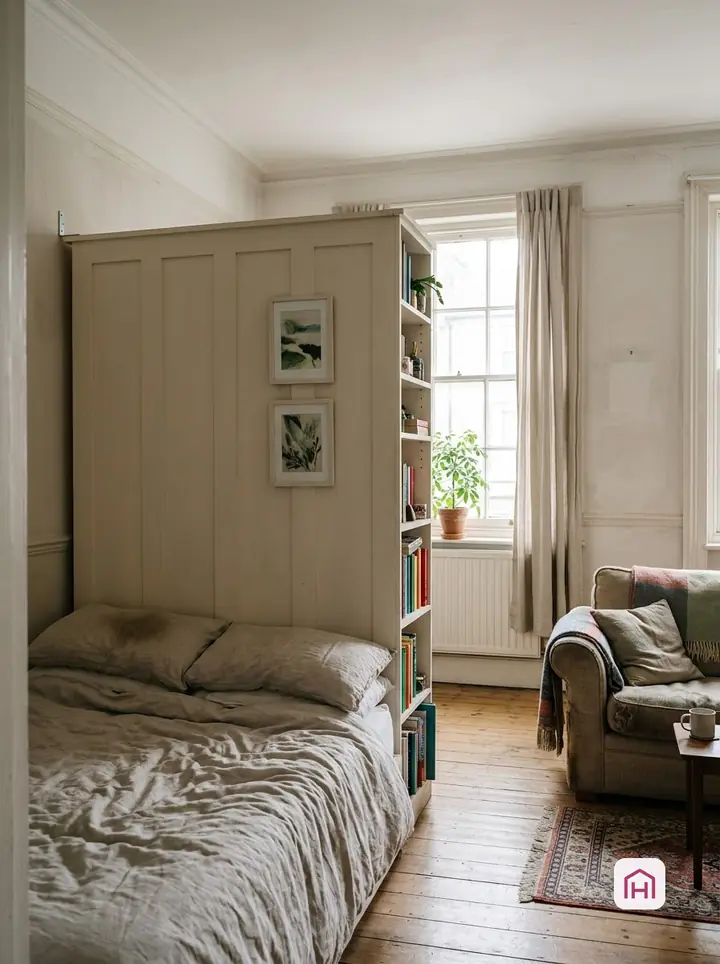
A backed unit with art on the back
One side shelves, the other side a gallery.
Why it works
A bookcase with a solid back faces the living area with its shelves; its back faces the bed and carries two prints.
Materials and furniture
- Backed bookcase
- Light prints
- Fixings
Check first
- Secure the bookcase.
- Light frames only on the back.
- Check light still reaches the bed side.
Open or backed
An open bookcase, with no back, lets light through from the window to the rest of the room and can be used from both sides. A backed bookcase gives more privacy, for example in front of the bed. Our comparison of room-divider types covers curtains, screens and partitions as well.
Secure it
A bookcase against a wall can be strapped to that wall. A divider stands in the room, so it needs another fixing: to a side wall at one end, to the floor, or to the ceiling with a tension system. Anchor It!, the US Consumer Product Safety Commission campaign, says anchoring furniture with shelves prevents tip-over injuries and deaths [1]. Heavy books always go on the lowest shelves.
Light and air
Leave the window side open so daylight reaches the whole room, and don't put a divider in front of a radiator.
Filter ideas by room and fixing
Sources
- Anchor It! , US Consumer Product Safety Commission (CPSC). checked