Idea gallery · 8 ideas
Coffee bar ideas outside the kitchen: 8 setups for a sideboard, cart or cupboard
Idea gallery 1 source
A coffee bar outside the kitchen works on furniture that can hide the machine and survive water, heat and steam: a pull-out shelf, a tray or a mat under the machine, space above it for steam, and its own wall socket rather than a chain of power strips. Close the doors when you are done, and the living room stays a living room.
-
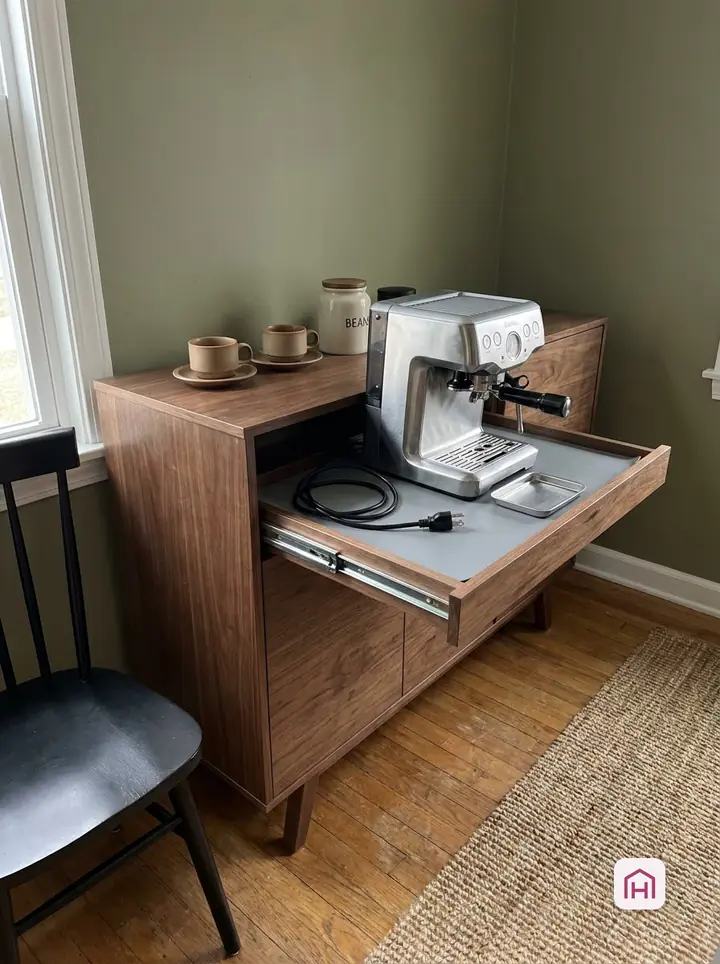
A sideboard with a pull-out shelf for the machine
Pull it out to brew, push it back to hide the machine.
Why it works
A sideboard with a pull-out shelf lets the machine come forward when you use it and disappear into the cabinet afterwards. The top stays free for cups and beans.
Materials and furniture
- Sideboard with a pull-out shelf on runners
- Water-resistant mat under the machine
- Socket behind the sideboard
Check first
- Follow the machine's manual for clearances and ventilation; steam and heat damage veneer.
- The pull-out and its runners must be rated for the machine's weight.
- Plan a cable route and a wall socket behind the sideboard; the image shows the machine unplugged.
-
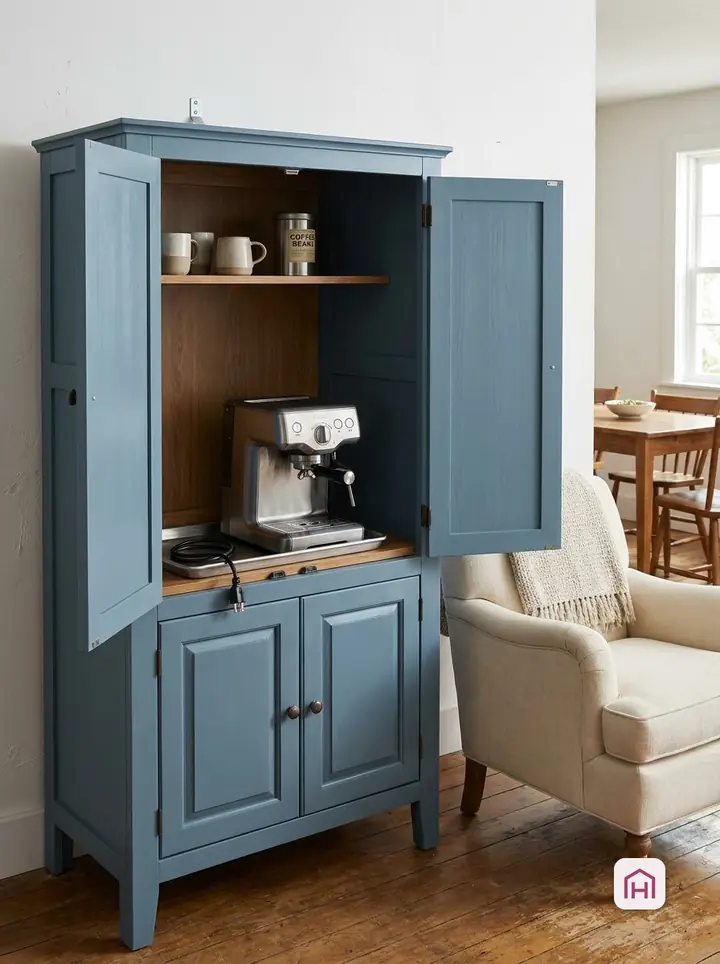
An armoire with a tray for the machine
Doors open for coffee, doors closed for the living room.
Why it works
An armoire hides the whole station: machine, cups, beans and filters. With the doors closed, the living room shows nothing of it.
Materials and furniture
- Armoire or tall cabinet
- Tray to catch drips
- Anti-tip fixing
Check first
- Use the machine with the doors open and follow its manual for clearances and ventilation.
- Tall cabinets must be anchored to the wall.
- The machine needs a wall socket within reach; route the cable out of the back.
-
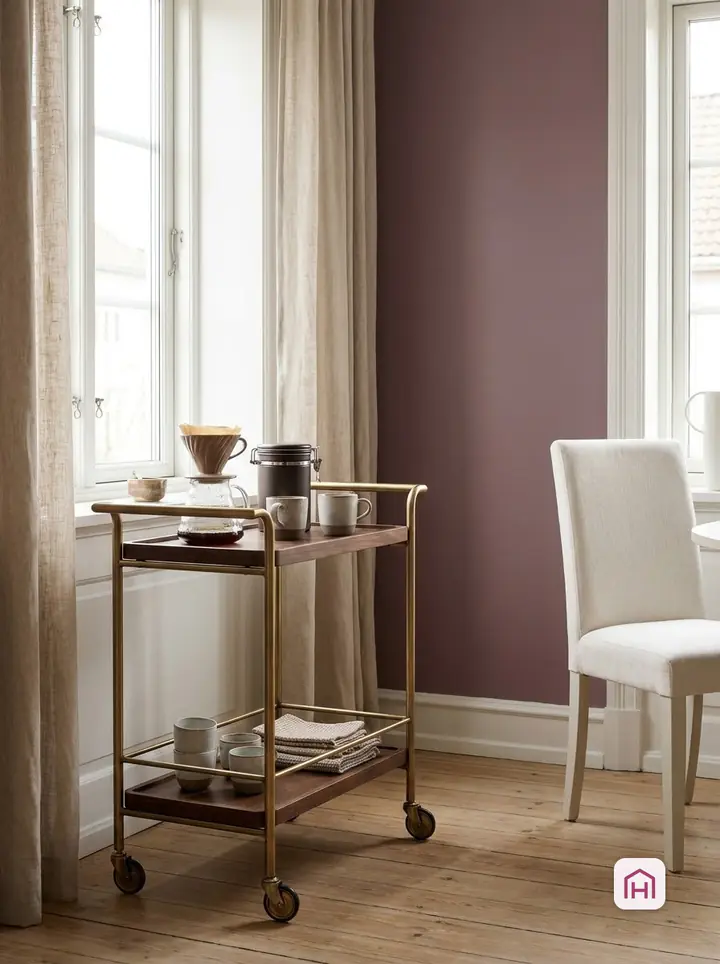
A bar cart by the window with a pour-over set
Slow coffee in the best light, and no machine at all.
Why it works
A pour-over set needs no power at the cart: hot water comes from the kettle, the coffee is made where the light is best, and the cart rolls aside when it is not needed.
Materials and furniture
- Sturdy bar cart with locking castors
- Pour-over dripper and carafe
- Canister and cups
Check first
- Lock the castors before pouring hot water.
- Carry hot water carefully across the room, and keep it out of children's reach.
- Rimmed shelves stop cups from sliding when the cart moves.
-
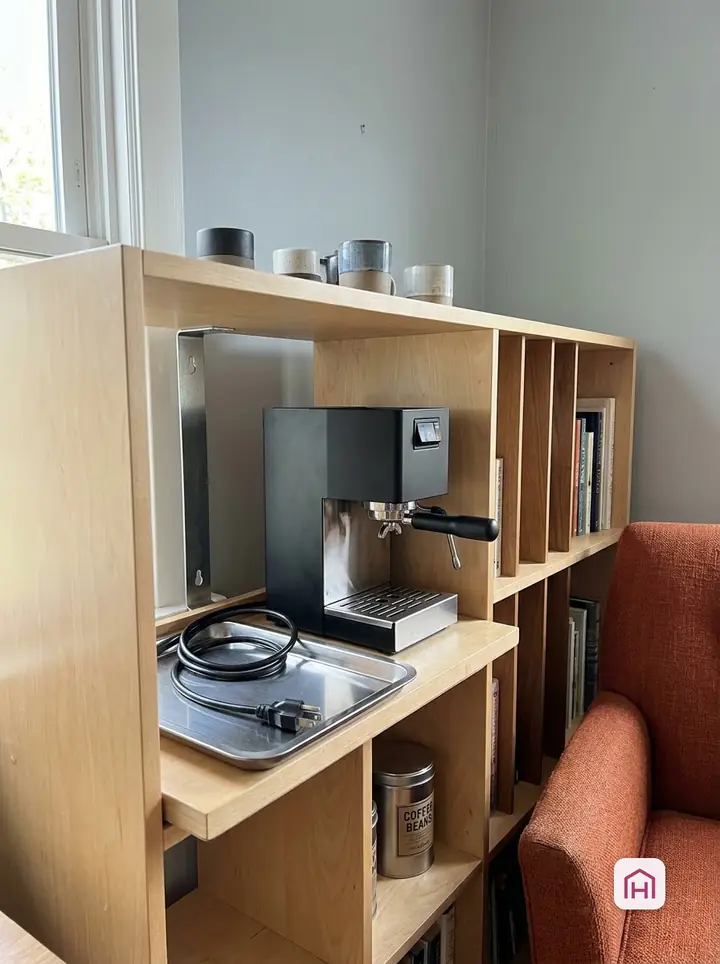
A pull-out shelf in one bookcase section
One section for coffee, the rest of the shelf stays books.
Why it works
One section of an open bookcase can hold a compact machine on a pull-out shelf, with mugs on top and beans below. The coffee corner looks like part of the shelving.
Materials and furniture
- Bookcase section with a pull-out shelf
- Water-resistant mat under the machine
- Cable route to a wall socket
Check first
- In the image the tray sits beside the machine; put a water-resistant mat under the machine itself.
- A heavy machine makes a bookcase front-heavy when pulled out; anchor the bookcase.
- Follow the machine's manual for clearances; shelves are not heat-resistant.
-
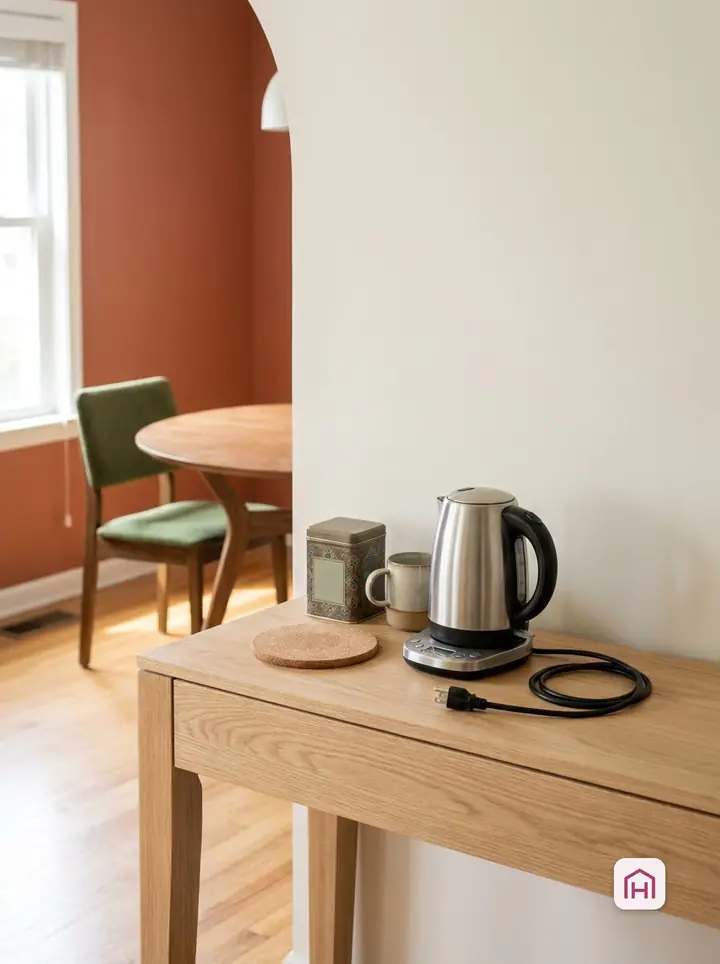
A console by a doorway with a kettle and a tea tin
Tea or instant coffee on the way out, made by the door.
Why it works
If you make a hot drink to take out every morning, a console near the door with a kettle and a tin saves a trip to the kitchen.
Materials and furniture
- Console table
- Kettle
- Heat-resistant mat under the kettle base
Check first
- A kettle needs its own wall socket and a stable surface; the cork mat in the image lies beside it, not under it.
- Keep the console out of the door swing and the walkway.
- Not where children can pull on the cable; anchor a light console.
-
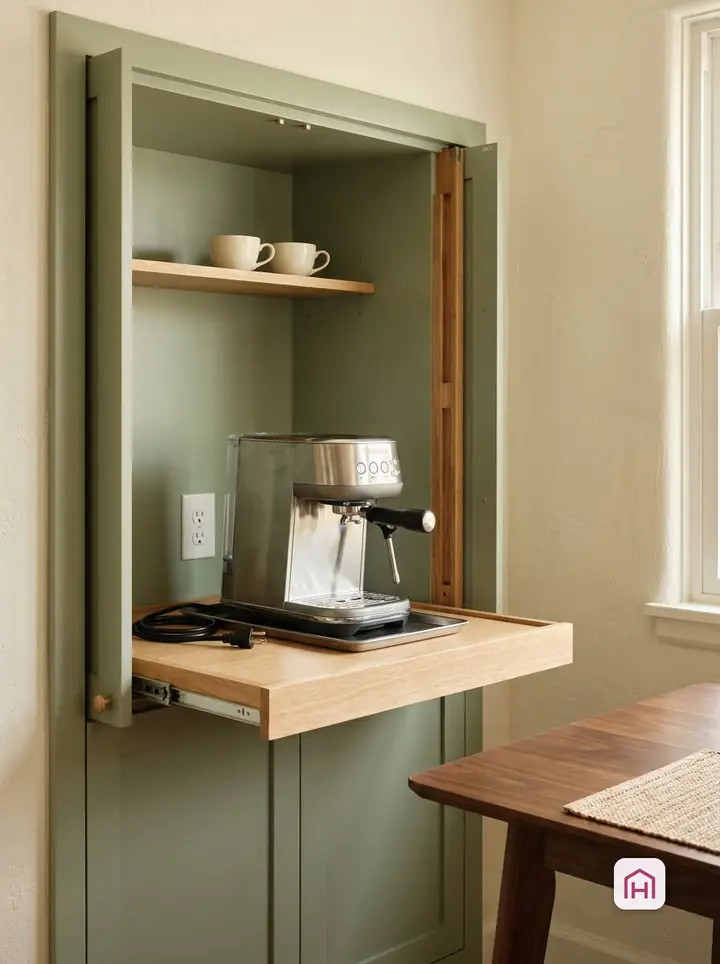
A built-in cupboard with pocket doors that slide out of the way
Doors that disappear into the sides while you use it.
Why it works
Pocket doors slide back into the cupboard sides, so an open coffee cupboard has no doors sticking into the room. A socket inside keeps the cable short.
Materials and furniture
- Built-in cupboard with pocket door hardware
- Pull-out shelf
- Socket inside the cupboard
Check first
- This is joinery and electrical work: a carpenter for the cupboard, an electrician for the socket.
- Not a renter-friendly idea.
- Follow the machine's manual for clearances and ventilation inside the cupboard.
-
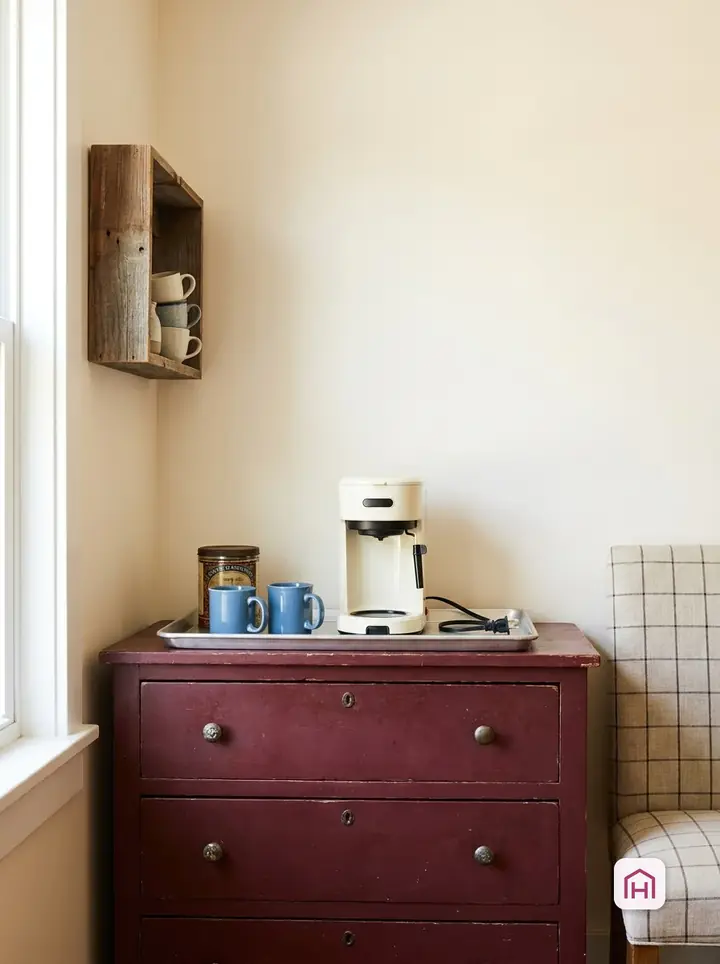
A dresser top with a crate shelf for mugs
The drawers hold beans and filters; the crate shows the mugs.
Why it works
A chest of drawers makes a good coffee station: the top holds the machine on a tray, the drawers hold supplies, and a crate on the wall displays the mugs.
Materials and furniture
- Chest of drawers
- Metal tray
- Wooden crate as a wall shelf, fixings suitable for the wall
Check first
- Protect the top with a tray or mat, as in the image.
- Fix the crate to the wall with suitable fixings; how it is fixed is not shown.
- Anchor the chest of drawers.
-
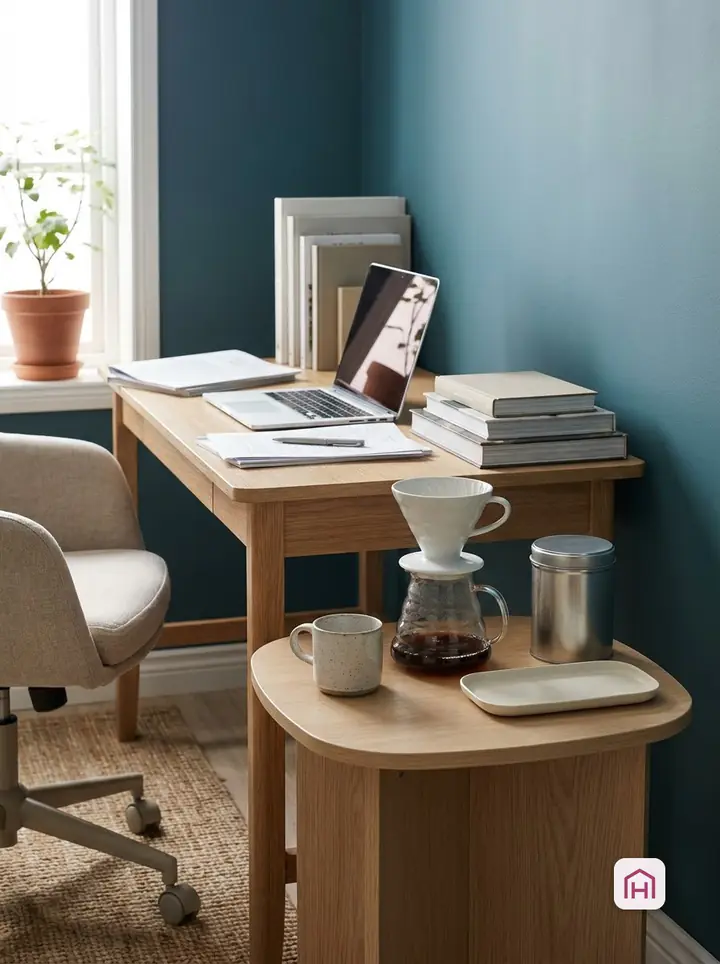
A pour-over set on a side table next to the desk
Coffee for one, on its own table, away from the laptop.
Why it works
For working from home, a pour-over set on its own small table beside the desk saves trips to the kitchen and keeps the coffee off the work surface.
Materials and furniture
- Small side table
- Pour-over dripper and carafe
- Tray
Check first
- Keep liquids away from the laptop and any extension leads.
- A separate side table is safer than the desk itself.
- Hot water comes from a kettle on its own wall socket.
They show no particular brand and are not product recommendations. Appliances are shown switched off and unplugged: the pictures do not demonstrate safe operation inside furniture. For clearances and ventilation, follow the manual of your appliance.
Why move it out
In a small kitchen, the coffee machine takes worktop space that is needed for cooking. In a studio or an open-plan room, the living area may have a better spot anyway: by a window, near the sofa, beside the desk. A coffee bar on living-room furniture can also be closed away when guests come.
Water, steam and power
- Protect the surface. Living-room furniture is rarely made for spills and heat. Put the machine on a tray, a heat- and water-resistant mat or a pull-out shelf.
- Let steam escape. Steam rising into a shelf or a closed cabinet damages veneer and edges over time. Brew with doors open or with the machine pulled forward, and leave space above it.
- Its own socket. Multiple-socket strips are designed for a limited power and should not be plugged into each other; VDE advises connecting large household appliances to their own socket rather than through extension leads or multiple sockets [1]. A wall socket of its own is the safest choice for a machine that heats water.
- Cables. Route them behind or through the furniture, never across a walkway.
Closing it away
Choose furniture whose doors either slide back, fold flat or stand open without blocking the room, and make sure the machine has cooled before the doors close. A small basket or drawer for beans, filters and cleaning tablets keeps everything in one place, and a cloth stored nearby makes wiping up a habit.
Filter ideas by room and fixing
Sources
- Electrical appliances in everyday life , VDE (consumer protection). checked