Idea gallery · 8 ideas
Colour drenching a small room: 8 examples from hallway to bedroom
Idea gallery 0 sources
Colour drenching means painting walls, trim, doors, radiators and often the ceiling in the same colour. In a small room it removes the contrast lines around every edge, so the room reads as one calm space. Each surface needs a paint made for it, in the same colour, and bathrooms and kitchens need paint rated for humidity and grease.
-
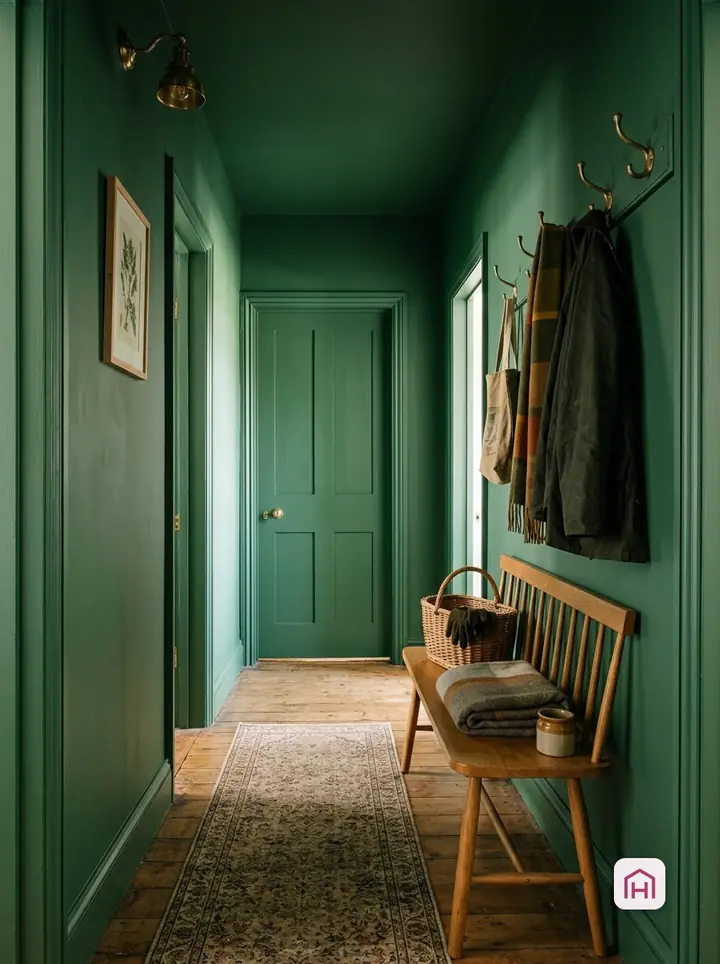
A narrow hallway drenched in deep green
When the trim disappears, a narrow hallway stops looking chopped up.
Why it works
Hallways are full of edges: doors, frames, skirting, radiators. Painting them all the wall colour removes the contrast lines, so the narrow space reads as one calm, enveloping room.
Materials and furniture
- Wall paint in the chosen colour
- Matching durable paint for wood and metal trim
Check first
- Trim and doors need paints made for those surfaces, in the same colour.
- Dark colours show scuffs; choose a wipeable finish where people brush past.
- The bench and coats take passage width; check what is left. Colours in AI images are approximate: test real samples on your own walls, morning and evening.
-
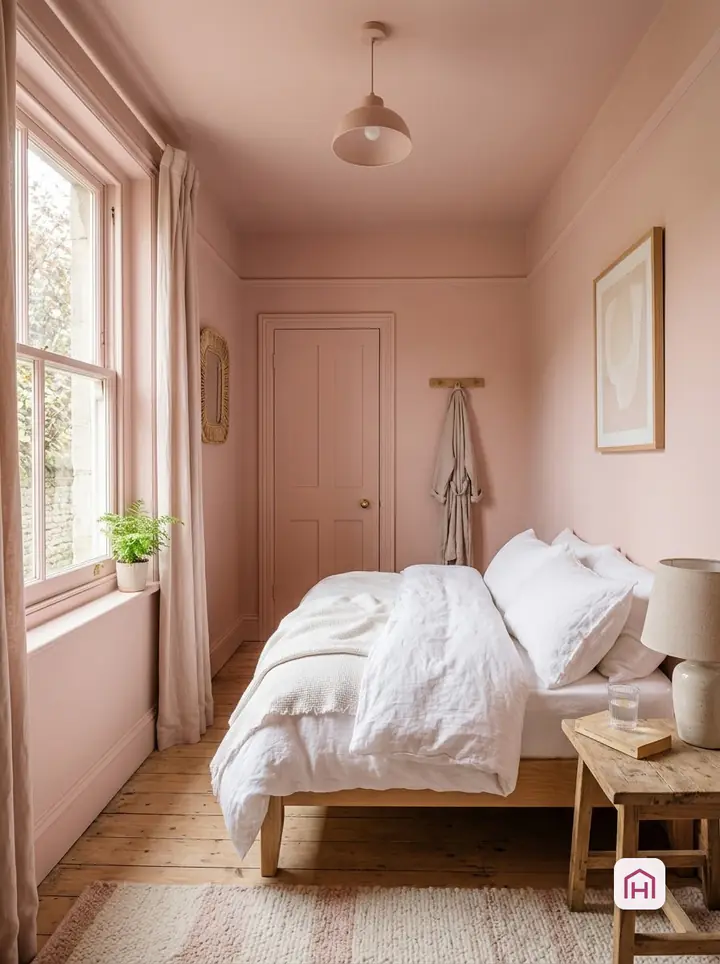
A small bedroom drenched in soft blush
A light colour drench feels like warmth, not like paint.
Why it works
Drenching does not have to be dark. A soft blush on walls, ceiling and trim makes a small bedroom feel wrapped and warm, while staying light.
Materials and furniture
- Wall and ceiling paint in blush
- Matching trim paint
Check first
- Pale colours on the ceiling look darker than on the walls; test there too.
- Colours in AI images are approximate: test real samples on your own walls, morning and evening.
- White bedding and curtains keep the blush from feeling too sweet.
-
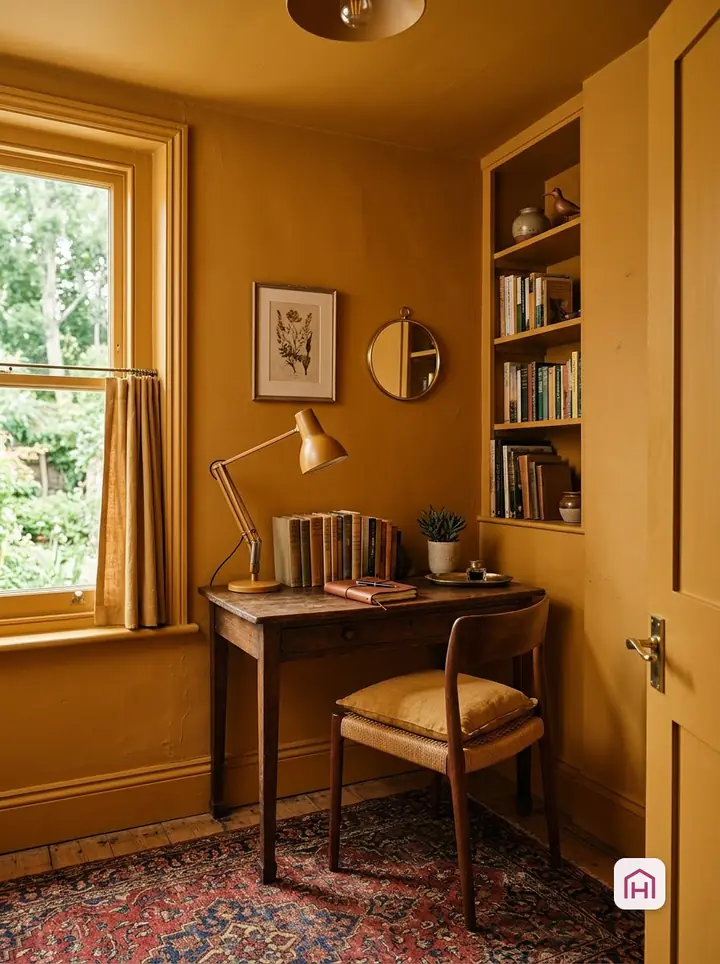
A small study drenched in ochre
A warm, enclosing colour for a room that should feel focused.
Why it works
A box room used as a study can feel like a cupboard. An ochre drench turns its smallness into a feature: warm and enclosing, like a library corner.
Materials and furniture
- Wall, ceiling and trim paint in ochre
- Good task lighting
Check first
- Strong colours reflect onto skin and paper; a neutral desk lamp helps.
- Colours in AI images are approximate: test real samples on your own walls, morning and evening.
- Book titles in the picture are image artefacts, not recommendations.
-
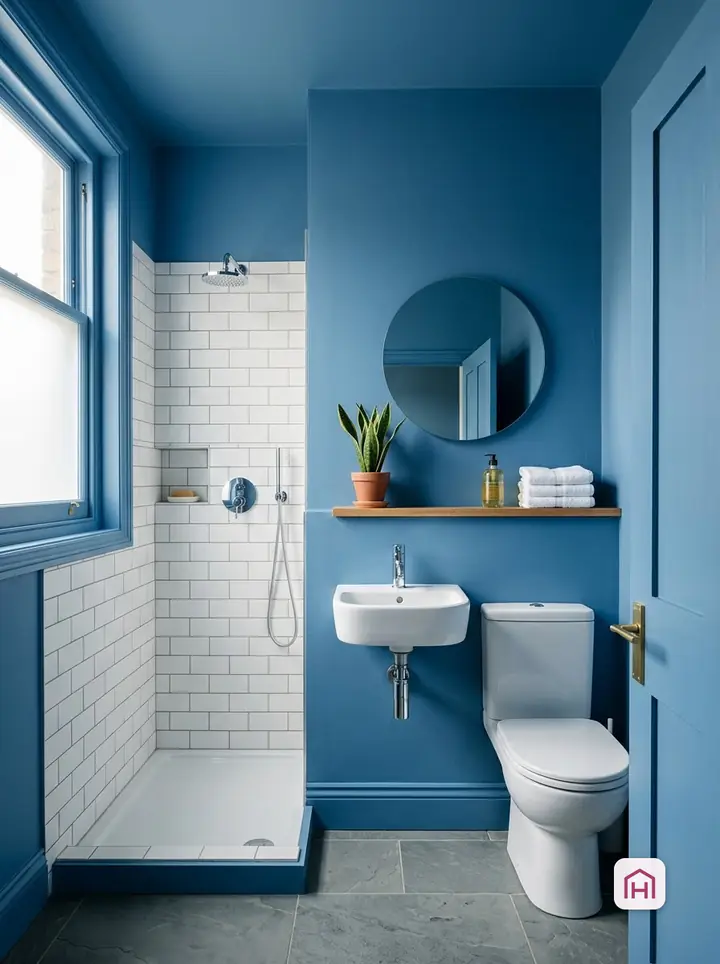
A small bathroom in blue, with tiles where water lands
One colour on every painted surface; tiles inside the shower.
Why it works
Small bathrooms are cut up by tiles, doors and fittings. Painting every surface that is not tiled in one colour pulls them together. The shower here is open, without a screen, so water will reach beyond the tiles: plan the tiled or waterproof area for that.
Materials and furniture
- Paint made for bathrooms and humid rooms
- Matching paint for door and trim
Check first
- Use paint made for bathrooms; ordinary paint can peel and grow mould in steam.
- Paint is not a waterproof finish: keep tiles or other waterproof surfaces wherever water lands. The picture does not show which surfaces are protected, and an open shower splashes further.
- Ventilate well while painting and after every shower.
-
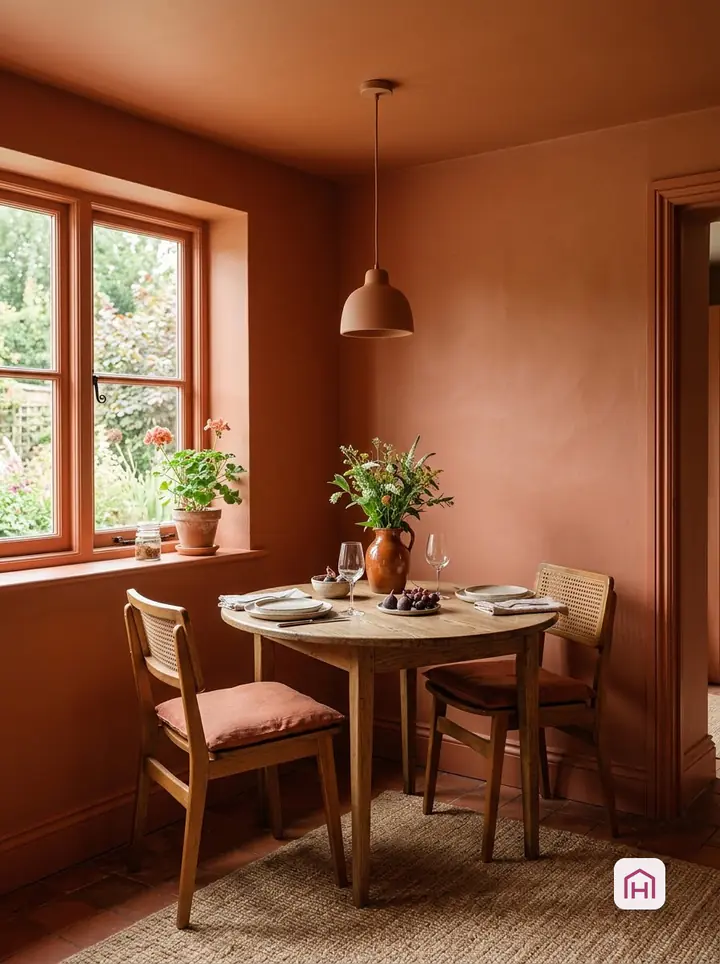
A dining nook drenched in terracotta
A colour drench can mark a zone, not only a room.
Why it works
Drenching works on part of a room too. Painting a dining nook's walls and ceiling in terracotta turns it into a warm, separate place to eat, distinct from the rest of the space.
Materials and furniture
- Paint in terracotta for walls and ceiling
- Painter's tape to define the nook
Check first
- Decide exactly where the colour stops, especially on the ceiling.
- Colours in AI images are approximate: test real samples on your own walls, morning and evening.
- Near a kitchen, a wipeable finish helps.
-
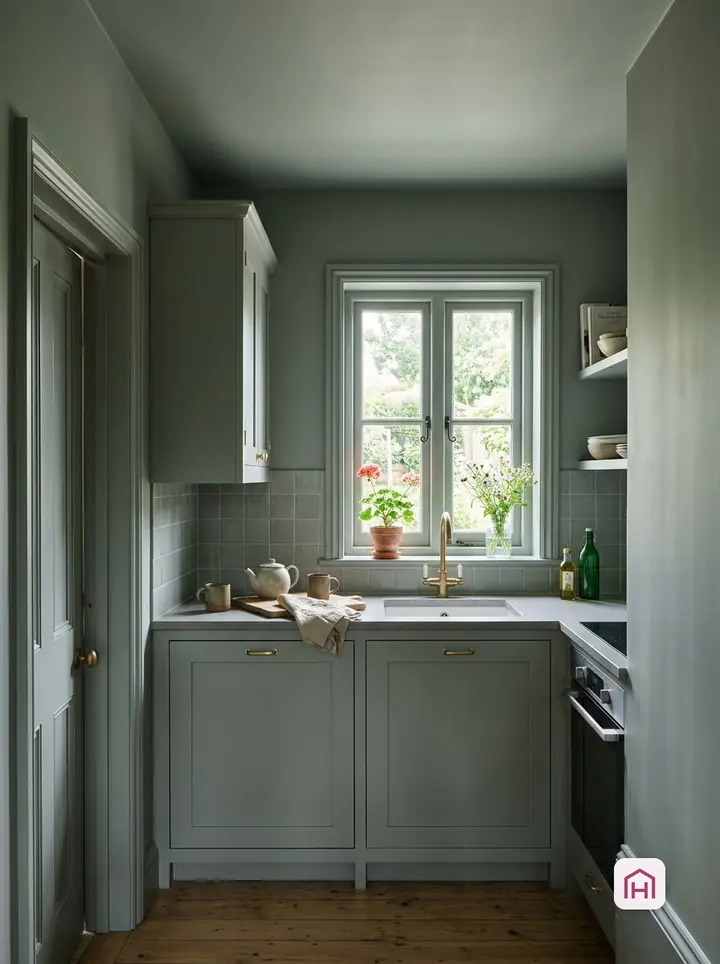
Grey-green kitchen walls and trim
Walls, trim and cabinets in one family of grey-green.
Why it works
In a small kitchen, white trim against coloured walls adds busy lines around every opening. Walls, trim and cabinets in tones of one grey-green make the room calm; the worktop and brass are the only contrast.
Materials and furniture
- Wall paint suited to kitchens
- Matching trim paint
Check first
- Walls, cabinets and tiles need different products; they will not match exactly, and the picture shows slightly different shades.
- Kitchen walls need a wipeable, grease-resistant finish; keep paint behind the hob to what the hob maker allows.
- Painting cabinets is a separate, bigger job; in a rental, ask first.
-
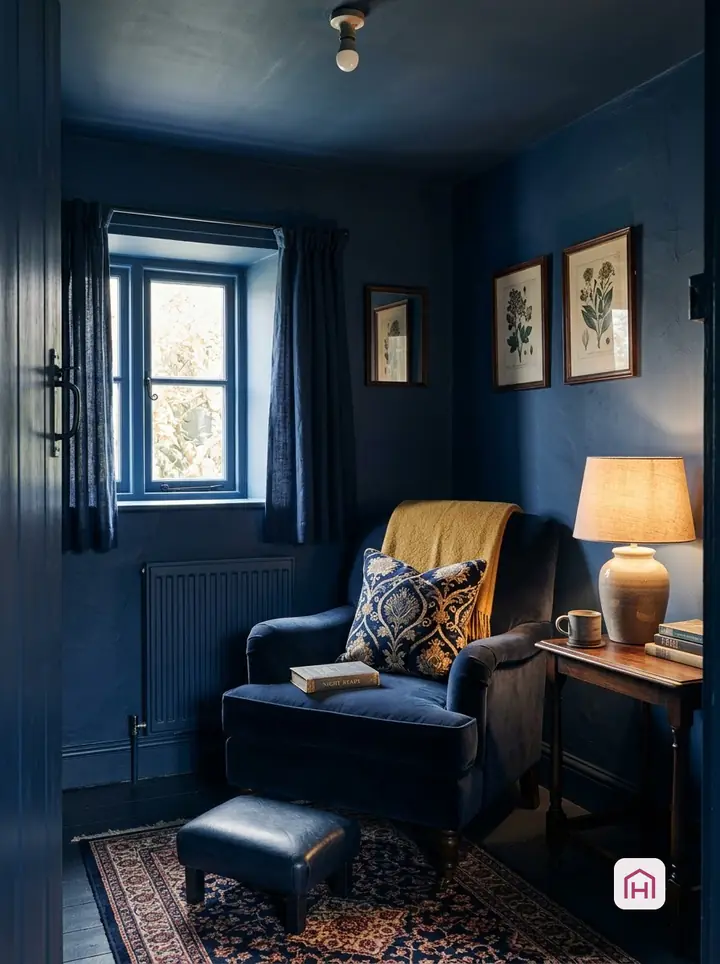
A small snug drenched in navy
Dark, on purpose: the room feels cosy instead of trying to look bigger.
Why it works
Some small rooms will never feel large. A navy drench stops trying: walls, ceiling and trim disappear into one dark colour, and the room becomes a cosy snug lit by lamps.
Materials and furniture
- Navy paint for walls, ceiling and trim
- Several warm lamps
Check first
- Dark rooms need more lamps; plan sockets and lighting before painting.
- The radiator is painted too: only with paint made for radiators, applied when it is cold.
- Going back to a light colour later may need a primer and extra coats.
-
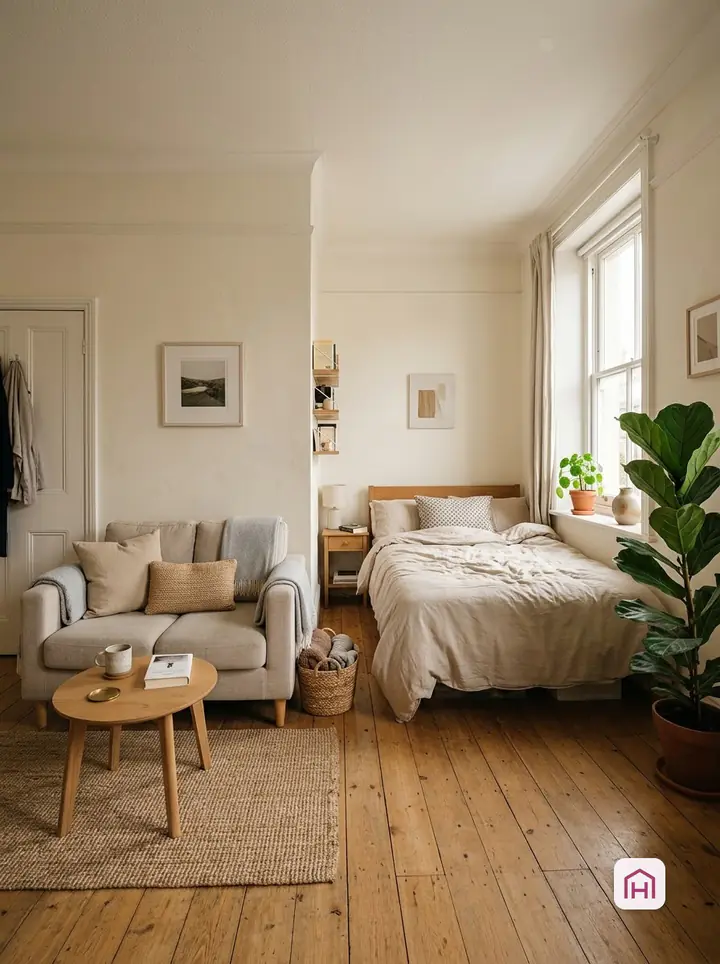
A studio drenched in warm white
One warm white everywhere: the room's edges soften and the furniture stands out.
Why it works
A whole studio drenched in one warm white, ceiling and trim included, reads as one calm volume. It is the gentlest form of drenching and suits a room that has to do many jobs.
Materials and furniture
- Warm white paint for walls, ceiling and trim
Check first
- Warm whites vary from creamy to pinkish; test several against your floor.
- Trim in the same white needs a durable, wipeable paint.
- The picture shows a mood, not a measured or improved floor plan.
Colours are approximate; they are not previews of a specific paint.
What colour drenching is
In a conventional room, the walls are one colour and the skirting, door frames, doors and ceiling are white. Each of those white edges draws a line. Colour drenching paints them all in the same colour as the walls, sometimes in a slightly different sheen, so the lines disappear and the room becomes one continuous colour.
In a small room this has two effects: the space looks calmer, because there are fewer edges, and the boundaries between wall and ceiling soften, which can make the room feel less boxy. Dark drenches do not make a room look bigger; they make it feel enclosed and cosy, which can be exactly the point.
Finishes per surface
One colour does not mean one tin. Each surface needs a product made for it, mixed to the same colour:
- Walls and ceiling: wall paint; a wipeable finish in hallways and kitchens.
- Skirting, frames and doors: a durable paint for wood, usually with more sheen.
- Radiators: a heat-resistant paint made for radiators.
- Bathrooms and kitchens: paints rated for humidity and grease; wet zones such as the shower stay tiled.
Different sheens of the same colour look slightly different. That is normal and often looks good; if you want them to match closely, ask for samples of each finish.
Testing
Paint large sample patches, or sample boards you can move, in at least two places: one in the brightest spot and one in the darkest. Look at them in the morning, in the evening and with lamps on. A colour that looks right on the wall may look much darker on the ceiling, so try a patch there too.
Where to stop
Drenching works for a whole room or for a clearly bounded part of it: a nook, an alcove, the area under a sloping ceiling. Decide where the colour stops before you start, and make that line clean: along a corner, a beam or a change in ceiling height.
In a rental, painting doors, trim and ceilings is a bigger change than painting one wall. Check your lease first.