Idea gallery · 8 ideas
Freestanding pantry ideas: 8 ways to add food storage in a rental kitchen
Idea gallery 1 source
A freestanding pantry adds food storage without changing the kitchen: a tall cabinet, a slim rolling unit in the gap by the fridge, a bookcase with baskets or an over-door rack. Tall units must be anchored to the wall, because full shelves make them top-heavy. Keep food away from the oven, the fridge's warm back and direct sun.
-
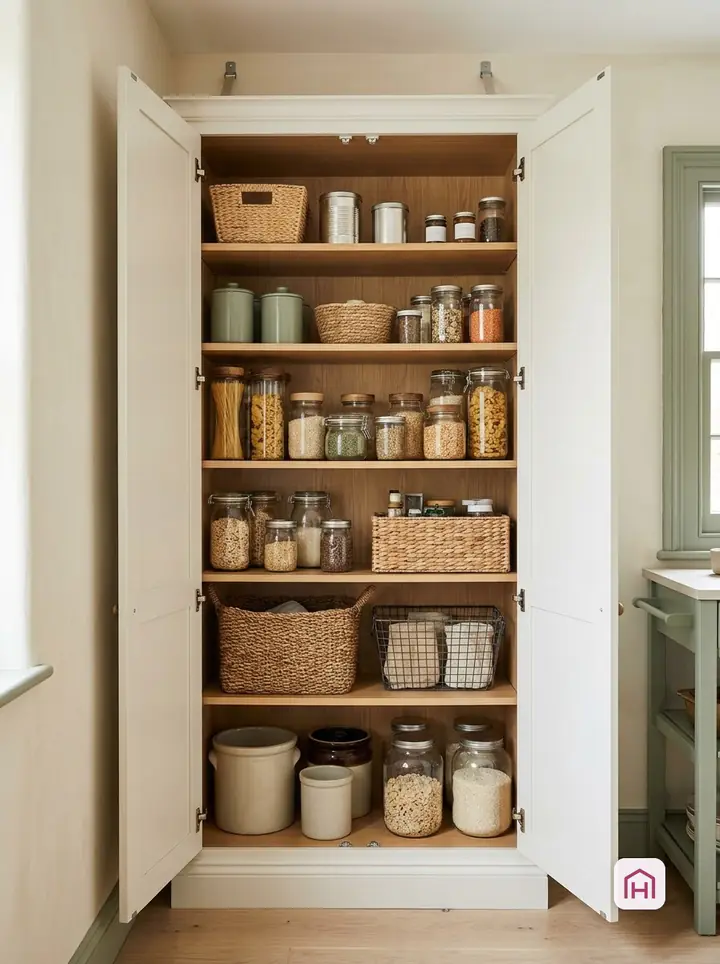
A tall pantry cupboard with two doors
Six storage levels behind two doors.
Why it works
A tall cupboard with shelves behind two doors holds most of a small household's dry goods. The one in the picture has five shelves above its base, so six levels for jars, tins and baskets.
Materials and furniture
- Tall cabinet with adjustable shelves
- Anchoring kit
Check first
- Anchor it to the wall. The straps in the picture are illustrations, not a tested fixing; use the maker's anchoring kit and wall plugs that suit your wall.
- Heavy items low.
- Not beside the oven.
-
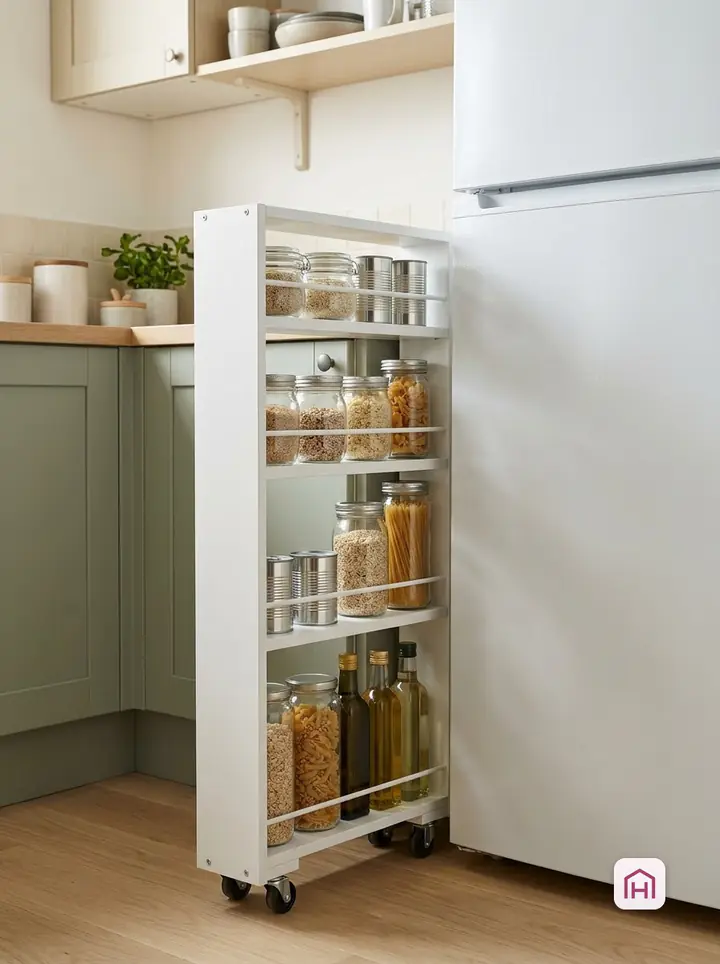
A slim rolling pantry beside the fridge
The gap by the fridge is a pantry.
Why it works
A slim pull-out pantry on castors fits the narrow gap beside the fridge and rolls out to show its four levels. Whether its castors lock, the picture does not show.
Materials and furniture
- Slim rolling pantry unit
Check first
- Measure the gap, including room to pull it out.
- Leave the fridge's ventilation clear, as its maker specifies.
- Heavy items on the lower levels.
-
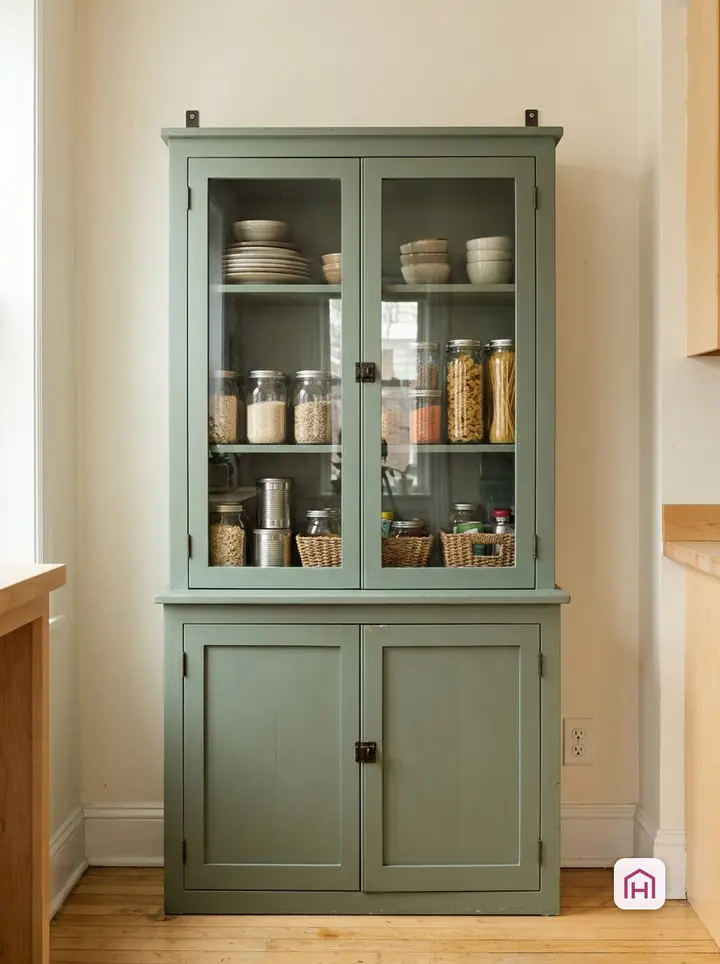
A hutch with glass doors
Pantry and display in one, three levels behind glass.
Why it works
A hutch with glass doors above and closed cupboards below shows jars and dishes on top and hides the rest. Behind the glass in the picture are two shelves above the base: three levels.
Materials and furniture
- Hutch or dresser
- Anchoring kit
Check first
- Anchor the hutch. The straps in the picture are illustrations, not a tested fixing; use the maker's anchoring kit and wall plugs that suit your wall.
- Keep glass doors closed to keep dust out.
- Heavy items in the base.
-
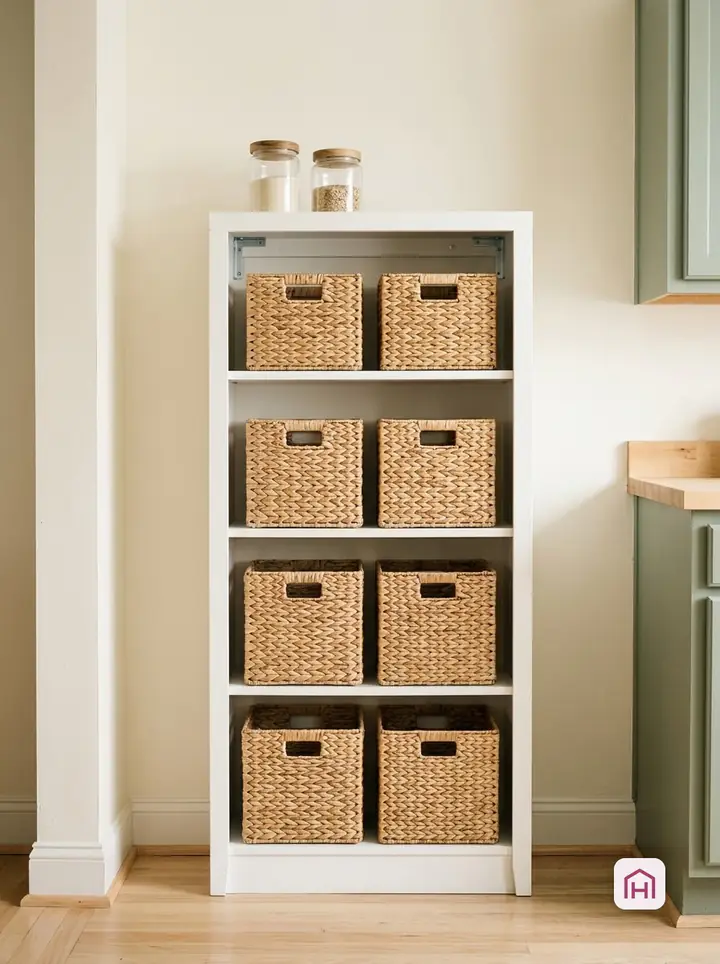
A bookcase with baskets
Baskets turn a bookcase into a pantry.
Why it works
A simple bookcase with matching baskets in each compartment becomes a pantry where every basket has its own category. The baskets hide their contents, so label them.
Materials and furniture
- Bookcase
- Matching baskets
- Anchoring kit
Check first
- Anchor the bookcase. The straps in the picture are illustrations, not a tested fixing; use the maker's anchoring kit and wall plugs that suit your wall.
- Baskets with handles for pulling out.
- Label the baskets.
-
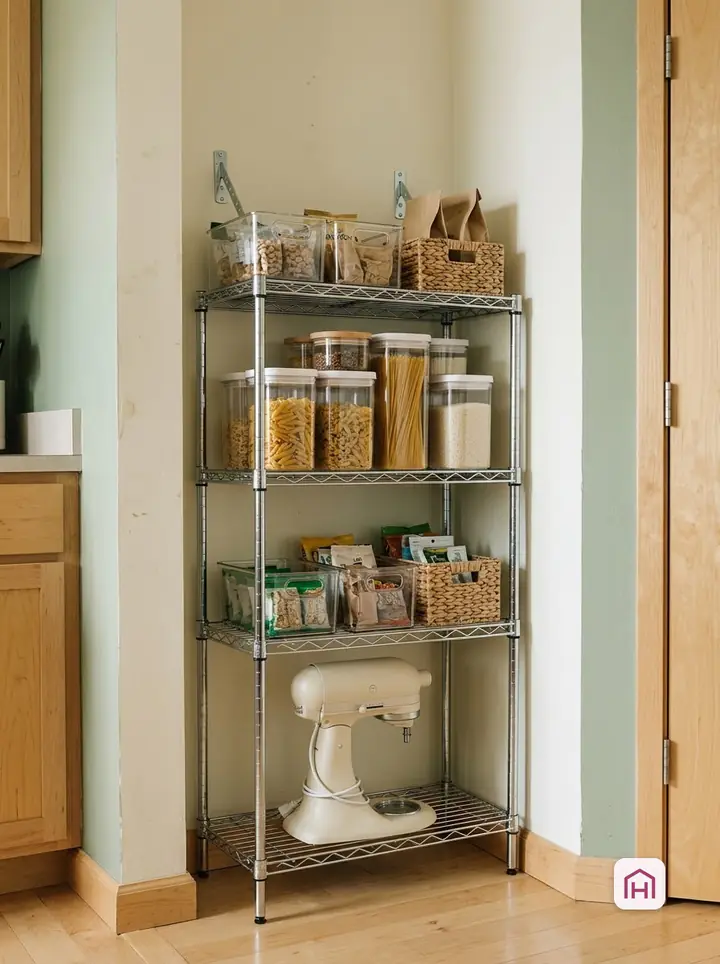
Wire shelving with bins
Adjustable levels, containers you can see into.
Why it works
Freestanding wire shelving with clear containers holds bulk food, snacks and an appliance and can be adjusted as needs change.
Materials and furniture
- Wire shelving unit
- Clear containers or bins
- Anchoring kit
Check first
- Anchor tall units. The straps in the picture are illustrations, not a tested fixing; use the maker's anchoring kit and wall plugs that suit your wall.
- Respect the maker's per-shelf load.
- Bins keep small things from falling through; keep appliance cables off the floor.
-
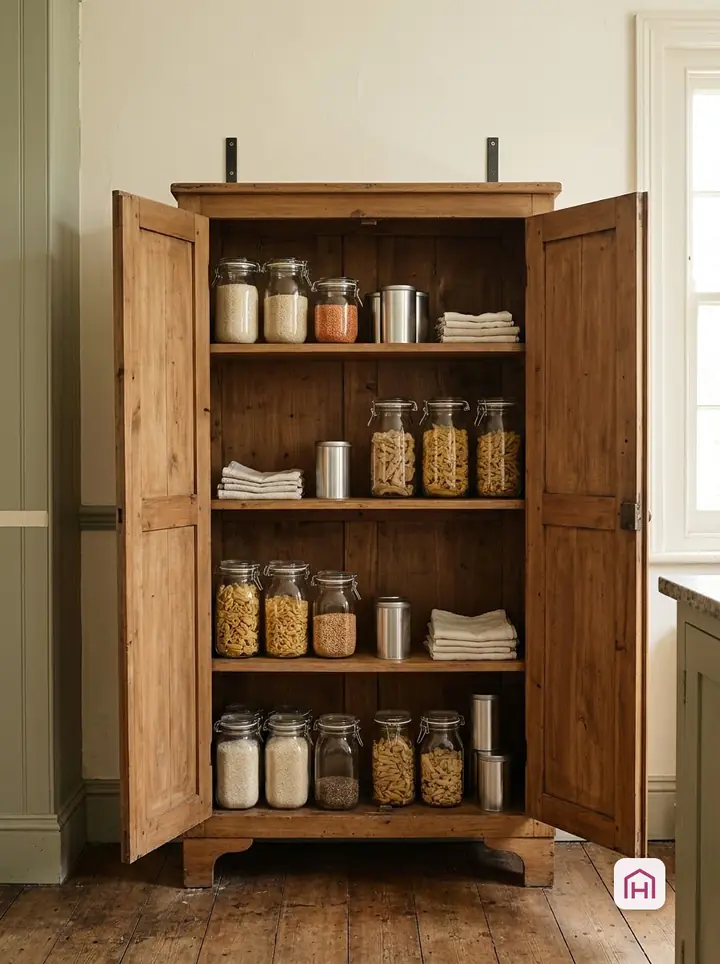
An armoire pantry
Four levels of jars behind doors that close.
Why it works
An armoire fitted with shelves becomes a large pantry with doors that close on everything. The one in the picture has three shelves above its base.
Materials and furniture
- Armoire
- Shelves
- Anchoring kit
Check first
- Anchor it; armoires are top-heavy. The straps in the picture are illustrations, not a tested fixing; use the maker's anchoring kit and wall plugs that suit your wall.
- Check the shelves for the load.
- Air it if it smells musty.
-
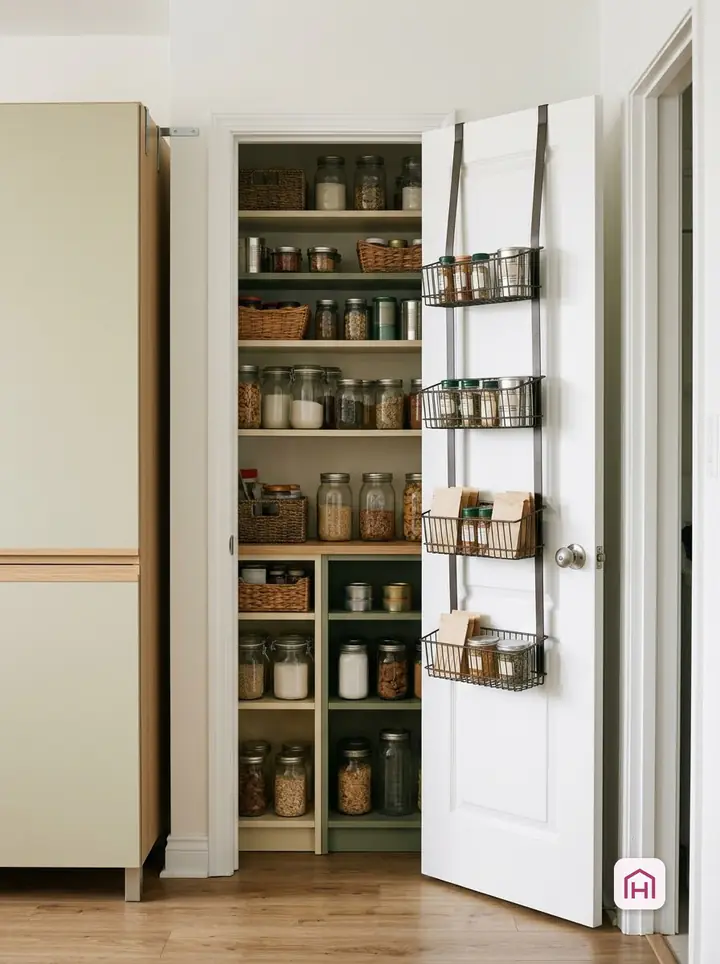
An over-door pantry rack
Spices and tins on the back of a door.
Why it works
A rack that hangs over a door holds spices, tins and small packets, using space that is otherwise empty. The door in the picture stands partly open; check yours still closes with the straps over it.
Materials and furniture
- Over-door rack
Check first
- The door must still close; the picture does not show it closed.
- Do not overload the baskets or the door hinges.
- Not on a fire door.
-
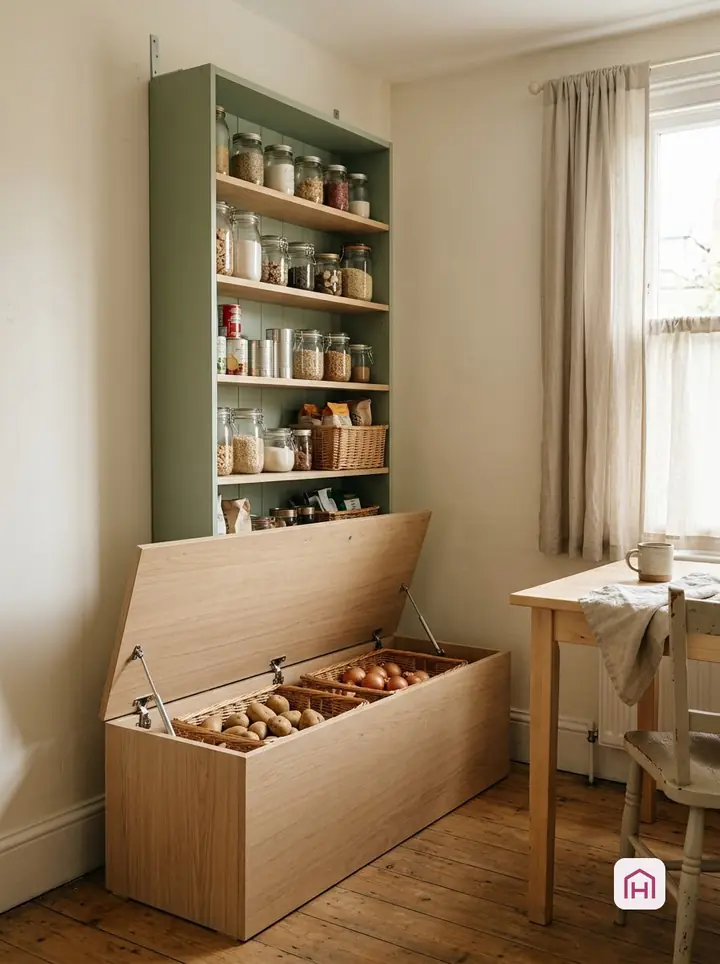
A bench pantry in the dining nook
Sit on the bench, store under it.
Why it works
A storage bench in a dining nook holds bulky items such as potatoes or onions in the dark space under the seat. How well produce keeps there depends on the room; a picture cannot show it.
Materials and furniture
- Storage bench with lid or drawers
Check first
- Lid with stays, as in the picture; lids pinch.
- Keep fresh produce aired and check it often.
- Away from radiators and direct sun.
Storage that moves with you
In a rental you usually cannot add cabinets, but you can add furniture. A freestanding pantry, from a tall cabinet to a slim rolling unit, adds food storage and goes with you when you move.
Anchor tall units
A tall pantry full of jars and tins is heavy at the top. The US Consumer Product Safety Commission advises anchoring furniture with drawers, doors and shelves to the wall to prevent tip-over injuries and deaths [1]. An anchoring kit needs only a couple of small holes; ask your landlord if your lease requires it.
Where food keeps
Keep dry goods away from the oven, the warm back of the fridge and direct sun. Closed containers help keep pests and moisture out; label them with the date you opened them.
Filter ideas by room and fixing
Sources
- Anchor It! , US Consumer Product Safety Commission (CPSC). checked