Idea gallery · 8 ideas
Limewash wall ideas: 8 soft-texture looks for small rooms
Idea gallery 0 sources
Limewash is a lime-based paint that dries to a soft, matte, cloudy finish with visible brush movement. It suits small rooms because the texture adds depth without pattern. It needs a suitable surface or the maker's primer, dries much lighter than it looks wet, and looks very different in raking daylight than in flat light, so test it on a board in the room first.
-
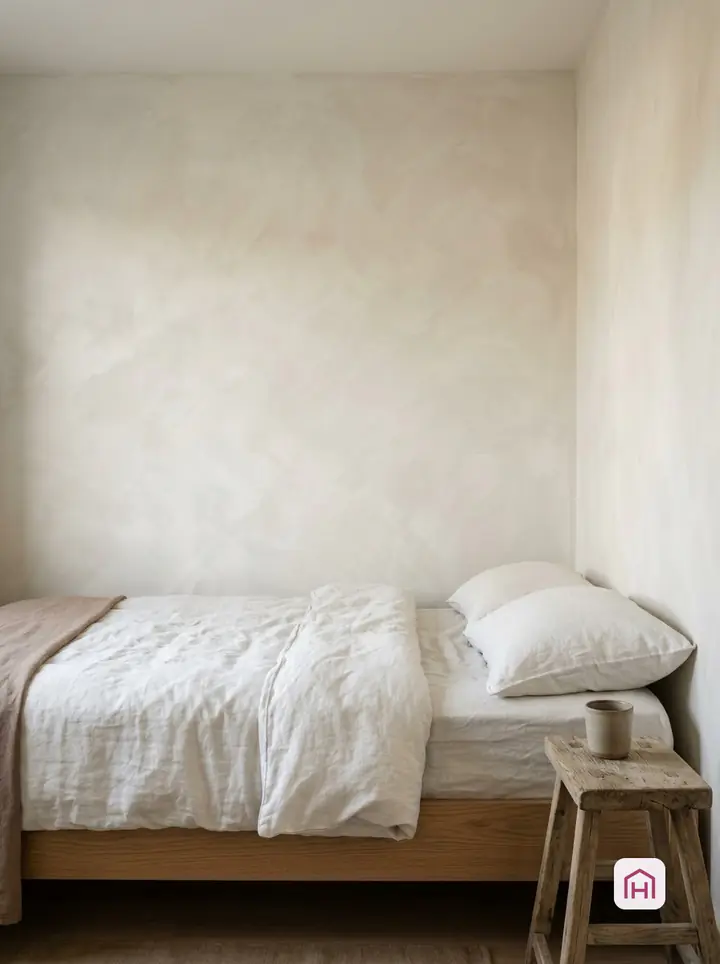
Warm white limewash behind the bed
White, but with movement: the wall looks soft even when the room is plain.
Why it works
A warm white limewash keeps a small bedroom light, but the cloudy texture stops a white wall looking flat. It is the easiest way to try limewash, because mistakes in the brushwork barely show.
Materials and furniture
- Limewash in a warm white
- Primer specified by the limewash maker
- Large, soft block brush
Check first
- Limewash needs a suitable surface or the maker's primer; check the product data sheet.
- The colour dries much lighter than it goes on: judge it only when dry.
- In a rental, check whether you may paint and how you must hand the wall back.
-
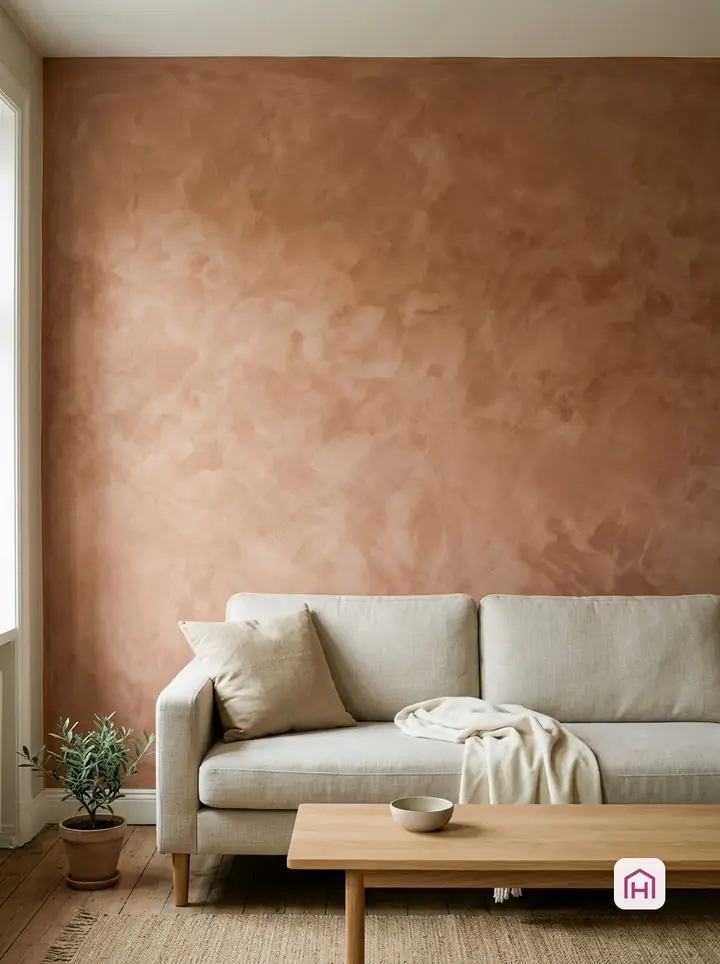
Clay limewash on the wall behind the sofa
One textured wall gives the living room warmth without a feature wallpaper.
Why it works
A clay-coloured limewash on one wall warms a small living room and gives it depth. Behind the sofa, it frames the seating like a backdrop.
Materials and furniture
- Limewash in a clay tone
- Primer if required
- Block brush
Check first
- Test a large sample board in the room first; texture and colour change with light.
- Matte limewash marks more easily than washable paint where people lean or brush past.
- Ask the maker whether a protective finish is possible behind seating.
-
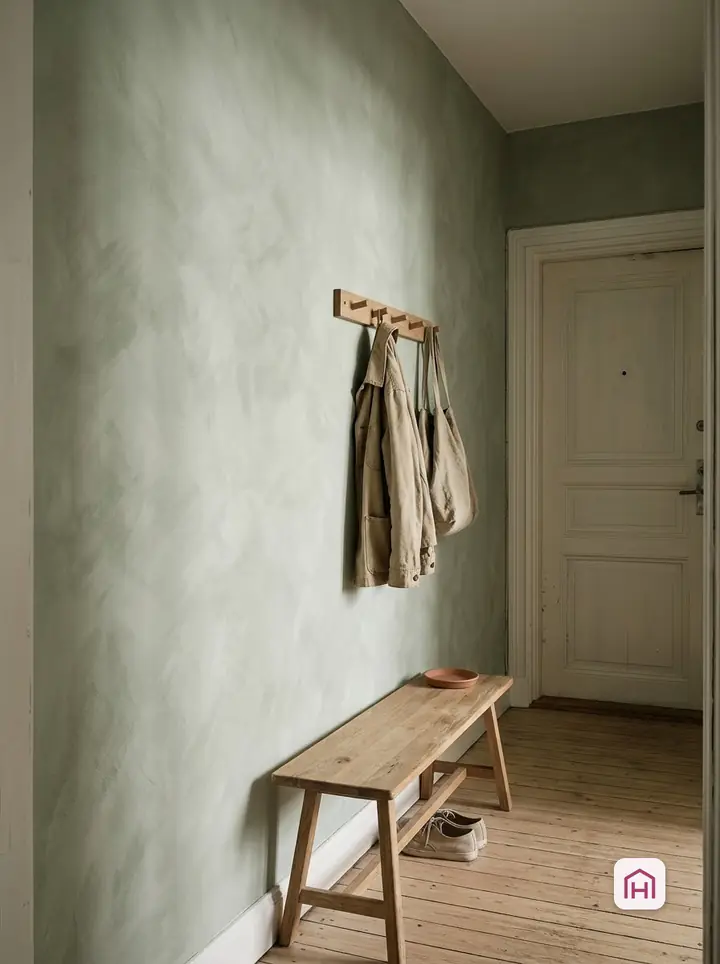
Sage limewash in a narrow hallway
A soft green with movement makes a narrow hallway feel less like a corridor.
Why it works
A plain painted hallway can feel cold. A sage limewash adds soft colour and texture, and its mottled finish hides small marks better than a flat paint.
Materials and furniture
- Limewash in a sage tone
- Primer if required
Check first
- Hallway walls get knocked and brushed: ask the maker about durability and touch-ups.
- Hooks and rails are better fixed before the final coat, or touched up after.
- Narrow hallways are often dark: see the colour in the hallway's own light before deciding. The picture does not measure the passage.
-
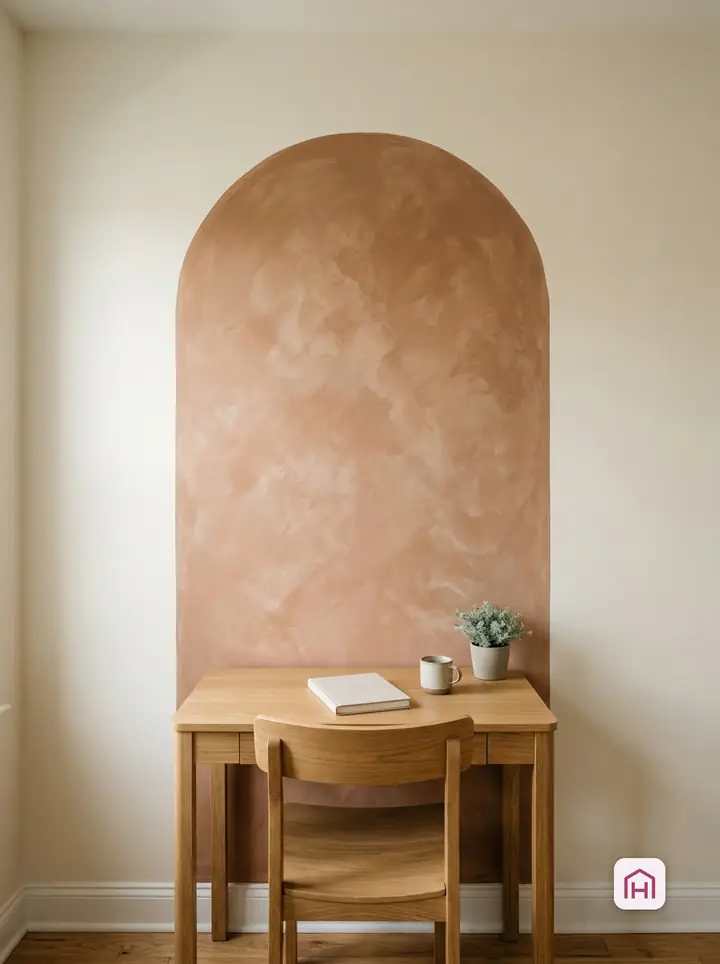
A painted limewash arch behind a desk
A painted arch of colour makes a corner into a place.
Why it works
Painting only an arch shape in limewash marks a desk or reading corner as its own zone; it is paint on a flat wall, not a recess. The soft edges of limewash suit a curved outline better than hard-edged paint.
Materials and furniture
- Limewash
- Pencil, string and a pin to mark the curve
- Painter's tape for the straight sides
Check first
- Mark the arch carefully; the curve is the hard part.
- Limewash edges are soft by nature; perfectly crisp lines are not its strength.
- Painting a shape is still painting: check your lease.
-
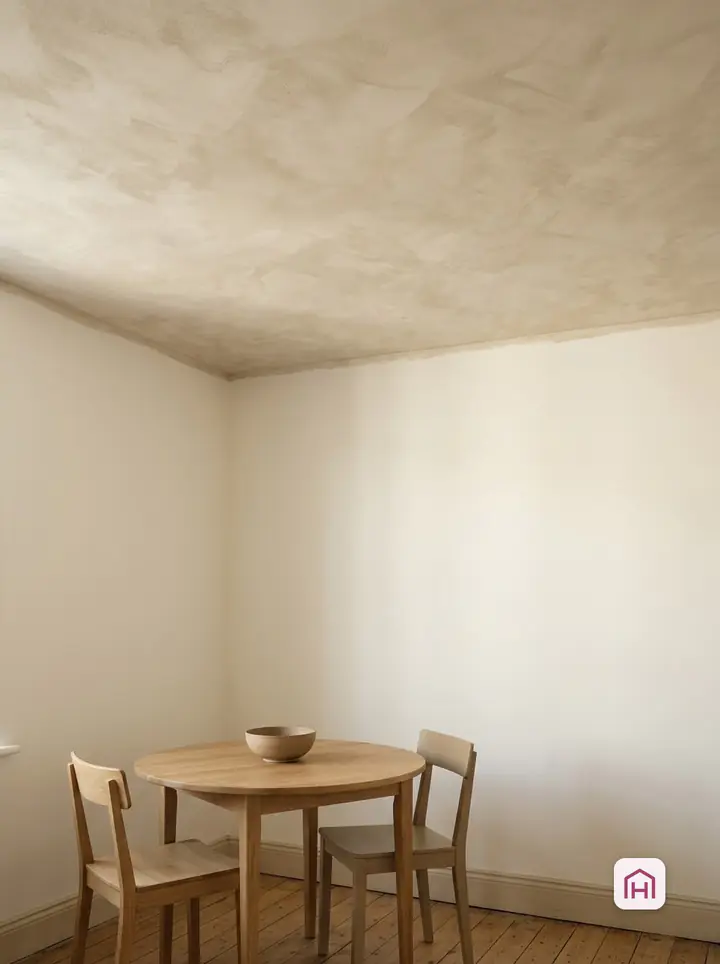
A softly limewashed ceiling above the table
The fifth wall, with a texture you notice only when you look up.
Why it works
A limewashed ceiling adds quiet texture overhead while the walls stay plain. Over a dining table, it makes the room feel finished without adding colour at eye level.
Materials and furniture
- Limewash
- Primer if required
- Extension pole, dust sheets, eye protection
Check first
- Painting a ceiling is messy and tiring; protect floors and furniture well.
- Lime products are alkaline: follow the safety advice on the tin, especially eye protection overhead.
- Check the ceiling surface suits limewash or needs the maker's primer.
-
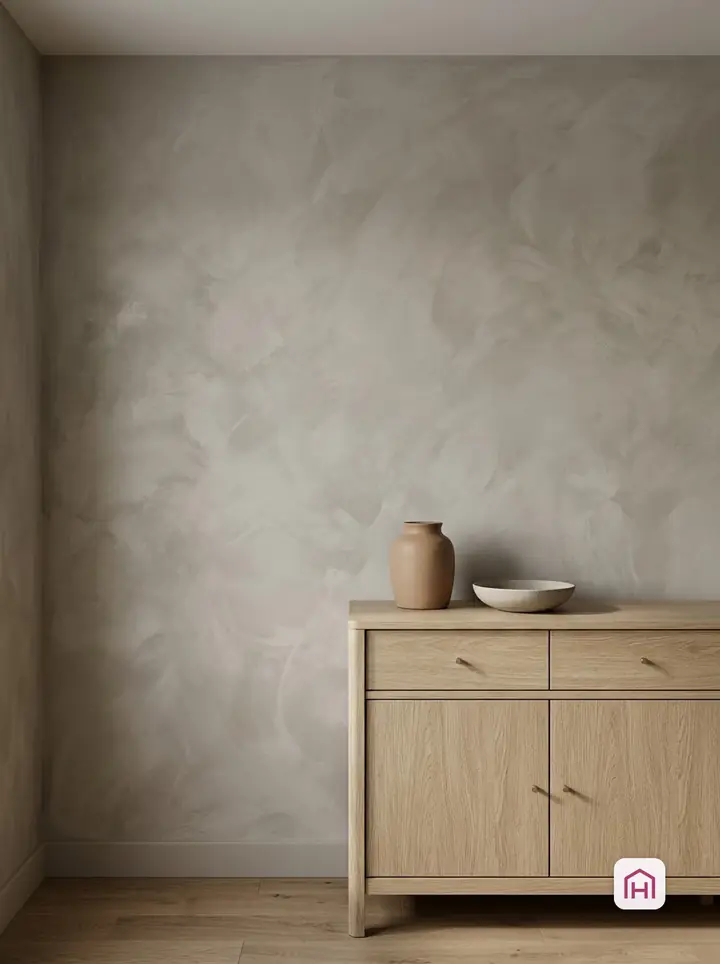
Warm grey limewash with oak
A grey with warmth, so the wood does not look cold next to it.
Why it works
Cool greys can make oak look yellow. A warm grey limewash sits well with oak furniture and floors, and the texture keeps a grey wall from looking flat.
Materials and furniture
- Limewash in a warm grey
- Sample boards
Check first
- Hold sample boards next to your actual wood before choosing.
- Greys change a lot with daylight direction; look morning and evening.
- Check the product's surface and primer requirements.
-
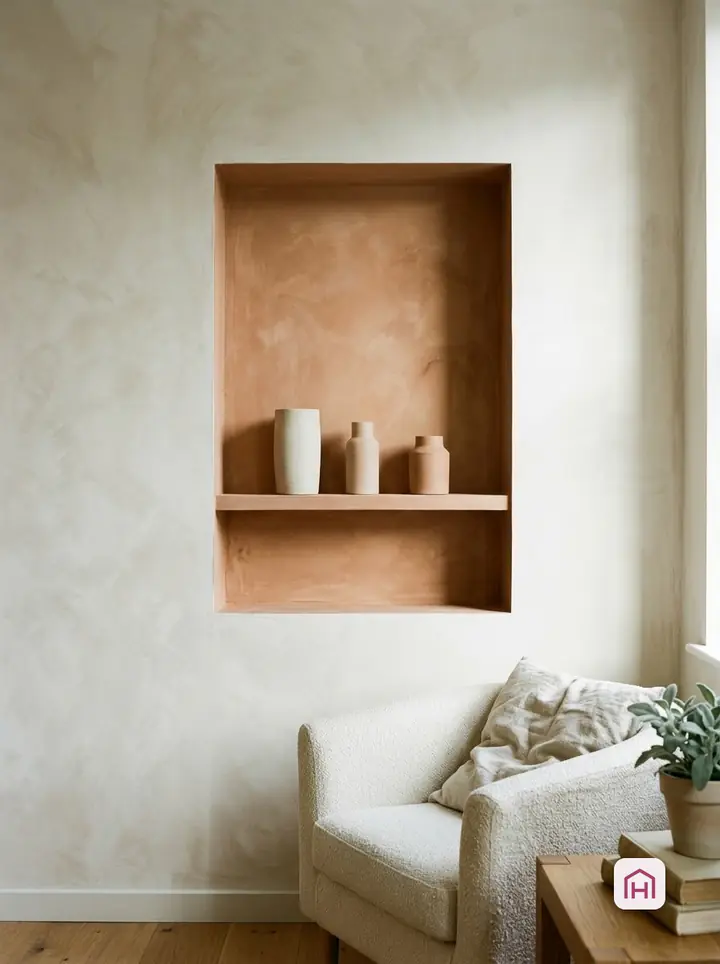
A terracotta limewashed niche
Strong colour in a small dose, where it frames what sits in it.
Why it works
A niche is a small, contained space for a strong colour. Terracotta limewash inside it frames a few ceramics or books; here the wall around it is textured too, in a pale tone, so the niche stays the strongest colour in the room.
Materials and furniture
- Limewash in terracotta
- Small brush for corners
Check first
- Niche corners are fiddly; a smaller brush helps.
- Shelves in the niche are easier to fit before painting, then touched up.
- See the colour dry in the niche's own shadow before committing.
-
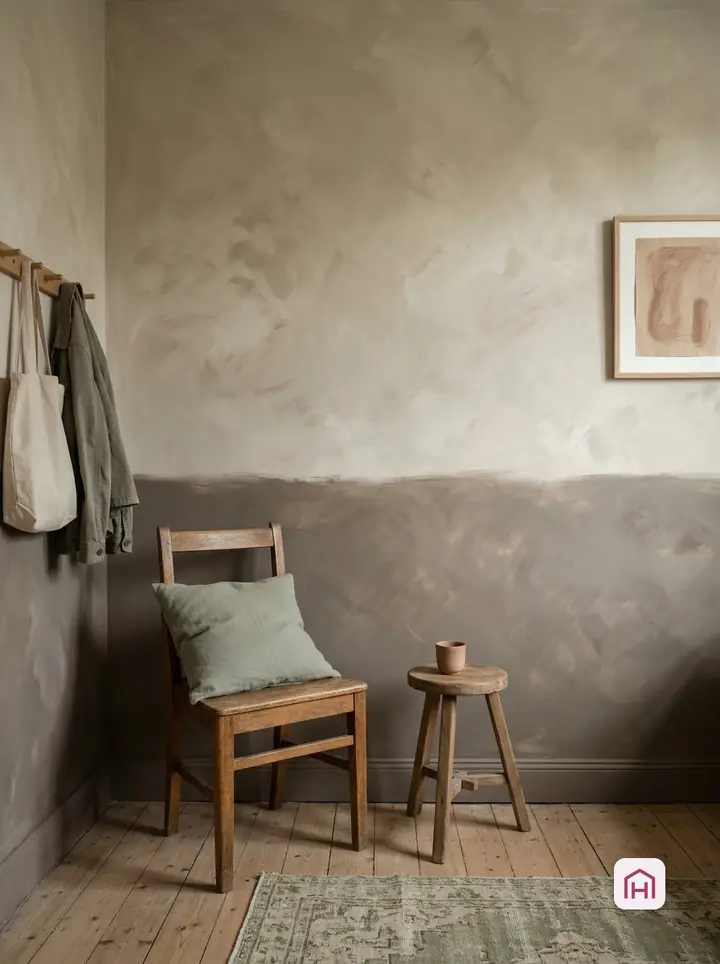
A two-tone limewash wall, darker below
Darker below, where walls get scuffed; lighter above.
Why it works
A darker tone on the lower part of the wall and a lighter one above gives a room structure without panelling. In the picture the darker part covers about half the wall and the line is softly brushed rather than taped. The darker band also hides some marks where people and furniture brush the wall.
Materials and furniture
- Two limewash tones
- Painter's tape
- Spirit level
Check first
- Decide whether you want a soft blended line, as in the picture, or a sharper taped one before starting.
- Mark the line with a level all the way round; floors and ceilings are rarely level.
- Check the lease before painting a rental.
Colour and texture are approximate; they are not previews of a particular product.
What limewash is
Limewash is a traditional paint based on lime, thinned with water and tinted with pigments. Brushed on in several thin coats, it dries to a matte, chalky finish with soft, cloudy variations in tone. Unlike standard emulsion, it does not form a uniform film: the brush strokes stay part of the look.
Products sold as "limewash" vary a lot in what they contain and what they need underneath. The details below are general; for your wall, follow the data sheet of the product you buy.
Surfaces
Limewash traditionally goes onto mineral, absorbent surfaces such as lime plaster or masonry. Many modern limewash products can also go over existing painted walls, but only with a primer the maker specifies. Glossy, washable or damp walls usually need preparation first. If in doubt, try a small patch in a hidden spot and wait until it is fully dry.
Lime products are alkaline. Follow the safety advice on the tin, which usually includes eye and skin protection, especially when working overhead.
Light
Limewash depends on light more than flat paint does. Light coming across the wall from a window shows the texture; flat, frontal light makes it look almost like plain paint. The colour also dries much lighter than it looks wet. Paint a large sample board, let it dry fully, and look at it in the room in the morning and the evening.
In a rental
Limewash is paint. Check your lease before painting, and ask how the wall must be handed back; going back to a standard paint over limewash may need the right primer.