Idea gallery · 8 ideas
Open closet ideas: 8 ways to make visible clothes look calm
Idea gallery 1 source
An open closet looks calm when the eye finds a pattern: the same hangers, clothes sorted by colour or length, and everything that is not a hanging garment in closed boxes or baskets. Leave a little space on the rail, keep shoes in one line and cover what you rarely wear against dust. Keep it out of direct sun, which fades fabrics.
-
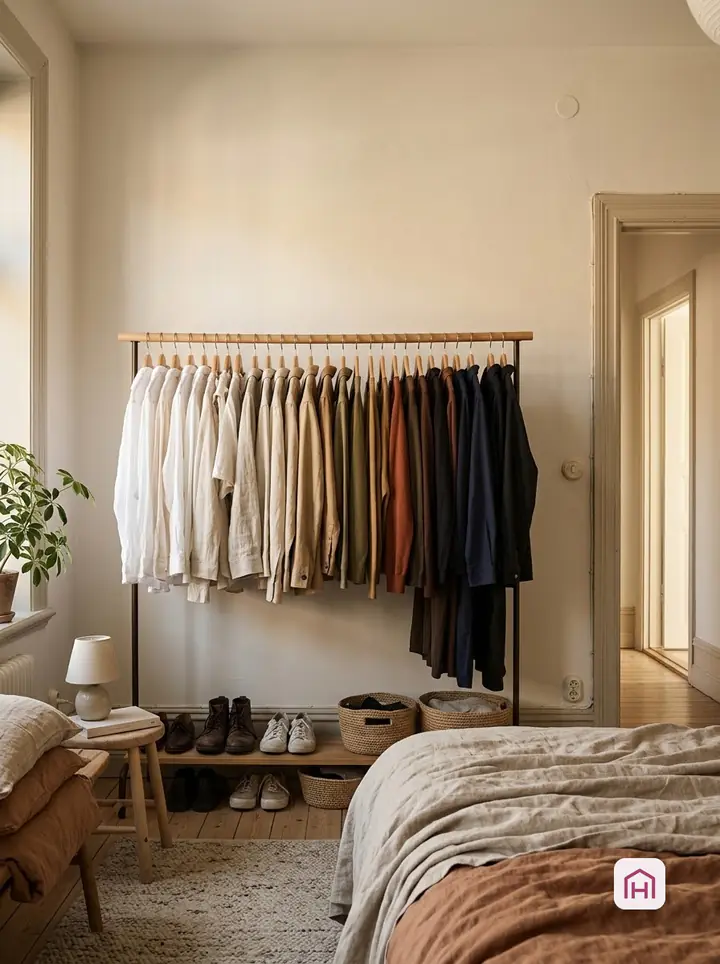
Matching hangers and clothes in colour order
Same hangers, light to dark: the cheapest way to calm a rail.
Why it works
Identical hangers and clothes sorted from light to dark turn a mixed rail into a gradient. Nothing new is needed apart from the hangers.
Materials and furniture
- Matching hangers
- Open clothes rail or open closet
Check first
- Leave space so hangers slide; a packed rail looks messy again.
- Check the rail's stated load before adding heavy coats.
-
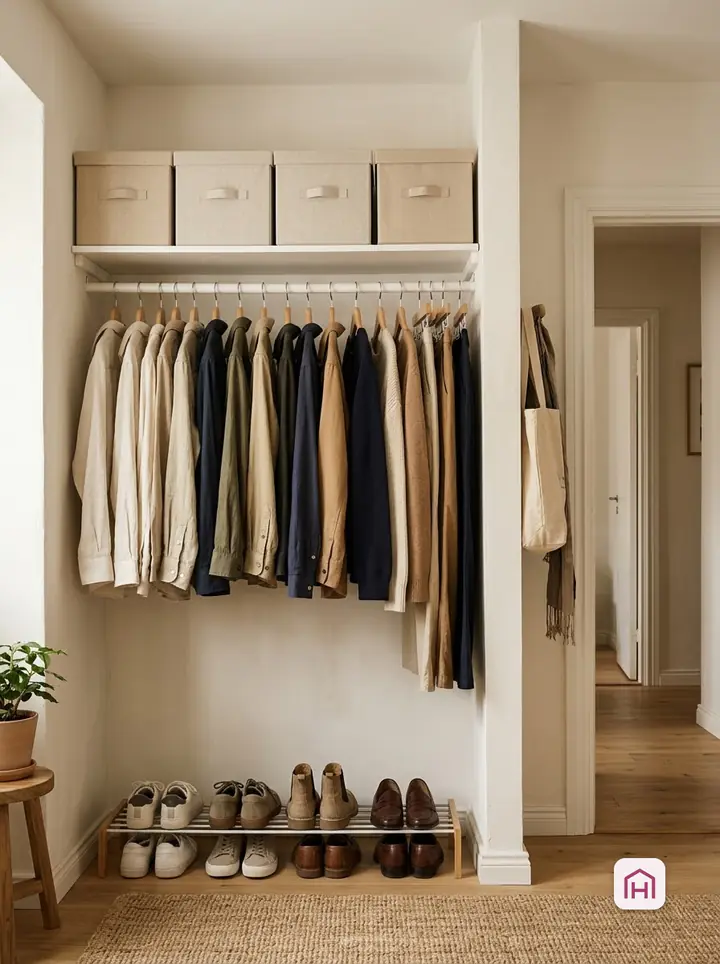
Closed boxes on the top shelf
One kind of box hides bags, scarves and out-of-season things.
Why it works
Matching closed boxes on the shelf above the rail hide everything that is not a hanging garment. The same boxes in a row read as one calm block.
Materials and furniture
- Matching lidded boxes
- Labels
Check first
- Use manageable light contents on high shelves and follow stated shelf loads.
- Use your own labels or categories to avoid searching through every box.
-
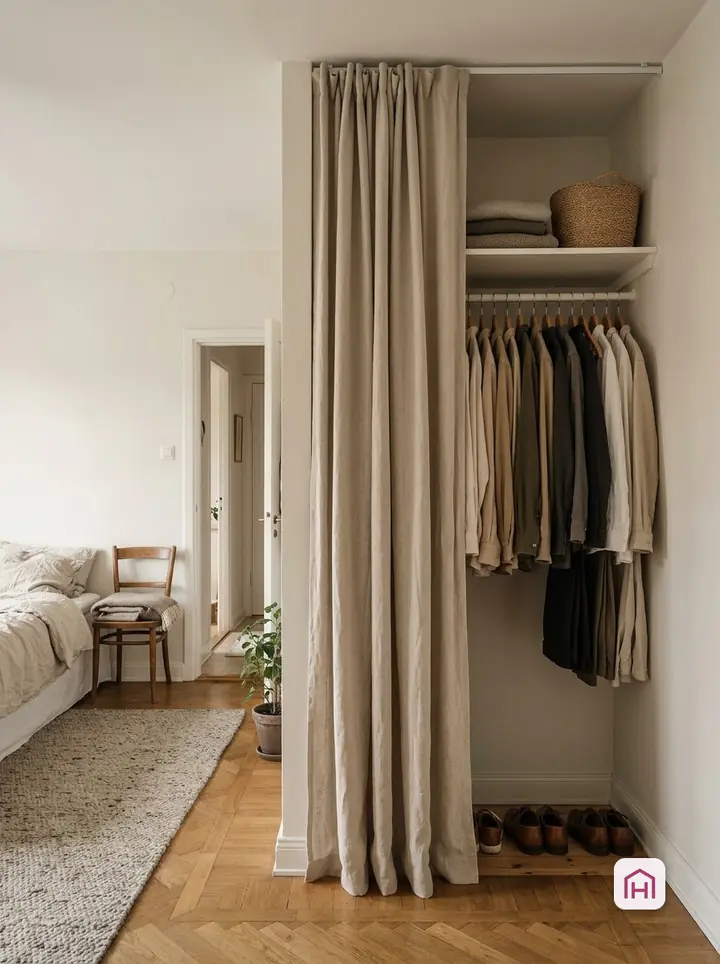
A curtain over half of the rail
Show the clothes you love, hide the rest.
Why it works
A curtain over part of the rail hides what you rarely wear and protects it from dust, while the part you use every day stays open and easy to reach.
Materials and furniture
- Curtain
- Tension rod, ceiling track or rail suited to the space
Check first
- A tension rod needs two firm, parallel surfaces; ceiling tracks need fixings suitable for the ceiling.
- Leave room for the curtain to gather at the side.
-
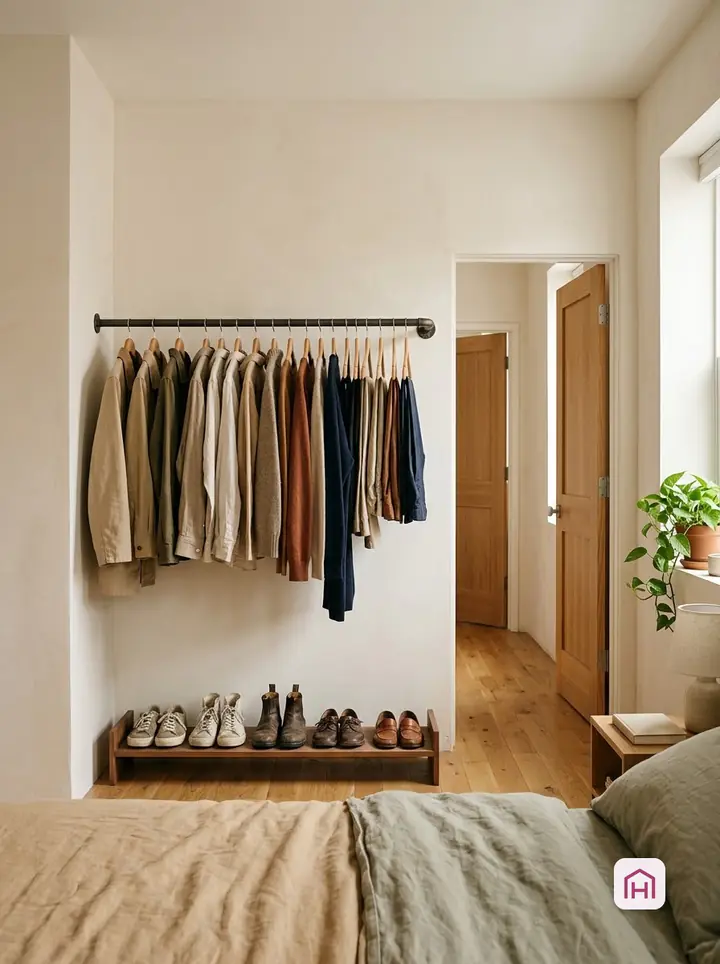
Shoes in one straight line
A single row under the rail looks deliberate; a heap does not.
Why it works
Shoes lined up in one row under the rail, toes to the front, read as a pattern. A low shoe shelf keeps the line straight and the floor easy to clean.
Materials and furniture
- Low shoe shelf or tray
Check first
- Only the shoes you wear this season; the rest go in boxes.
- Let wet shoes dry elsewhere first.
-
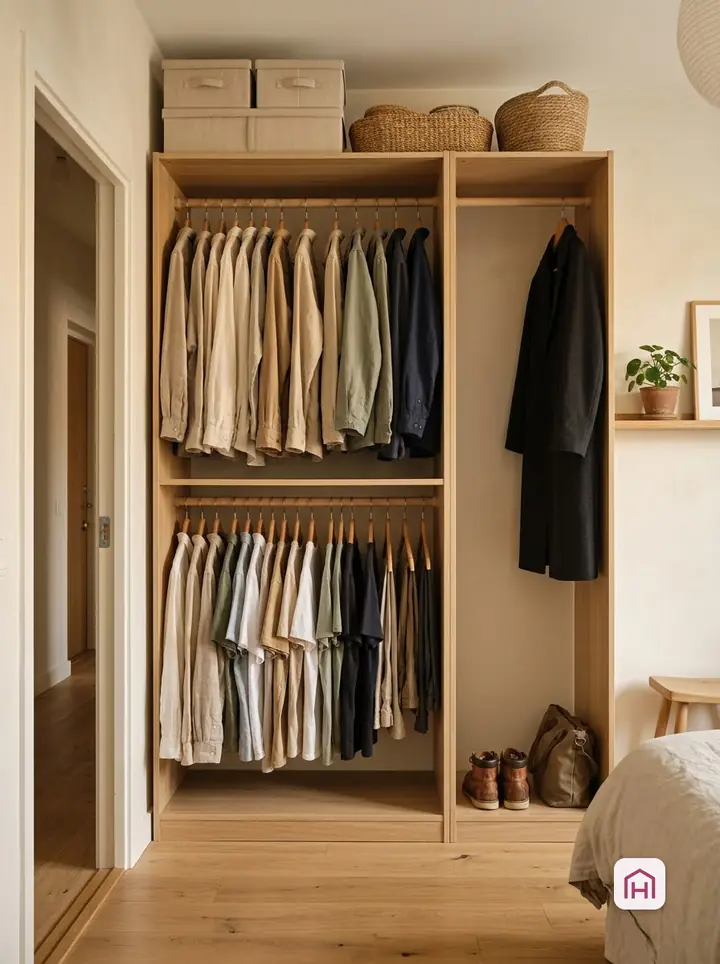
Two rails: short clothes on top, below and beside
Shirts on two levels double the hanging space for short clothes.
Why it works
Shirts, skirts and folded trousers are short. A rail with two levels, or a second rail below the first, uses the empty height under short clothes.
Materials and furniture
- Double-level clothes rail or second hanging rail
Check first
- Keep a section at full height for long coats and dresses.
- Check both rails' loads; a freestanding double rail can tip if loaded only on top.
-
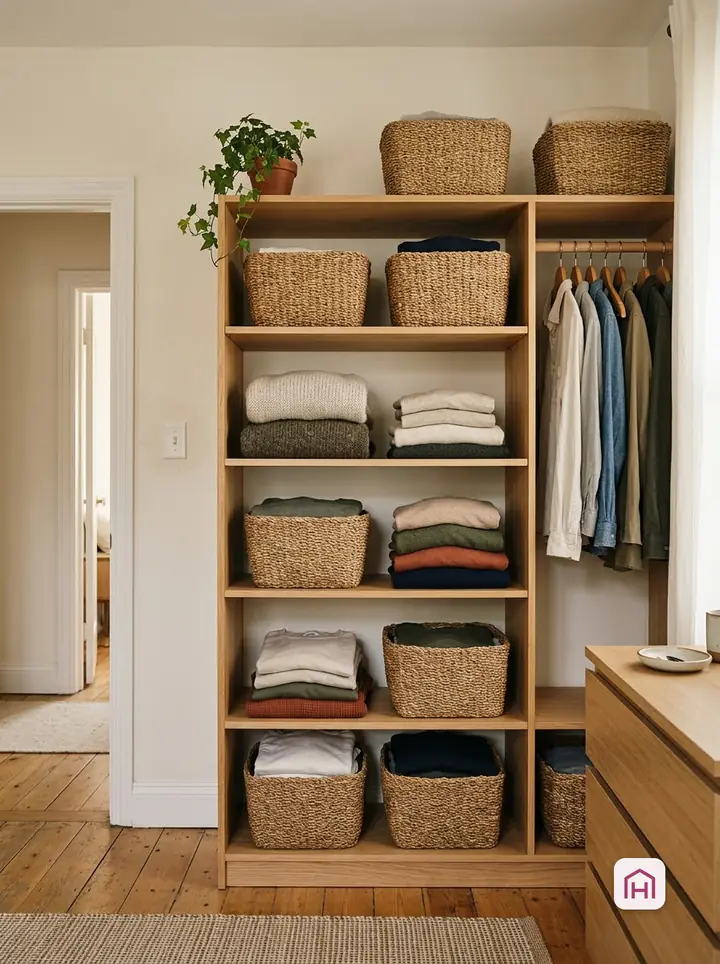
Baskets for folded clothes
Knitwear and T-shirts folded into baskets instead of piled on a shelf.
Why it works
Knitwear and T-shirts keep their shape better folded than hung. Baskets of one kind, one category each, keep the piles from sliding and look calm from the bed.
Materials and furniture
- Matching baskets
- Labels or tags
Check first
- One category per basket.
- Baskets on the floor collect dust underneath; lift them to clean.
-
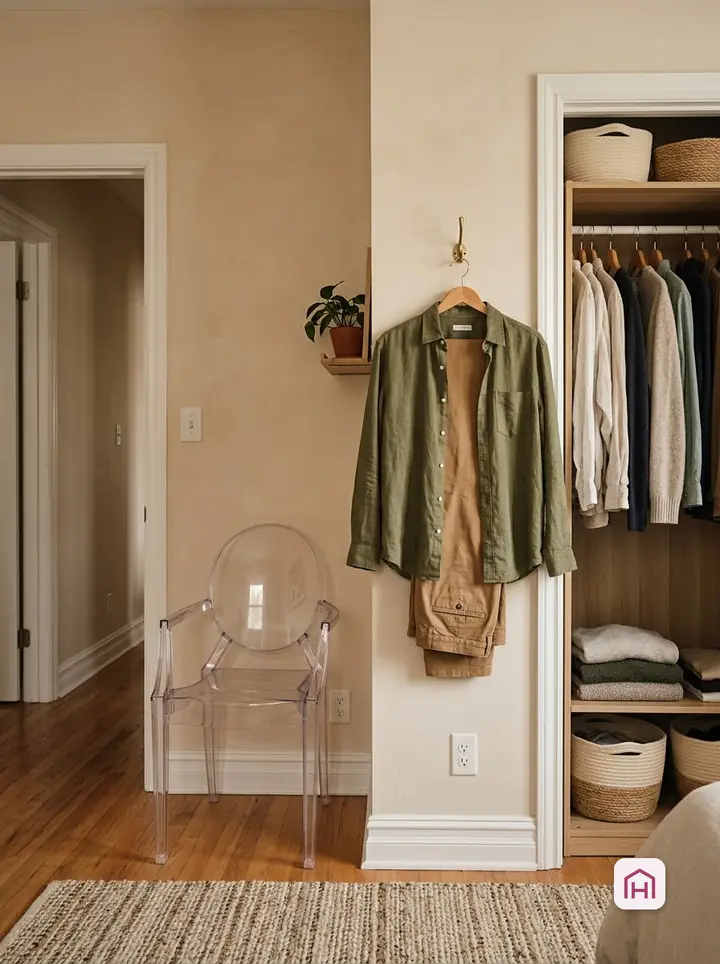
One decorative hook for tomorrow's outfit
One outfit ready to go, so the rest of the rail stays untouched.
Why it works
A single hook beside the rail holds tomorrow's outfit or today's jacket, so clothes do not end up on the chair. One hook, one outfit.
Materials and furniture
- Wall hook (adhesive or screwed)
Check first
- Adhesive hooks are rated for light loads on smooth surfaces; follow the pack.
- Remove adhesive hooks exactly as the pack says when you move out.
-
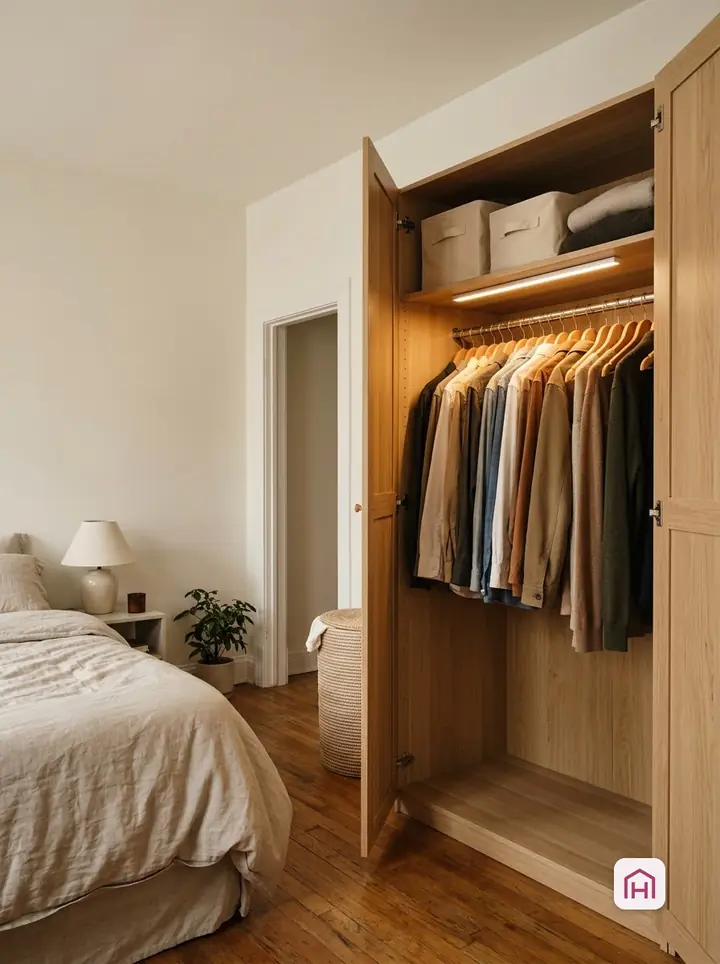
Soft light along the rail
A warm strip of light makes the rail look like furniture, not a clothes heap.
Why it works
A battery or plug-in light strip above the rail lights the clothes when you choose an outfit and makes the open closet look deliberate in the evening.
Materials and furniture
- Battery or plug-in LED strip or rail light
- Adhesive clips
Check first
- Battery or plug-in only unless an electrician installs a fixed light.
- Keep lights and cables clear of fabric that touches them; follow the product's instructions.
Make the visible wardrobe fit your actual clothes
An open rail works best when its everyday contents have a place. Begin by hanging the clothes you really use, leaving occasional outfits and spare bedding aside. Measure the longest garment and the width of a normally filled hanger. A beautifully empty rail is a poor model for your weekly routine.
| Arrangement | Main benefit | What it asks of you |
|---|---|---|
| Matching hangers | A consistent line | One hanger shape suited to the garments |
| Boxes above | Conceals occasional items | Reachable boxes within shelf limits |
| Partial curtain | Covers the less-used half | Space for fabric to gather |
| Shoe row below | Keeps daily footwear visible | Enough depth for the largest pair |
| Two rail levels | Uses height for short garments | Separate space for coats and dresses |
| Folded baskets | Gives knitwear its own zone | A pile size you can lift without rearranging |
Test one week before buying the whole system
Try the planned categories with your existing rail or a simple sketch. Each evening put clothing back in its intended zone. Note what repeatedly lands on a chair: it may need an outfit hook or a return basket rather than more hangers. Keep laundry separate from clean storage.
Measure the rail footprint with garments hanging on it. Sleeves and hanger ends project beyond the metal frame. Open drawers, pull out a shoe and draw the curtain while someone walks past. The system should work from the normal side of the bed, without furniture moving every morning.
Light items high, daily items within reach
Closed upper boxes look calm, but they must remain manageable to retrieve. Follow the wardrobe's stated loads and securing instructions; the CPSC's Anchor It guidance explains furniture tip-over prevention [1]. Adding weight low down does not replace required anchoring.
For rail lighting, choose a suitable product and position batteries or cables so they do not trail through clothes or across the floor. The image shows the visual effect, not a verified installation. A curtain also does not make an open wardrobe sealed or dust-proof. Save the idea whose maintenance fits you, then record rail width, longest garment and where occasional clothes will live.
Filter ideas by room and fixing
Sources
- Anchor It! furniture tip-over prevention , U.S. Consumer Product Safety Commission. checked