Idea gallery · 8 ideas
Open shelving in a tiny kitchen: 8 shelves that stay tidy
Idea gallery 0 sources
Open shelves in a tiny kitchen stay tidy when they hold only what you use and wash every day, are kept away from the hob, and are fixed with brackets rated for the weight of plates and jars. Everything used rarely belongs in closed cabinets, where less grease and dust settle on it.
-
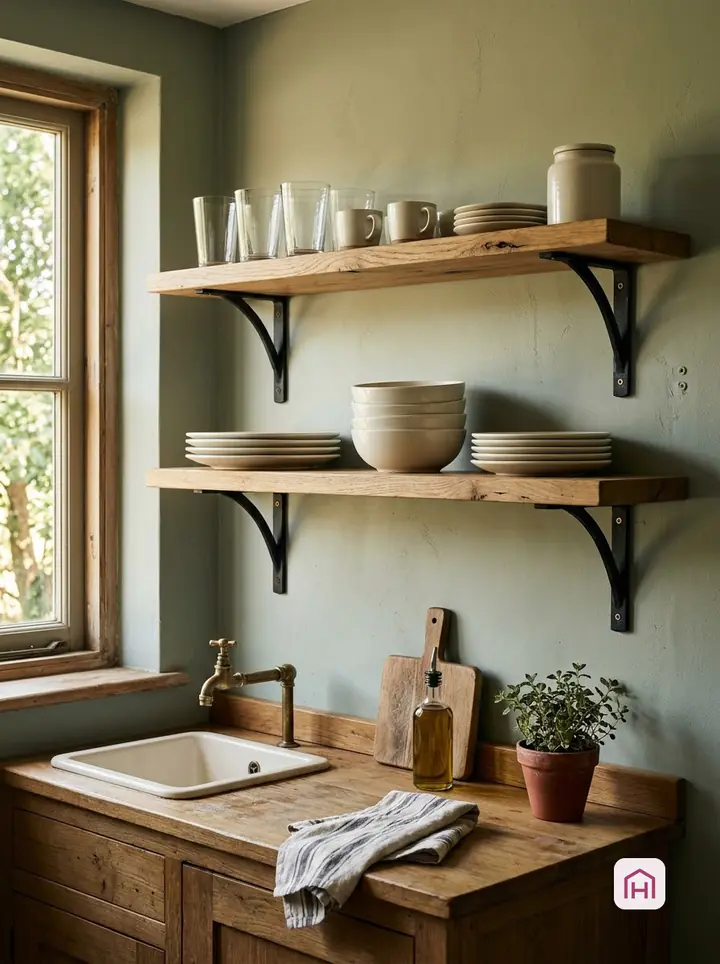
Two oak shelves for the dishes you use every day
Daily dishes on show are washed often, so less builds up on them; the shelves still need wiping.
Why it works
Open shelves stay tidy when they hold things that are used and washed every day. Two shelves of daily plates, bowls and glasses are quicker to reach than a cabinet, and frequent washing limits build-up, though the shelves themselves still need regular wiping.
Materials and furniture
- Two solid-wood shelves
- Brackets rated for the load
- Fixings for your wall
Check first
- A stack of plates is heavy: brackets and fixings must be rated for it. The picture cannot show loads or what the wall is made of.
- Keep shelves clear of the hob; heat and grease build up there. Here the shelves sit above the sink.
- Only daily items: rarely used things collect dust and grease.
-
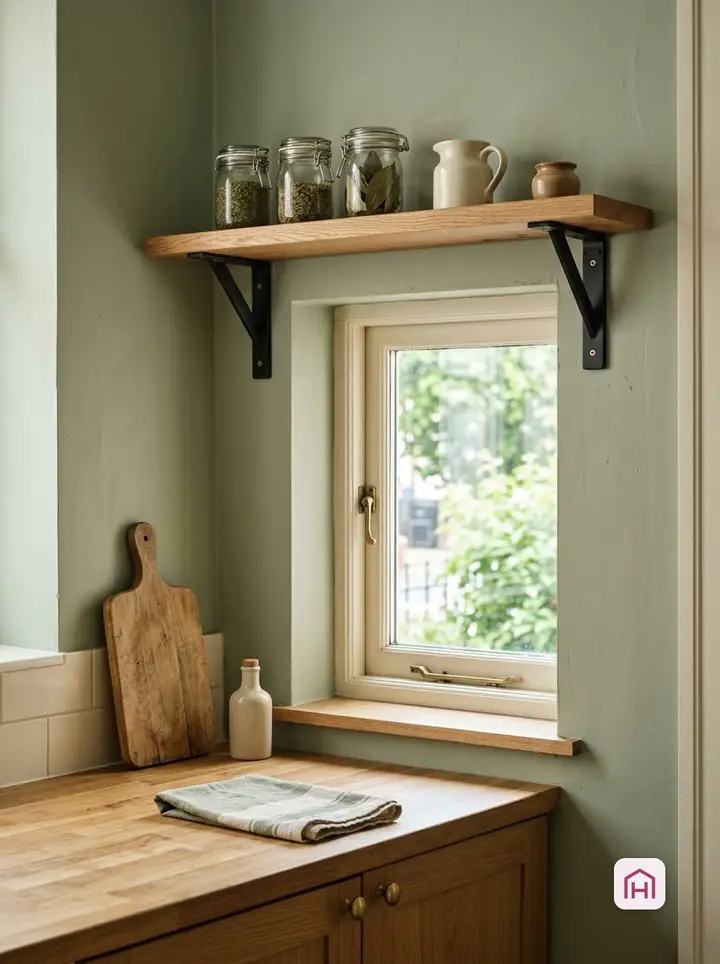
One shelf above the kitchen window
The strip of wall above the window is storage too.
Why it works
The wall between the window and the ceiling usually stays empty. A single shelf there holds jars, jugs and occasional things without taking light or worktop space.
Materials and furniture
- Shelf
- Brackets
- Fixings for the wall above the window
Check first
- Above windows there is often a lintel; drilling into it may need different fixings.
- Make sure blinds and the window still open fully; the picture does not show the window being opened.
- Light, rarely used items up high; you will need a step to reach them safely.
-
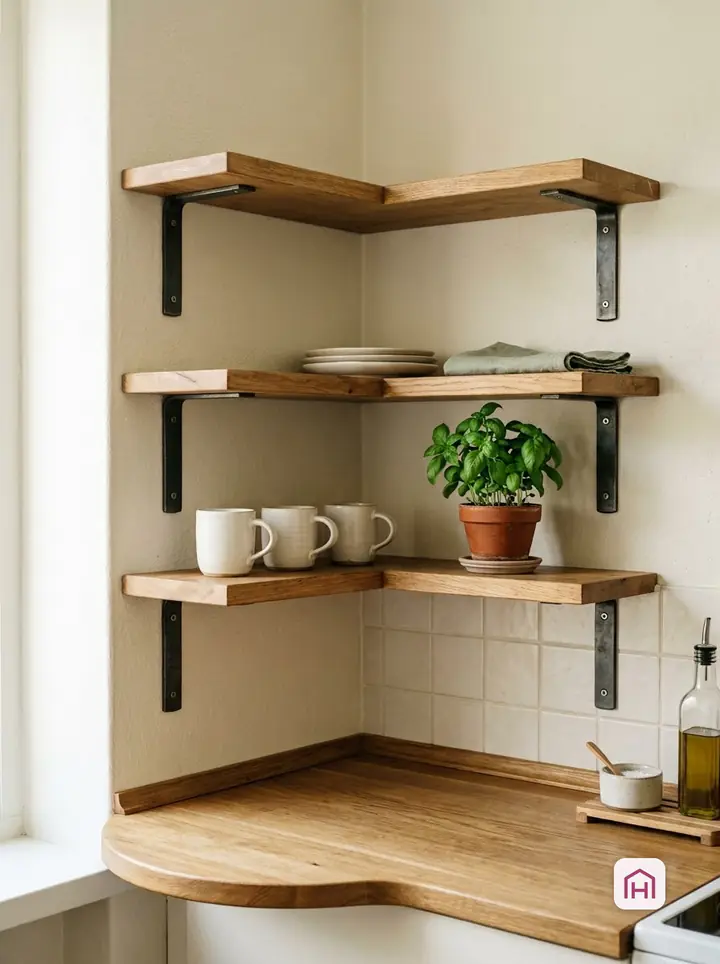
Three corner shelves where two walls meet
The awkward corner becomes the easiest shelf to reach.
Why it works
Corners above the worktop are hard to use with cabinets. Open corner shelves turn them into easy storage for mugs, a few plates and a plant; an empty top shelf leaves room to breathe.
Materials and furniture
- Corner shelves
- Brackets on both walls
- Fixings for your wall
Check first
- Check both walls for cables and pipes before drilling.
- Keep loads light and check what the brackets are rated for; the picture cannot show it.
- Keep shelves clear of the cooker's heat and out of the way of your head at the corner.
-
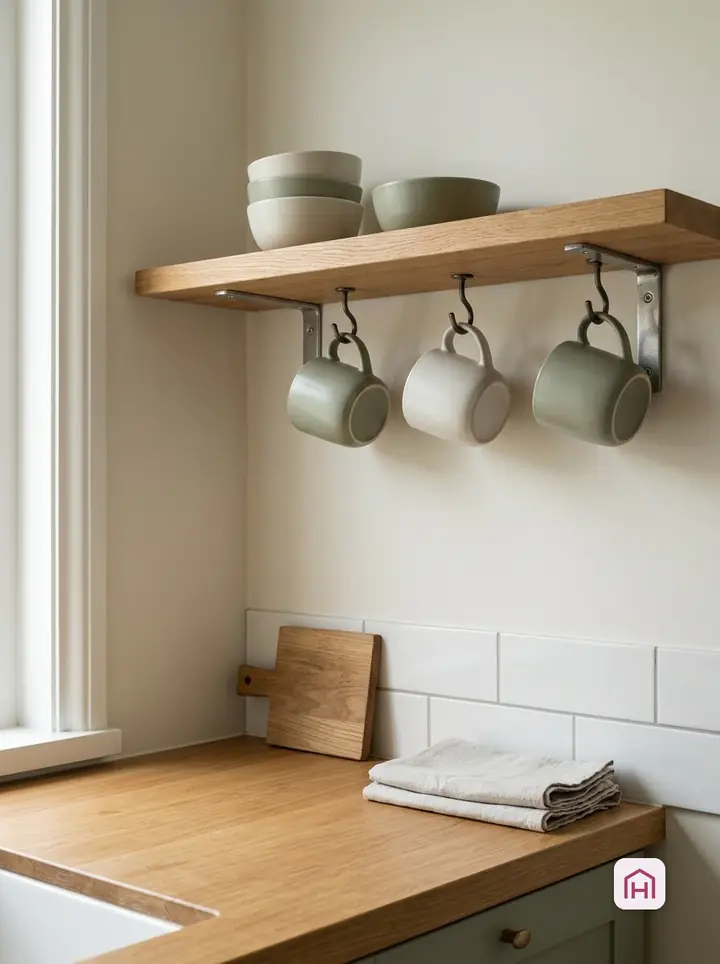
A shelf with hooks underneath for mugs
The underside of a shelf is free storage for mugs.
Why it works
Hooks screwed under a shelf hold mugs by their handles, so the shelf above keeps its full depth for bowls or jars.
Materials and furniture
- Shelf
- Cup hooks
- Brackets
Check first
- Space the hooks so mugs do not knock into each other or the wall.
- Hanging mugs collect grease near the hob; keep them away from it.
- Leave enough head room above the worktop; the picture shows no load rating for the hooks.
-
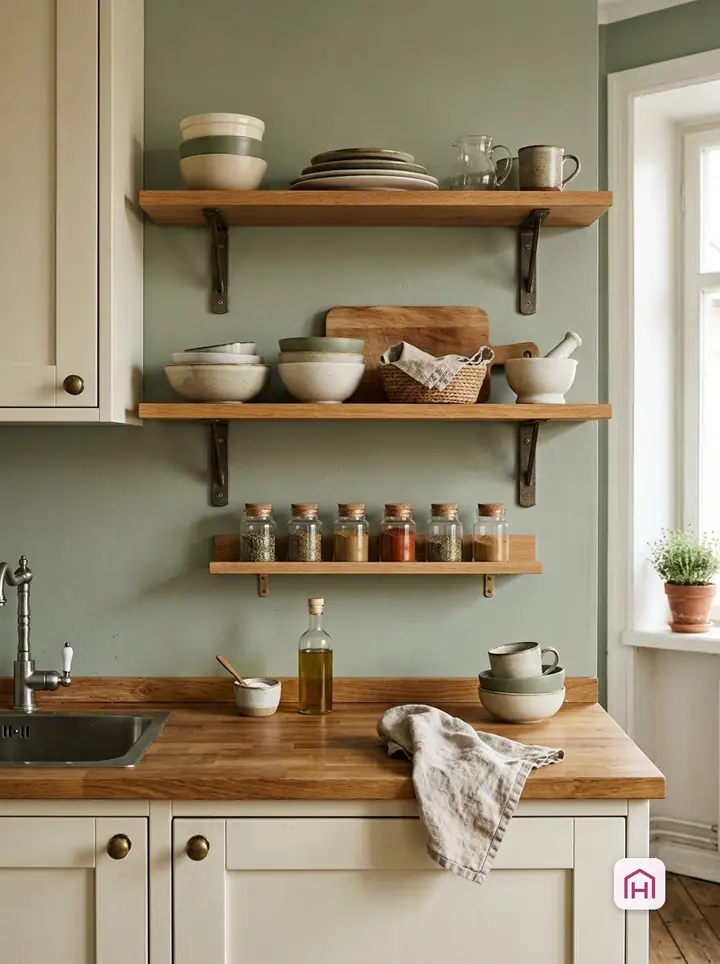
A narrow ledge, one jar deep, for spices
One row, every jar visible.
Why it works
The lowest shelf here is only as deep as one spice jar: every jar is visible at once and it takes almost no space above the worktop. Two deeper shelves above carry the everyday dishes.
Materials and furniture
- Narrow ledge with a lip
- Matching jars, labelled
Check first
- Keep spices out of the steam and heat above the hob.
- A lip stops jars sliding off.
- Spices keep better out of direct sunlight; label the jars, which the picture does not show.
-
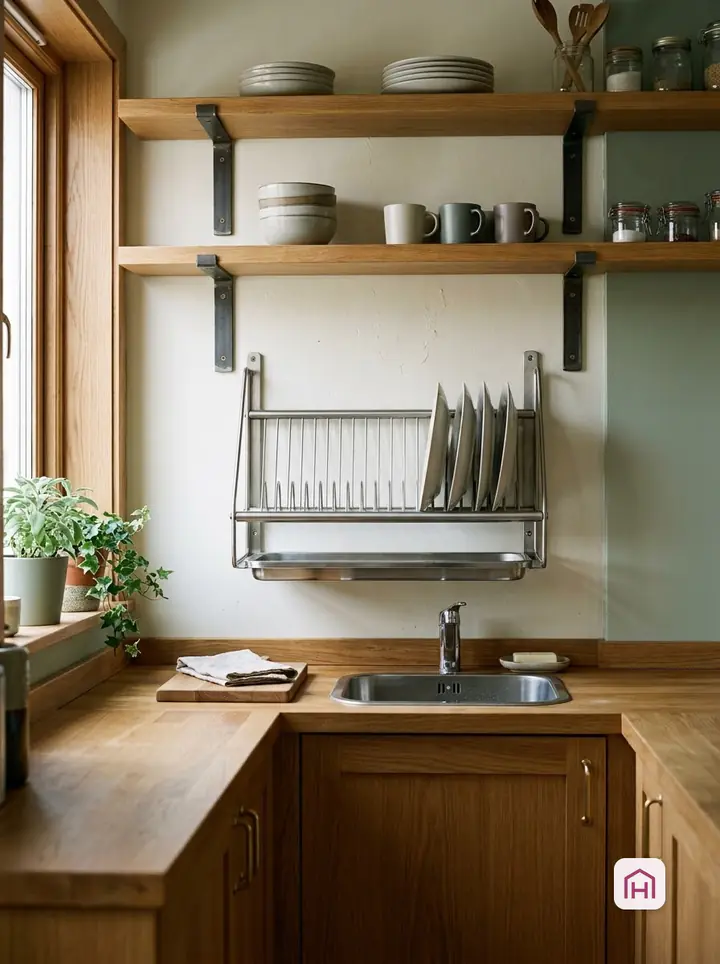
A plate rack with a drip tray over the sink
Wet plates dry above the sink instead of on the worktop.
Why it works
A plate rack above the sink lets washed plates dry where they will be put away, and keeps the worktop free. The rack in the picture has a tray underneath that catches the drips.
Materials and furniture
- Wall-mounted plate rack with drip tray
- Rust-resistant fixings
Check first
- The tray collects water: empty and clean it regularly. The picture does not show water draining into the sink.
- Wet plates are heavy: use fixings rated for the load in your wall.
- Leave head room above the tap and choose materials that cope with constant moisture.
-
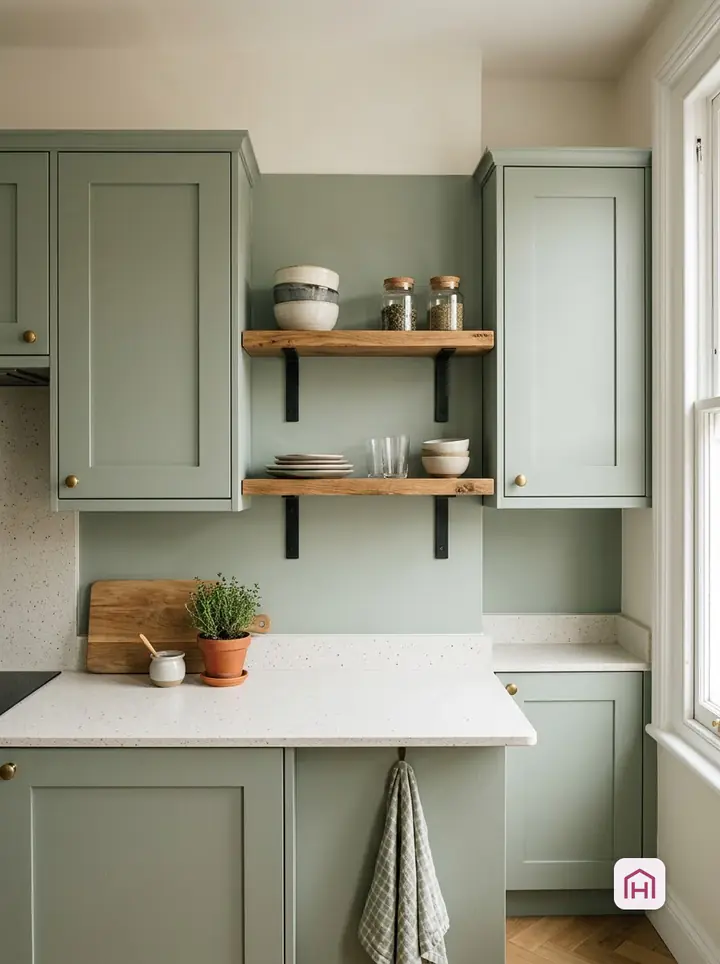
Open shelves in a gap between wall cabinets
One open bay between closed cabinets lightens the whole wall.
Why it works
Open shelves in place of one wall cabinet break up a heavy row of cabinets and give the daily dishes a place within reach. The picture shows the result, not a cabinet being removed.
Materials and furniture
- Shelves to fit the gap
- Brackets
- A home for what was in the cabinet
Check first
- Removing a wall cabinet in a rental needs permission; keep it if you must put it back.
- The wall behind may need repairing or painting.
- Decide where the cabinet's contents will go before removing it.
-
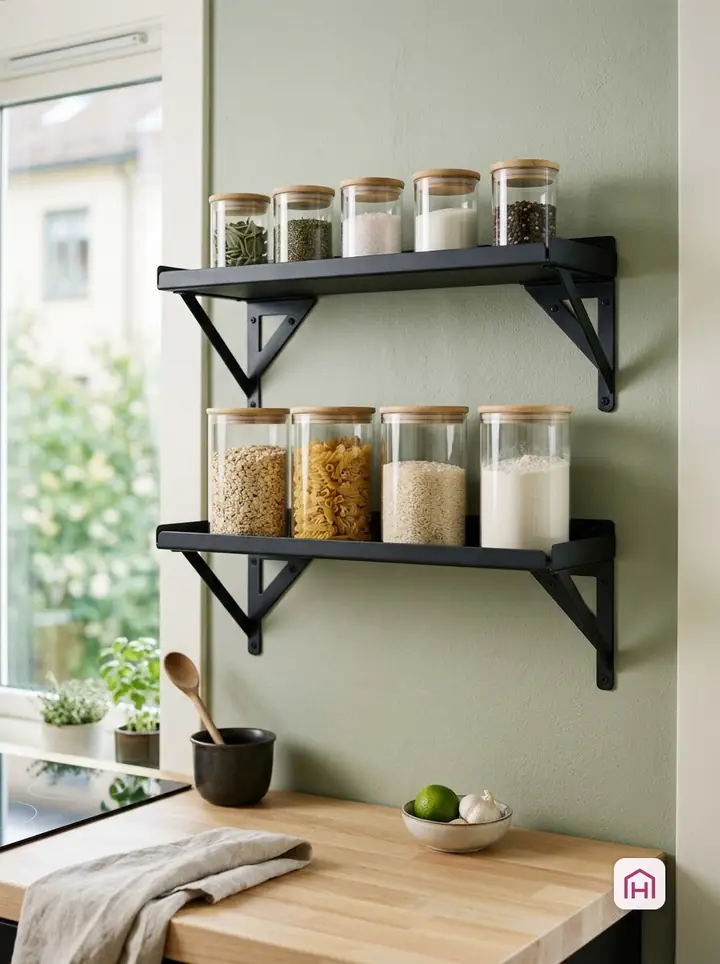
Black metal shelves with matching storage jars
Matching jars make a full shelf look calm.
Why it works
Dry goods in matching glass jars look orderly on open shelves and show at a glance what is running low. Shelves with a raised edge stop jars from sliding off.
Materials and furniture
- Metal wall shelves with a lip
- Matching glass jars with lids
- Labels
Check first
- Full glass jars are heavy; check the shelf's rating. The picture cannot show the material or load capacity.
- Keep shelves and jars away from the hob's heat and steam.
- Label the jars, including dates for flours and grains.
Rules for open shelves
- Daily only. What you use and wash every day collects less dust and grease, because it is washed often; the shelf itself still needs wiping.
- Away from the hob. Steam and grease rise above the cooker and settle on everything nearby.
- Heavy low, light high. Plates and full jars on the lower shelf, light things above.
- Repeat. Matching plates, glasses or jars look calm even when the shelf is full.
- Leave gaps. A shelf packed to the edges looks cluttered and is harder to use.
Grease and dust
Even away from the hob, kitchen air carries some grease, and it settles as a sticky film that catches dust. Washing things daily reduces what builds up on them, but the shelf and the items at the back still collect a film. A closed cabinet for rarely used things, lidded jars and a regular wipe of the shelves keep it under control.
Loads
A stack of plates or a row of full glass jars weighs more than it looks. The shelf's brackets and the fixings in your wall carry that weight, so choose brackets rated for it, fix them into studs or solid wall with fixings for your wall type, and space them as the maker suggests. The peg-rail guide explains how to find out what your wall is and scan for cables before drilling.