Idea gallery · 8 ideas
Painted ceiling ideas: 8 small rooms with a colourful fifth wall
Idea gallery 0 sources
Painting the ceiling a colour, the fifth wall, changes a small room without adding anything to it: a light colour feels airy, a dark one makes the room cosy and lower. Painting a ceiling needs stable steps or a platform and a roller on a pole. Bathrooms need paint made for humid rooms. Test colours in the room's own light first.
-
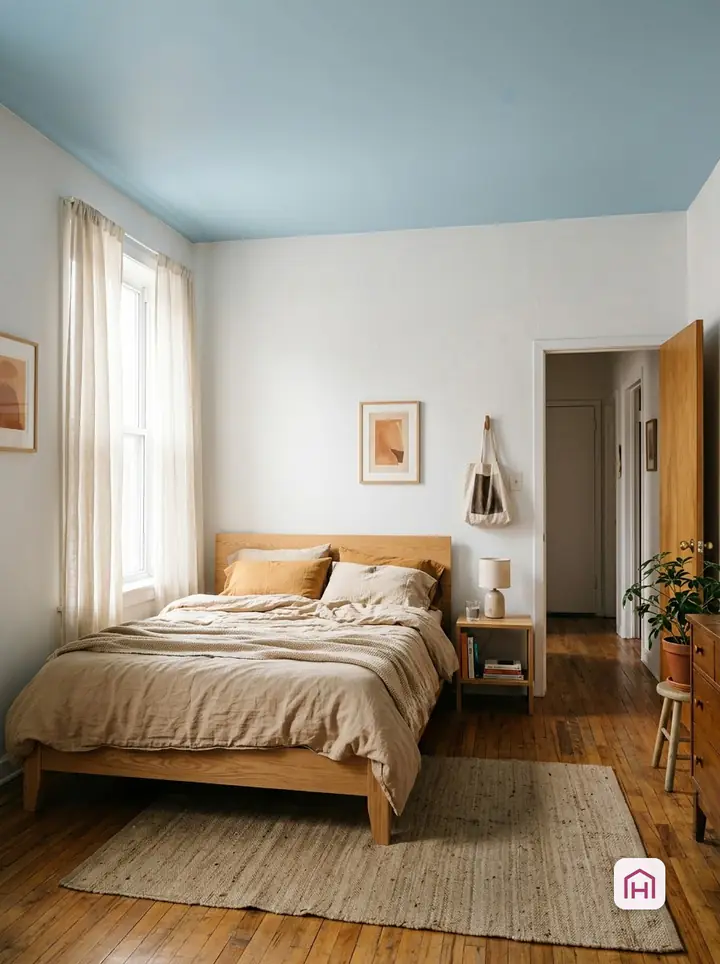
A sky-blue bedroom ceiling
A little sky above the bed.
Why it works
A pale sky-blue ceiling over white walls makes a bedroom feel airy and fresh, especially lying in bed.
Materials and furniture
- Pale blue ceiling paint
- Roller and extension pole
Check first
- Stable steps, not a chair.
- Test a real paint sample on the intended surface in your own light.
- In a rental, ask first.
-
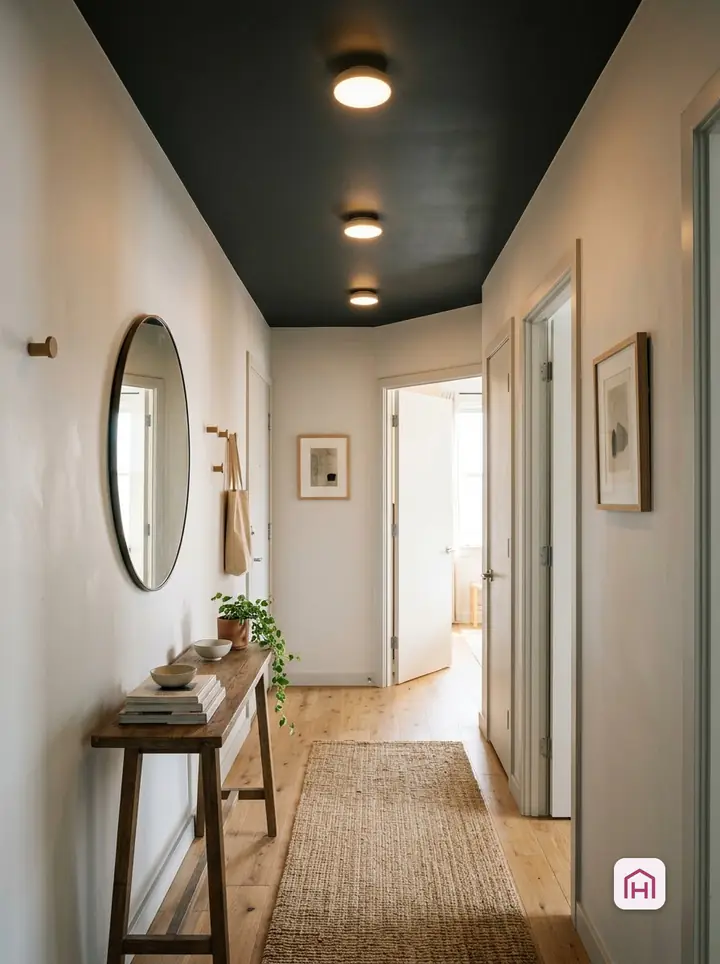
A dark hallway ceiling
A low, dark lid makes a narrow hall feel intimate.
Why it works
A dark ceiling in a narrow hallway draws the eye down to the floor and the walls and makes the space feel intentional.
Materials and furniture
- Dark ceiling paint
- Good lighting
Check first
- Add enough light; dark ceilings absorb it.
- Stable access equipment.
- Test the colour first.
-
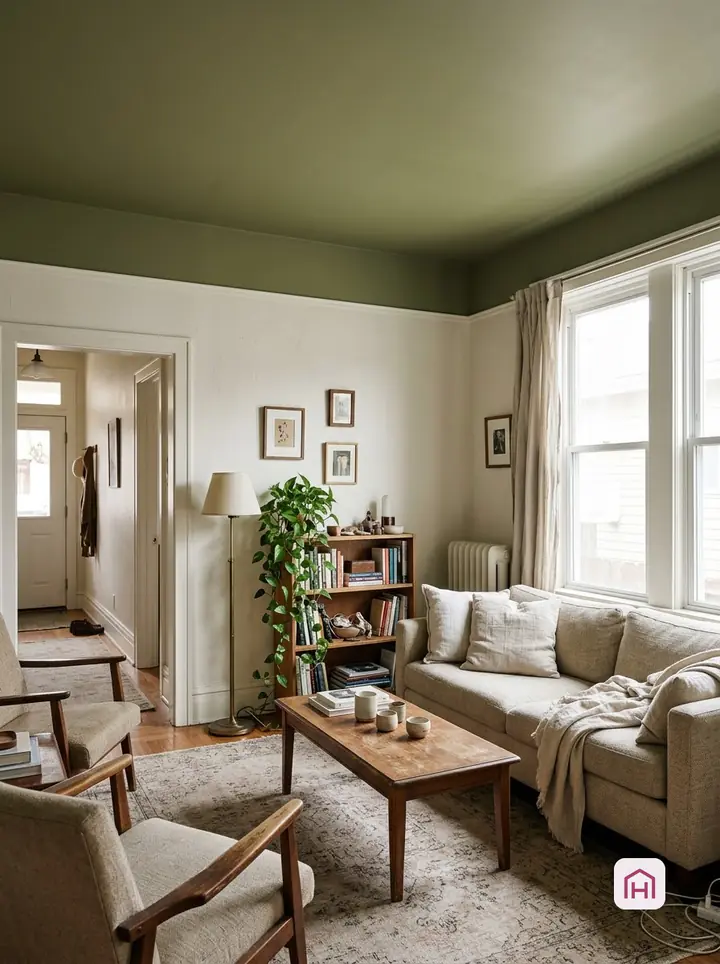
The ceiling and a top band in one colour
The colour folds down from the ceiling.
Why it works
Painting the ceiling and a band at the top of the walls in one colour lowers a tall room and frames it like a canopy.
Materials and furniture
- Ceiling and wall paint in one colour
- Painter's tape
- Spirit level or laser
Check first
- A level line matters: use a laser.
- Stable access equipment.
- Rentals: plan to repaint.
-
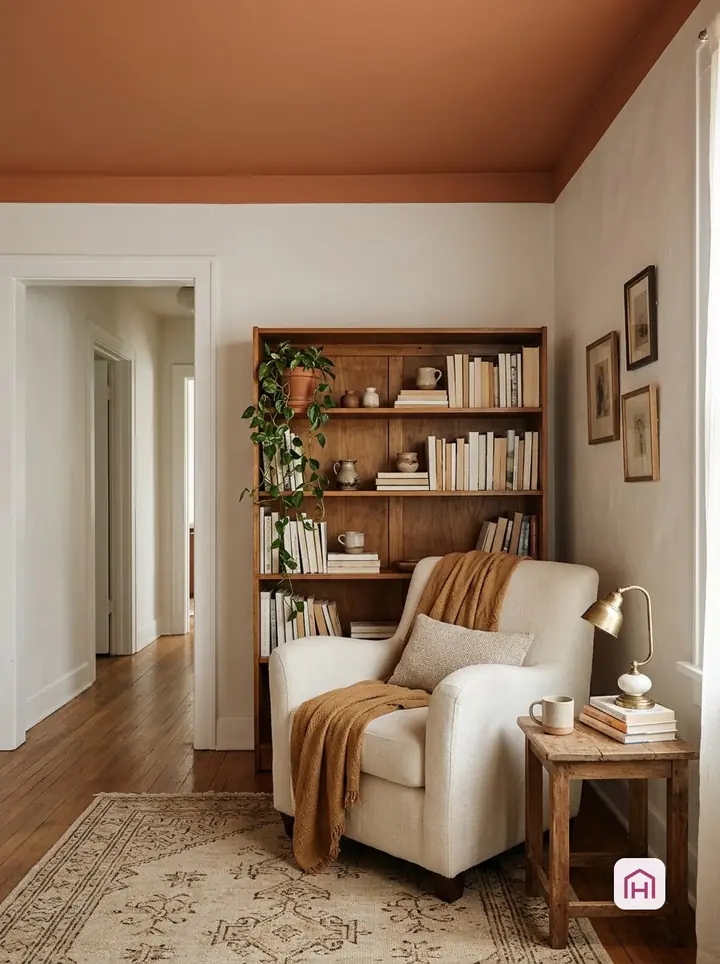
A terracotta ceiling over a dining nook
The colour above marks the nook below.
Why it works
A terracotta ceiling over a dining nook, or the part of the ceiling above it, defines the nook without a divider.
Materials and furniture
- Terracotta ceiling paint
- Tape for a clean edge
Check first
- Choose a clear stop line and compare a real sample under normal lights.
- Existing lights and electrical fittings need suitable protection and professional handling.
- Check the colour beside the chair and bookcase that will stay.
-
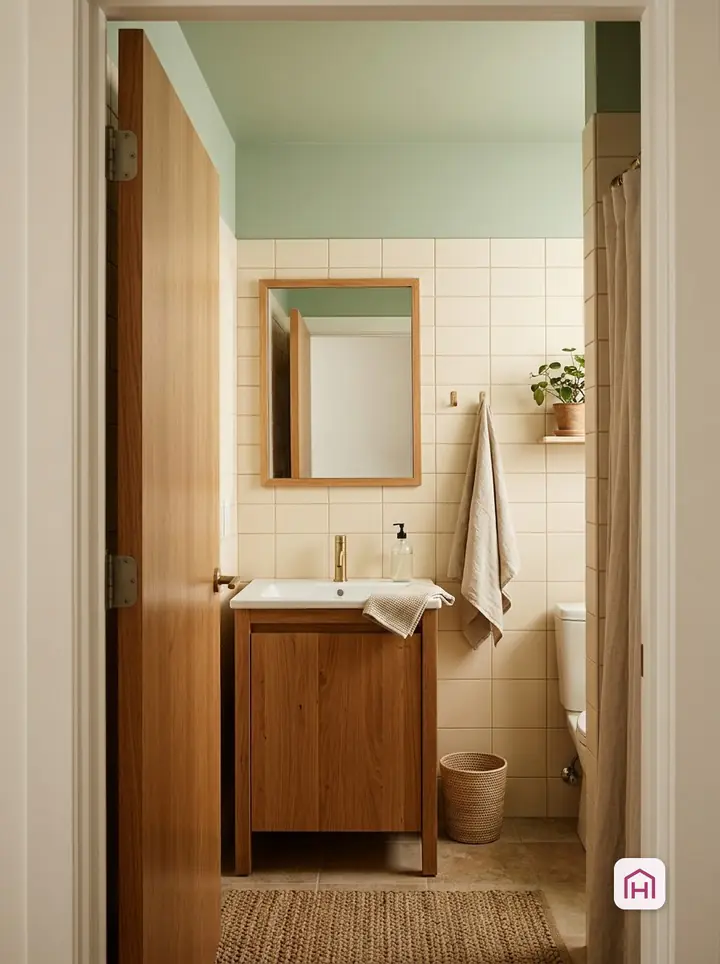
A pale sage bathroom ceiling
Soft green above cream tiles; choose the actual coating for the room conditions.
Why it works
A coloured ceiling and upper wall create a distinct plane above the tiles. Suitability for your humidity and surface comes from the coating instructions and wall condition, not from this finished-room image.
Materials and furniture
- Bathroom paint for humid rooms
- Ventilation
Check first
- Choose a coating suitable for the actual substrate and bathroom conditions.
- Resolve damp or peeling surfaces before decoration.
- Plan suitable access and leave electrical fittings to appropriate professionals.
-
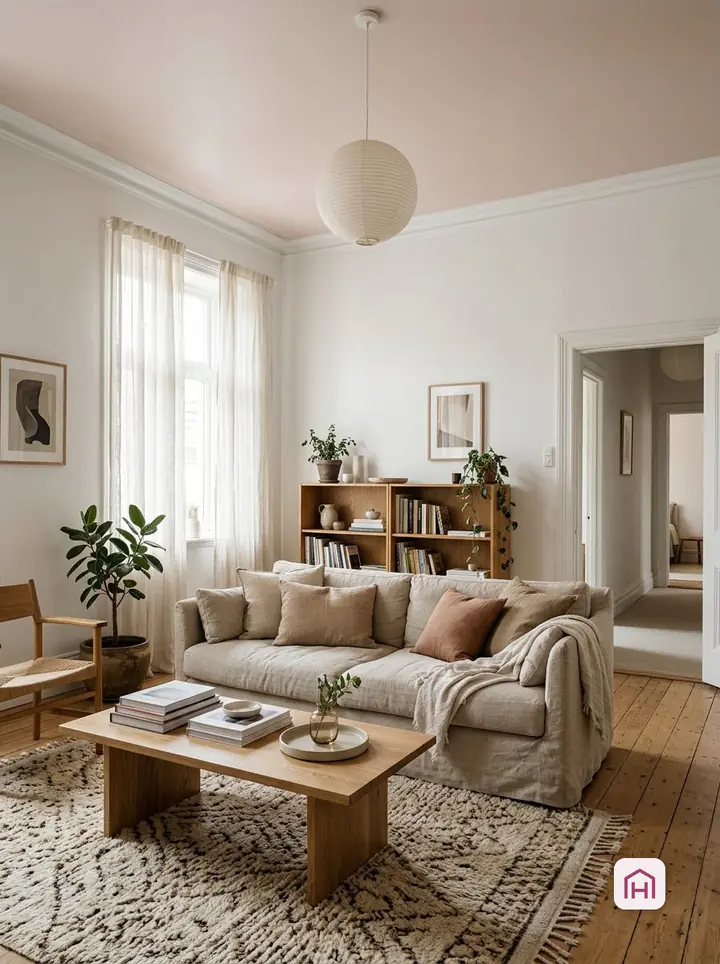
A soft pink ceiling with white walls
A warm glow over the whole room.
Why it works
A soft pink ceiling over white walls casts a warm glow across the room, especially in the evening.
Materials and furniture
- Soft pink ceiling paint
Check first
- Test a real paint sample on the intended surface in your own light.
- Stable steps.
- Test under evening lamps.
-
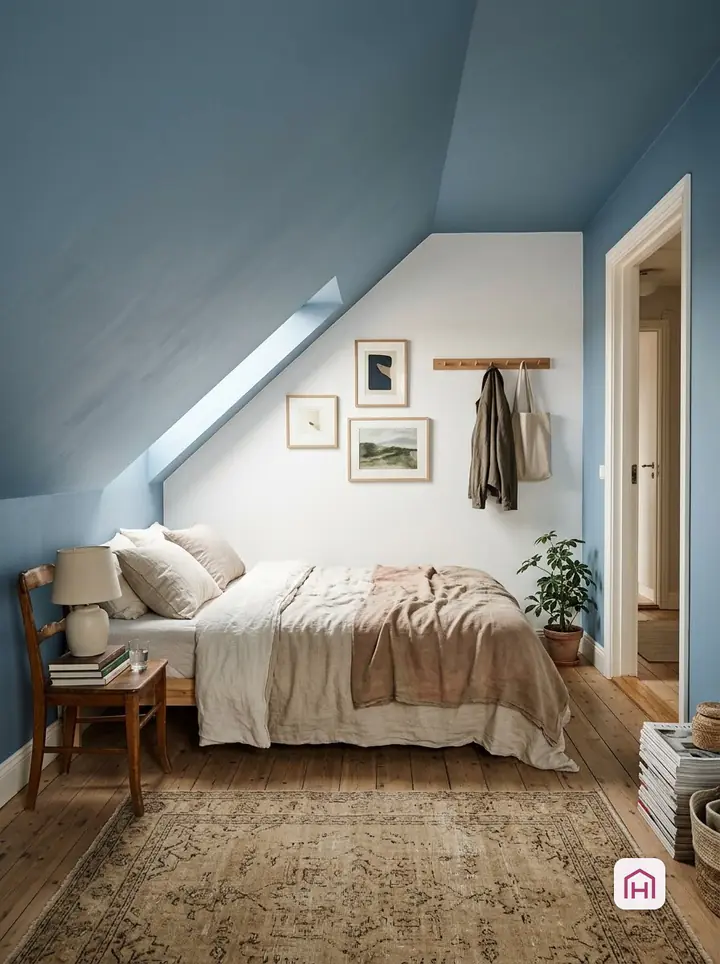
A sloped ceiling in colour
Paint the slope, not just the walls.
Why it works
In an attic room, painting the sloped part of the ceiling in a colour turns an awkward angle into a feature.
Materials and furniture
- Paint
- Roller and pole
Check first
- Stable access equipment under slopes.
- Decide where the colour stops.
- Air the room while painting.
-
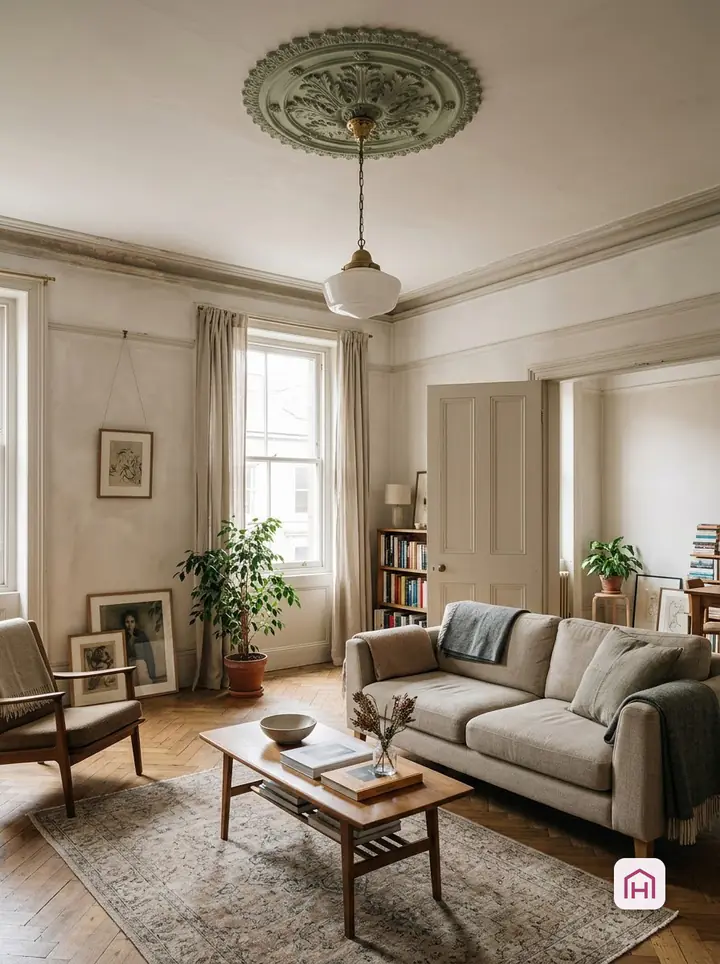
A highlighted ceiling rose
Bring out the period detail.
Why it works
Painting a period ceiling rose, or a circle around the light, in a contrasting colour draws attention to the detail.
Materials and furniture
- Small brush
- Contrasting paint
Check first
- Agree protection and handling of electrical fittings with an appropriate professional.
- Check access and the existing detail before planning fine brush work.
- Agree changes in a rental before starting.
The ceiling changes the boundary you notice
Colour overhead can turn an overlooked surface into a clear part of the room. A pale pink ceiling feels different from a dark hallway ceiling because of the light, adjoining walls and furniture beneath it. Compare those relationships rather than assuming that one colour always enlarges a room.
| Ceiling approach | Good reason to try it | Compare first |
|---|---|---|
| Pale blue above white walls | A distinct light upper plane | Daylight against existing white trim |
| Dark hallway ceiling | A deliberate enclosed mood | Real evening light and visibility |
| Colour continuing down a top band | A single boundary across uneven edges | Band ends at doors and corners |
| Terracotta over a nook | A warmer focal area | Existing upholstery and timber |
| Soft pink above neutral furnishings | Gentle colour without a feature wall | The actual lamp colour at night |
| Coloured attic slope | Makes the roof shape intentional | Where slope meets vertical wall |
Put the sample on the plane you are painting
A wall sample cannot fully represent a ceiling because its angle to the light differs. Use a removable sample board supported safely in a suitable position, or a small permitted test area that you can repaint. Compare morning, afternoon and lamp light. Record the sample manufacturer and finish; do not select a paint code from a rendered photograph.
Keep surfaces that stay in the room beside your sample: curtain, floor, worktop or bedding. If a colour clashes with a fixed finish, adjust the sample before changing every accessory. Decide the exact stopping edge before estimating paint quantity.
Separate the colour decision from the painting job
The surface condition and intended room determine the suitable product. A finished bathroom scene does not establish that any paint tolerates your humidity. Follow its preparation and application instructions, and resolve existing damp or peeling surfaces first.
Plan suitable access equipment and leave electrical fittings to appropriate professionals. Avoid leaning from furniture to reach the centre of a ceiling. If working around slopes, stairs or high fittings needs specialist access, include that in the project decision.
Save the preferred approach with a photo of your current ceiling, the chosen stop line and a real sample note. Those three details make the next conversation with a painter more useful than a colour name alone.