Idea gallery · 8 ideas
One rolling cart, 8 jobs: utility cart ideas for small apartments
Idea gallery 0 sources
Give a cart a parking spot and one main job: bedside storage, towels, craft supplies, plants, coffee serving, desk overflow, changing supplies or guest drinks. Measure handles and routes, follow load and castor instructions, and unload before difficult moves. A serving cart is not automatically an appliance worktop.
-
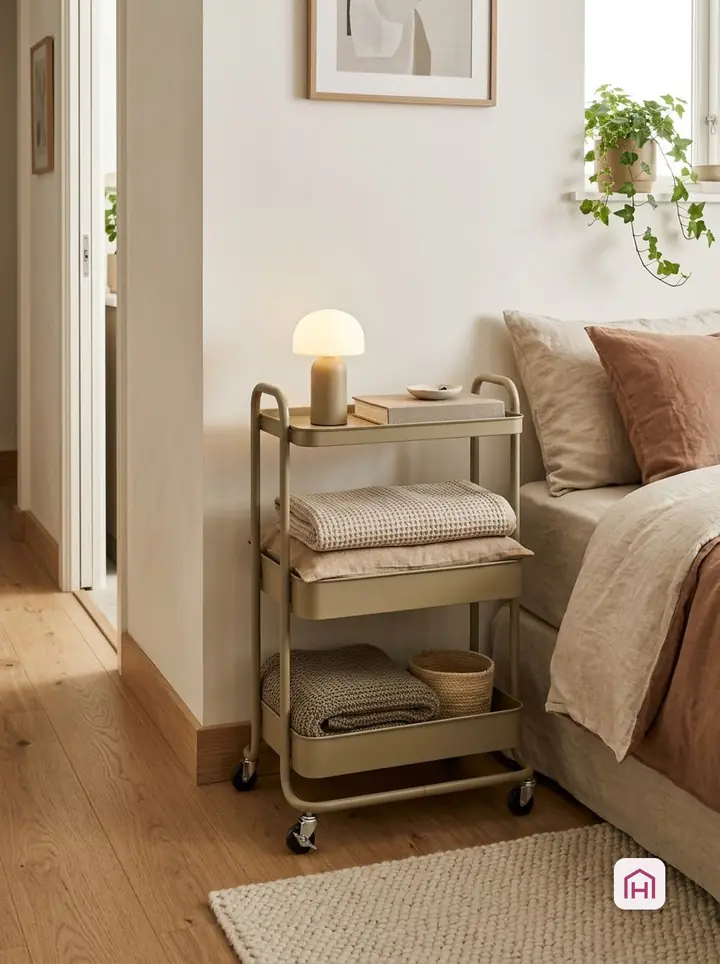
A rolling cart as a bedside table
Lamp and book on top, a basket of spares below, and it rolls away to make the bed.
Why it works
Where there is no room for a bedside table, a slim cart fits in the gap and holds more than a nightstand: a lamp on top, books in the middle, spare bedding at the bottom.
Materials and furniture
- Slim three-tier cart
- Battery or plug-in lamp
- Basket
Check first
- Lock the castors so it does not roll away when you reach for it in the dark.
- Lead the lamp cable along the wall, not across the floor.
-
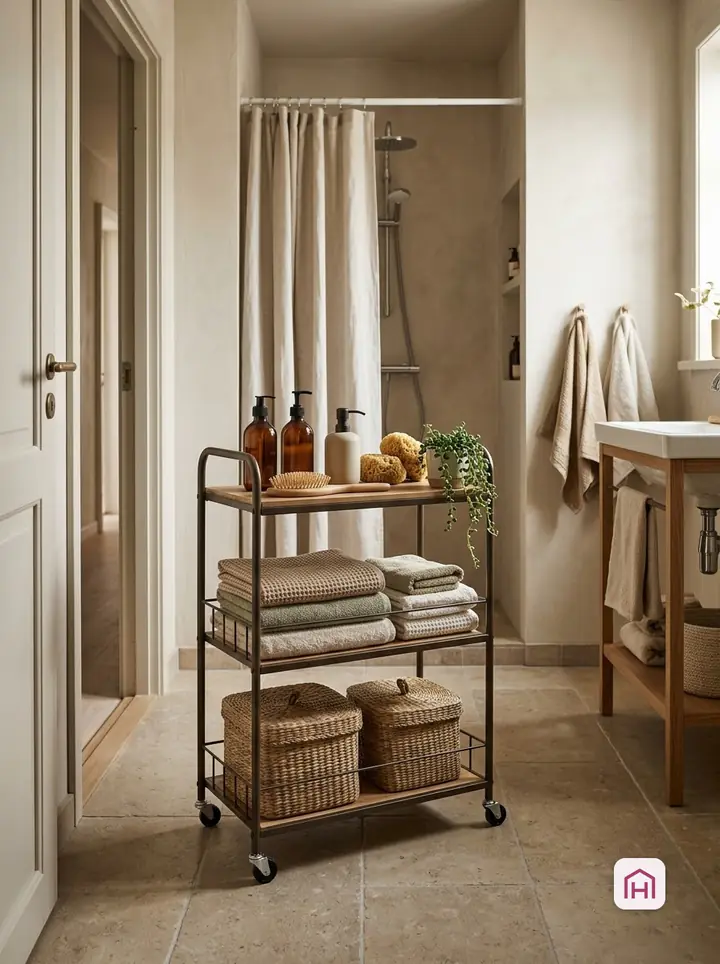
Towels and toiletries on a cart in the bathroom
Storage for a bathroom with no cabinet and no wall you may drill.
Why it works
In a bathroom without a cabinet, a cart holds rolled towels, toiletries and spare toilet paper, and can be moved to clean the floor.
Materials and furniture
- Cart with a finish suited to damp rooms
- Small boxes or trays
Check first
- Choose a cart made for damp rooms; some metal finishes rust.
- Keep it away from where water splashes, and dry the floor under it.
- Keep medicines and cleaning products out of children's reach.
-
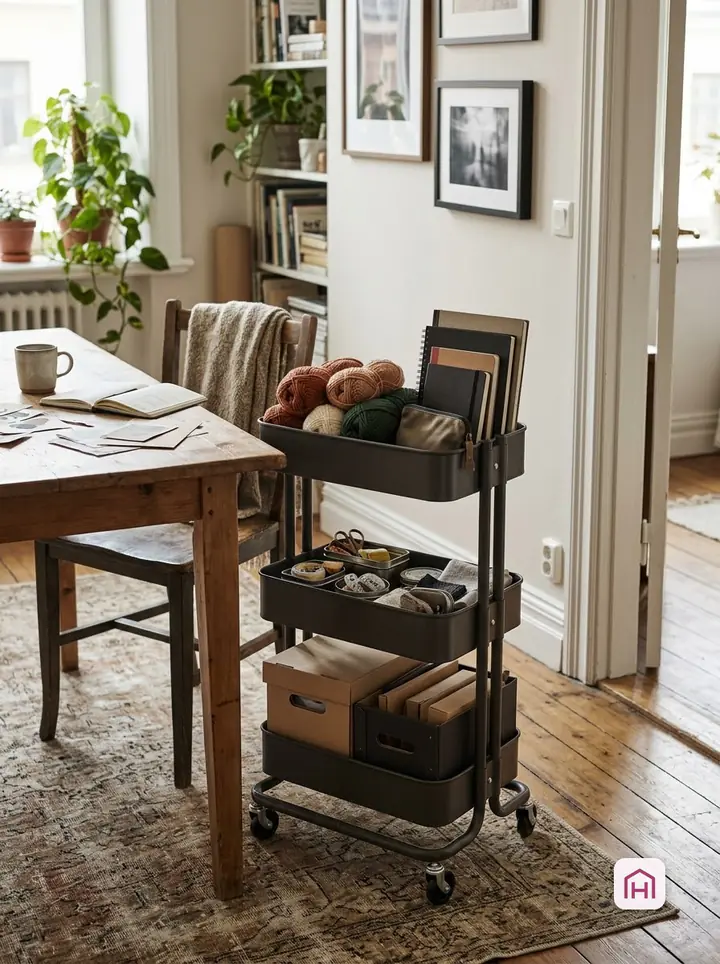
A craft cart that rolls to the table
Everything for one hobby on one cart, ready in a minute and gone in a minute.
Why it works
Paper, pens, yarn or paints on one cart mean the hobby can start at the dining table and end with everything rolled back into a corner.
Materials and furniture
- Three-tier cart
- Jars and small boxes
- Labels
Check first
- Sharp tools and small parts out of reach of young children.
- Heaviest supplies on the bottom shelf.
-
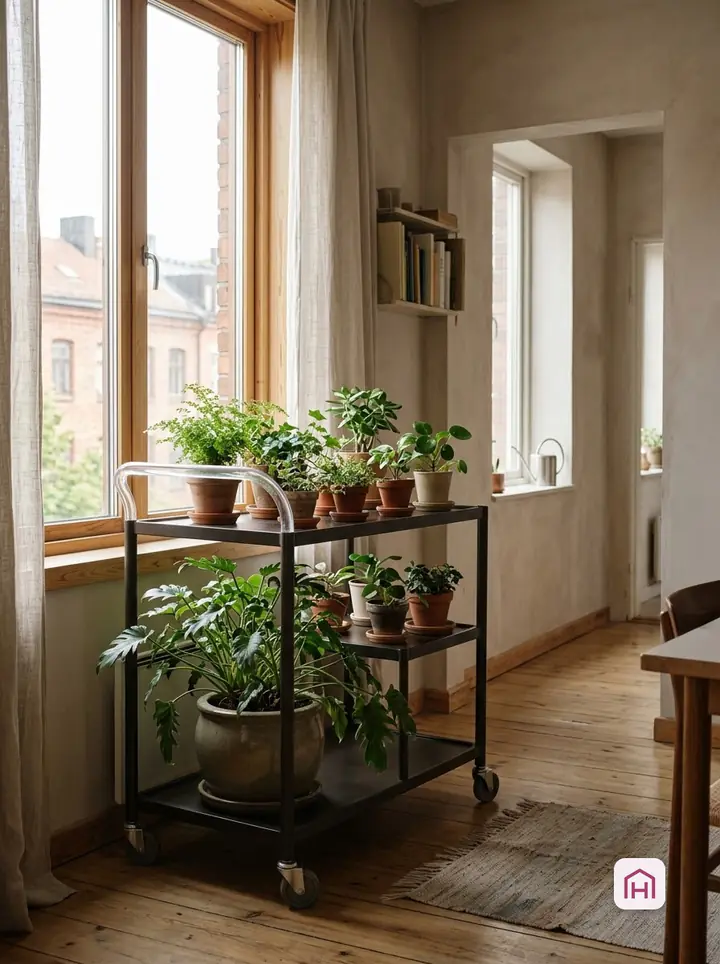
A plant cart by the window
Plants follow the light and roll aside when the window needs opening.
Why it works
Plants on a cart can be moved closer to the window in winter, away from a radiator or out of hot afternoon sun, and rolled aside for cleaning.
Materials and furniture
- Cart
- Plant pots with saucers
- Watering can
Check first
- Saucers under every pot; water and metal or wood do not mix.
- Soil and water are heavy: keep the biggest pots on the bottom shelf.
- Check the shelf load before filling it with pots.
-
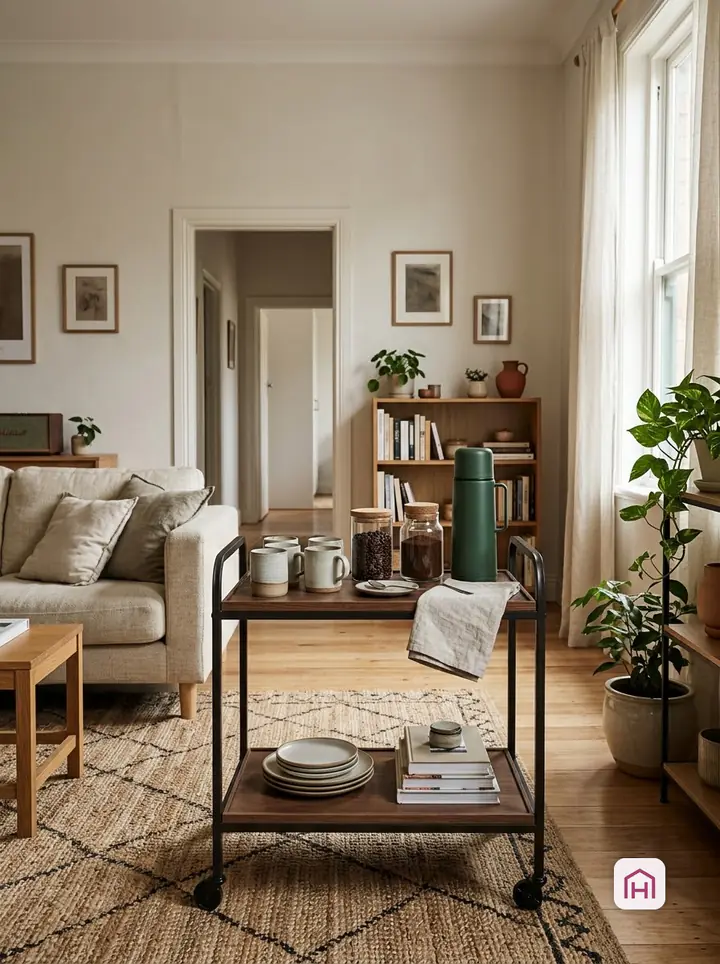
A coffee serving cart in the living room
Cups, jars and an insulated flask arrive together for serving.
Why it works
A serving cart groups cups and prepared coffee near the sofa, then returns to its parking place. Keep powered brewing appliances on an appropriate stable surface according to their instructions.
Materials and furniture
- Serving trolley with stated load
- Cups and tray
- Insulated flask
Check first
- Park and secure the trolley as its instructions require before serving.
- A trolley is not automatically a worktop for a kettle or coffee machine.
- Unload insecure heavy contents before crossing difficult thresholds.
-
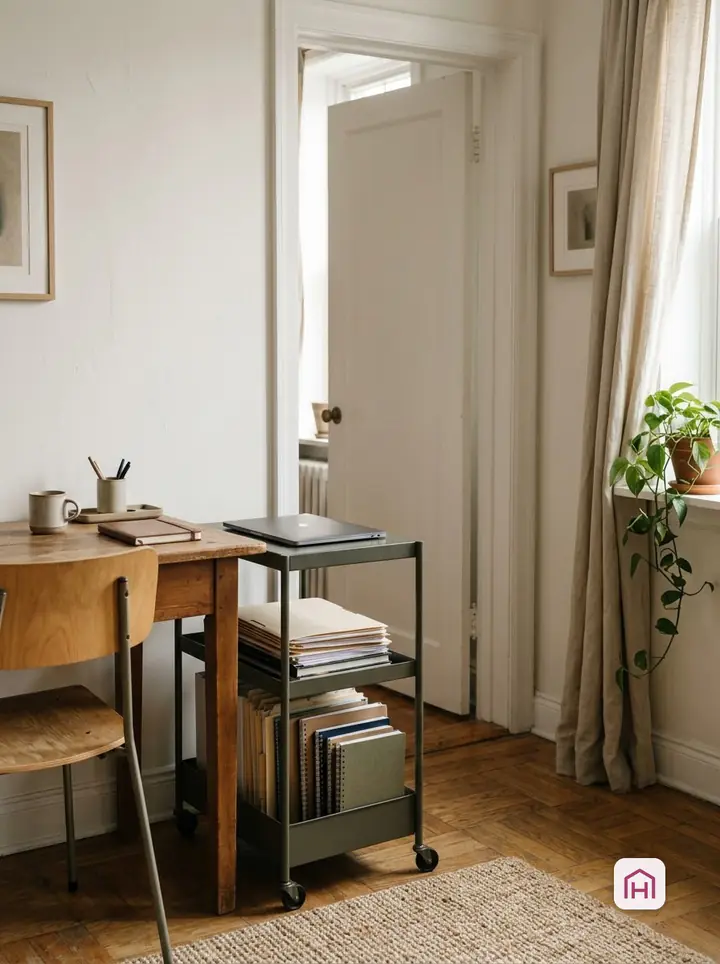
A desk overflow cart that hides after work
Work things in one place, rolled out of sight in the evening.
Why it works
Laptop, notebooks and chargers on a cart beside the desk or dining table; after work it rolls into a corner and the room is a living room again.
Materials and furniture
- Cart
- Folders or file boxes
- Cable organiser
Check first
- Unplug chargers before rolling the cart away.
- Keep heavy files on the bottom shelf.
-
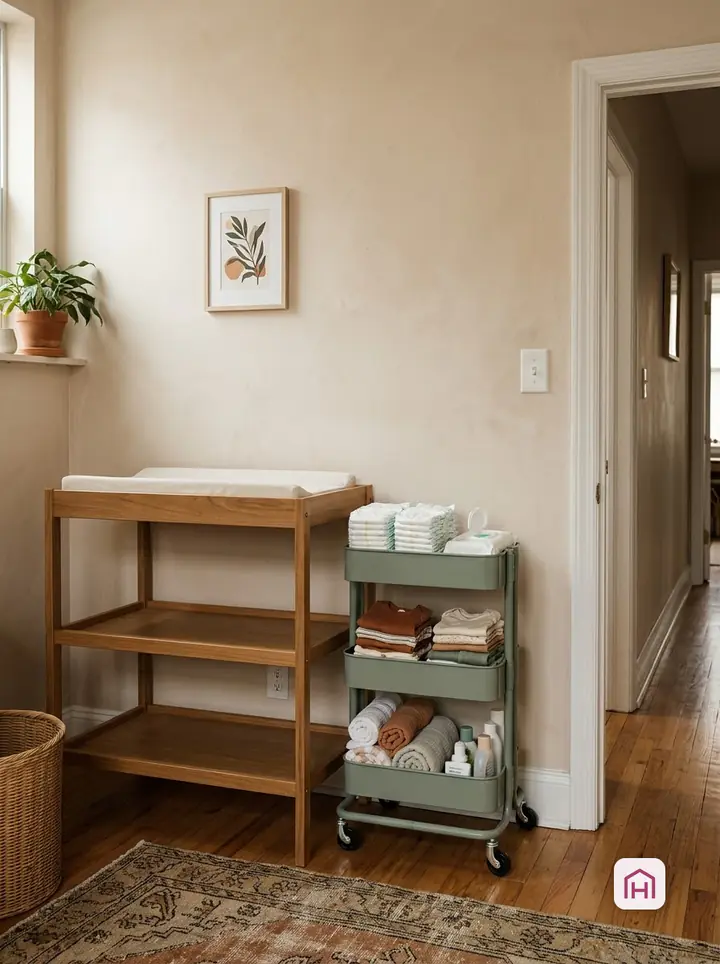
Changing supplies on a cart beside the changing area
Nappies, wipes and spare clothes within your reach, not the baby's.
Why it works
A cart beside the changing area keeps nappies, wipes, creams and spare clothes in one place and rolls along when the changing spot moves.
Materials and furniture
- Cart with locking castors
- Small baskets
Check first
- Keep creams and small items out of the baby's reach.
- Lock the castors; a cart must never be used to support the baby.
- As children start to climb, a cart can tip; empty or move it.
-
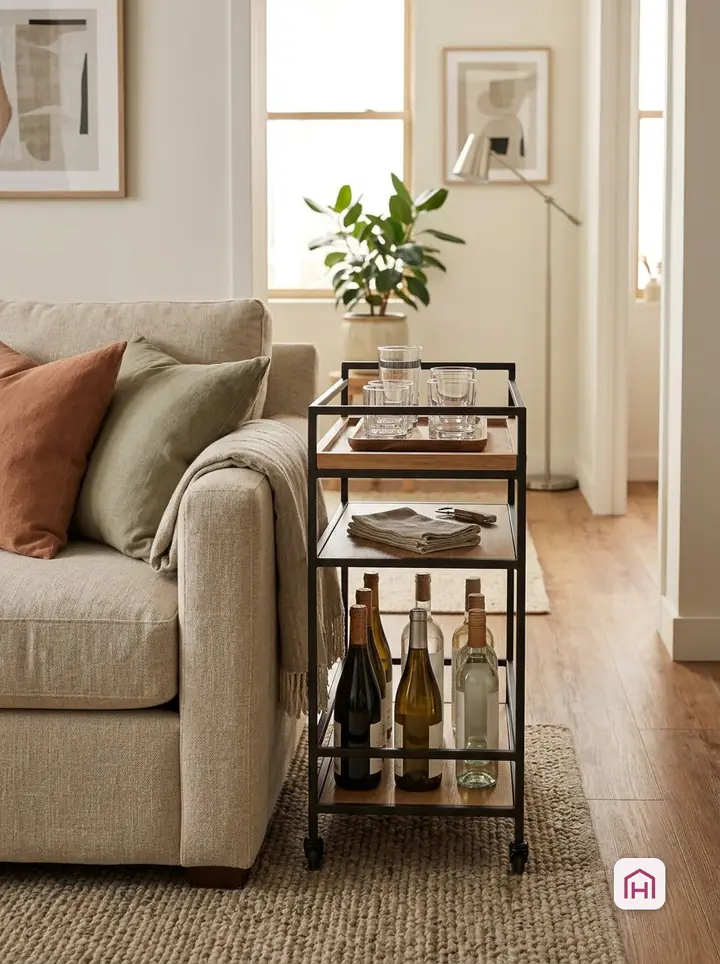
A drinks cart for guests
Glasses and drinks roll out when guests arrive and back when they leave.
Why it works
For guests, the cart rolls next to the sofa with glasses, a jug of water and drinks; the rest of the time it stands in a corner and holds the glasses.
Materials and furniture
- Cart with rimmed shelves
- Glasses
- Tray
Check first
- Keep heavy bottles low and contain glassware in a suitable tray.
- Unload before difficult moves and follow handling instructions; do not lift a loaded cart with unsecured glassware.
A cart needs a parking place as well as a job
A mobile shelf is useful when it collects one task and returns to a predictable place. Decide where it lives when you are not using it, then check the whole route between that spot and the work area. A cart that blocks a door when parked has not added useful storage.
| Job | What belongs together | Check in the actual room |
|---|---|---|
| Bedside cart | Book, battery lamp and small basket | Reach from bed and making the bed |
| Bathroom cart | Daily toiletries and clean towels | Dry parking area and wiping underneath |
| Craft cart | Supplies for one current hobby | Table approach and put-away routine |
| Plant cart | Pots with saucers | Watering access and load of wet pots |
| Coffee serving | Cups, coffee and insulated flask | A stable parking place away from the route |
| Desk overflow | Files and a closed laptop | Unplugging before the cart moves |
Measure past the handles
Check overall width including handles, shelf openings and the space taken by swivel castors. Measure the largest item you want to store, not just the empty shelf. Rimmed shelves can help contain small items but do not secure a tall bottle while moving.
Test a lightly loaded cart over the route before filling it. Rugs, thresholds and uneven tiles may stop small wheels. Do not force a fully loaded cart over an obstacle or lift it with unsecured heavy contents; unload and follow the product's handling instructions. Check shelf and total load limits separately.
Keep movement separate from serving
Park and secure the cart as its instructions require before placing drinks on it. The coffee scene uses a serving flask; a rolling trolley is not automatically an appliance worktop. Keep powered brewing equipment on an appropriate stable surface according to its own instructions.
Changing supplies can be stored on a cart beside a separate changing area, but the cart is never a surface for a baby. Keep small items out of children's reach and choose a different storage arrangement once the cart becomes a climbing temptation.
One cart can serve several jobs over time, but it cannot be available in every room at once. Choose the main job first. Save that scene with parking dimensions, wheel requirements and the heaviest planned shelf contents, then see which secondary use fits without constant unloading.