Idea gallery · 8 ideas
Shaker peg rail ideas: 8 ways to use one rail by the door
Idea gallery 0 sources
A peg rail is one board with pegs, so it adapts: one long rail at adult height for daily coats, a second one lower for children, a shelf on top for gloves and hats, or a lower rail used as display. Whatever goes on it, it only holds what its fixings and your wall can hold.
-
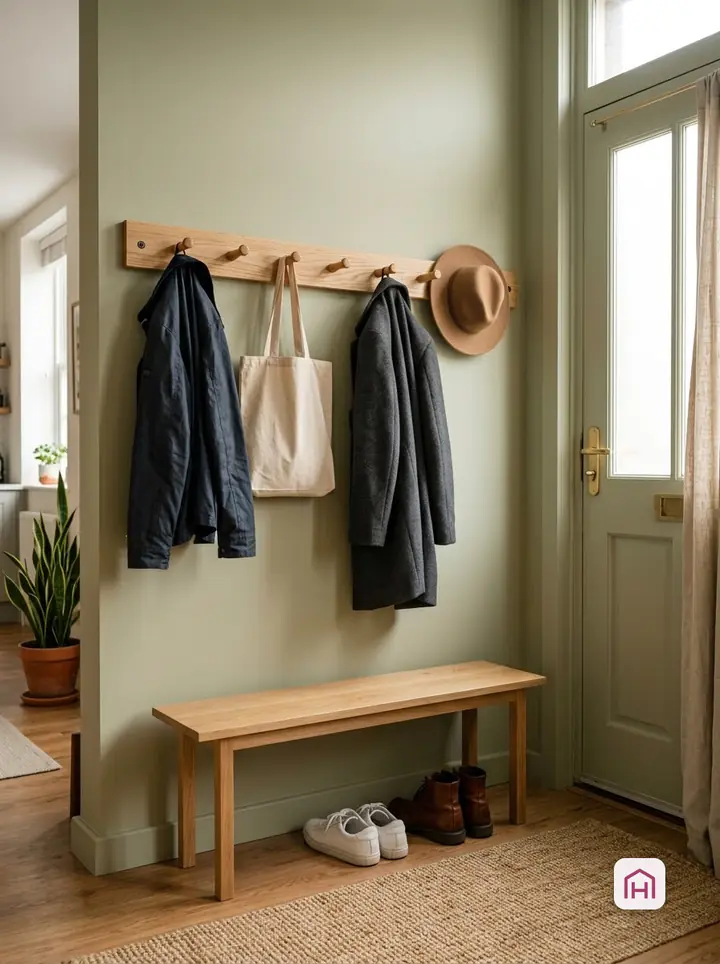
One long rail at adult height, one item per peg
Leave every other peg free and the rail still looks tidy when it is full.
Why it works
A long rail at shoulder-to-head height takes the coats and bags everyone uses daily. Hanging one item per peg, with gaps, stops coats piling on top of each other, so you can take one without the rest falling.
Materials and furniture
- Peg rail long enough for one peg per person plus spares
- Fixings for your wall
- Bench or shoe rack below
Check first
- Set the height with your longest coat: the hem should clear the bench or shoes below.
- Fix into studs or solid wall. The picture shows no fixings, load rating or wall type; what a rail holds depends on its fixings and your wall.
- Keep it out of the door's swing and check the path left in front of hanging coats; the picture shows no measured walkway.
-
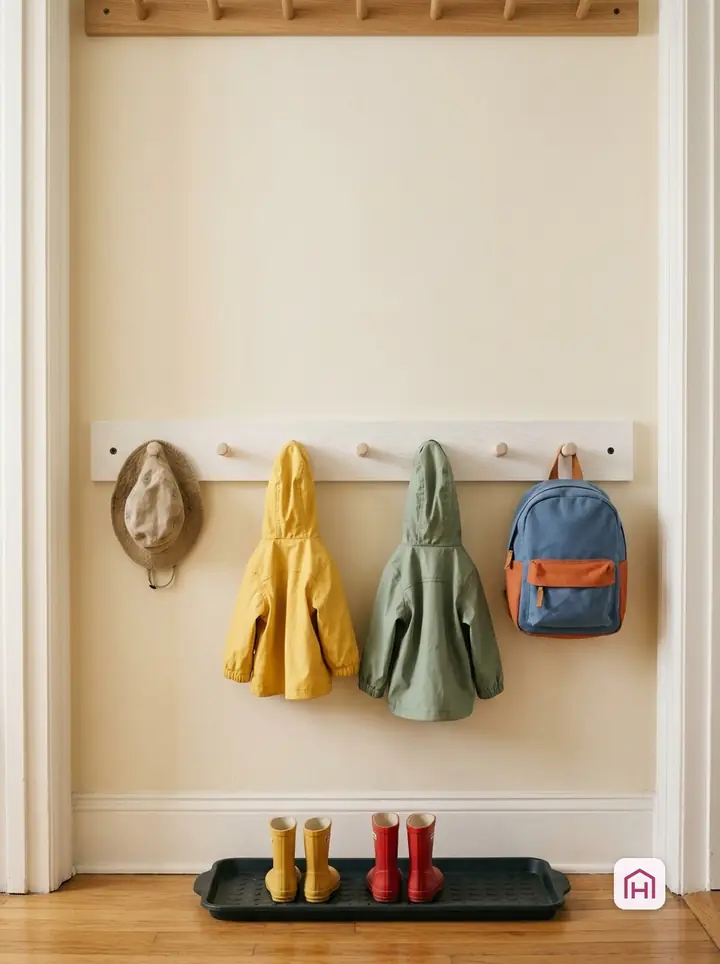
A low rail children can reach on their own
When the pegs are at their height, children hang their own things.
Why it works
Children only use a rail they can reach. A second rail at their height takes small jackets, school bags and hats, and the adult rail above stays free for long coats.
Materials and furniture
- Second peg rail
- Fixings for your wall
- Low boot tray
Check first
- Measure your children's reach rather than using a standard height; raise the rail as they grow.
- Rounded peg ends matter at a child's eye level.
- Children may climb or hang on pegs: fix the rail very securely within the fixing maker's ratings. The picture shows no fixings, load rating or wall type; what a rail holds depends on its fixings and your wall.
-
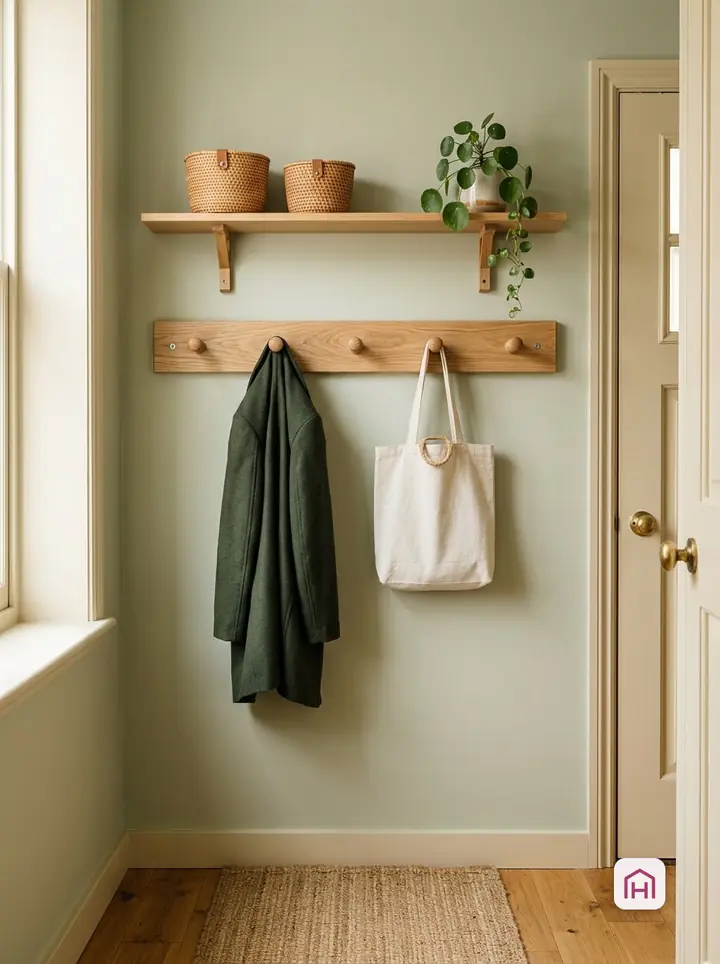
Peg rail with a narrow shelf on top
The shelf takes hats and gloves; the pegs below take what you wear.
Why it works
A shelf directly above the rail turns one strip of wall into two layers of storage: baskets for gloves, hats and sunglasses up top, coats and bags below. It costs almost no extra depth.
Materials and furniture
- Peg rail with shelf, or a rail plus a narrow shelf on brackets
- Two or three baskets
- Fixings for your wall
Check first
- Light things only on the shelf, and nothing that can slide off when you pull a coat.
- Leave enough space between shelf and pegs to lift coats off.
- Shelf brackets carry the shelf's load: use the fixings their maker specifies; the picture shows no rating.
-
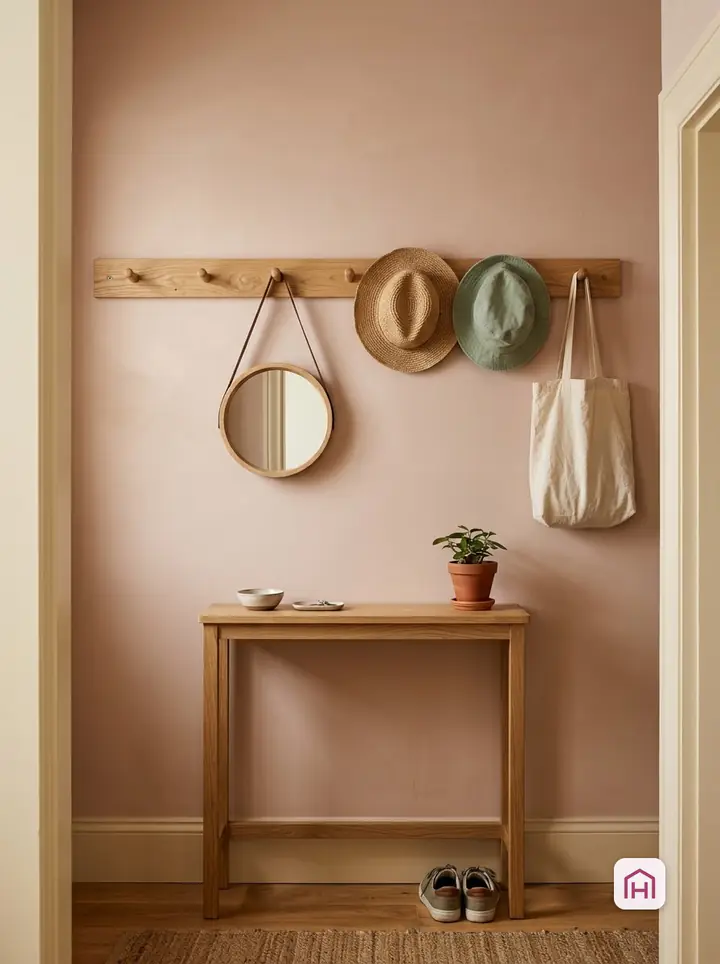
A mirror on a strap and hats on the pegs
The rail holds the last look before you leave, not just the coats.
Why it works
A small mirror hanging from a peg on a strap gives a last check before you leave without another hole in the wall. Hats either side are easier to grab than from a shelf.
Materials and furniture
- Peg rail
- Small, light mirror with a hanging strap
- Hats
- Slim console or shelf below
Check first
- Use only a small, light mirror, and check the rail and peg rating before hanging one; a heavier mirror belongs on its own wall fixing.
- A swinging mirror can knock against the wall: a felt pad behind it helps.
- Keep the mirror out of reach of a door that swings open.
-
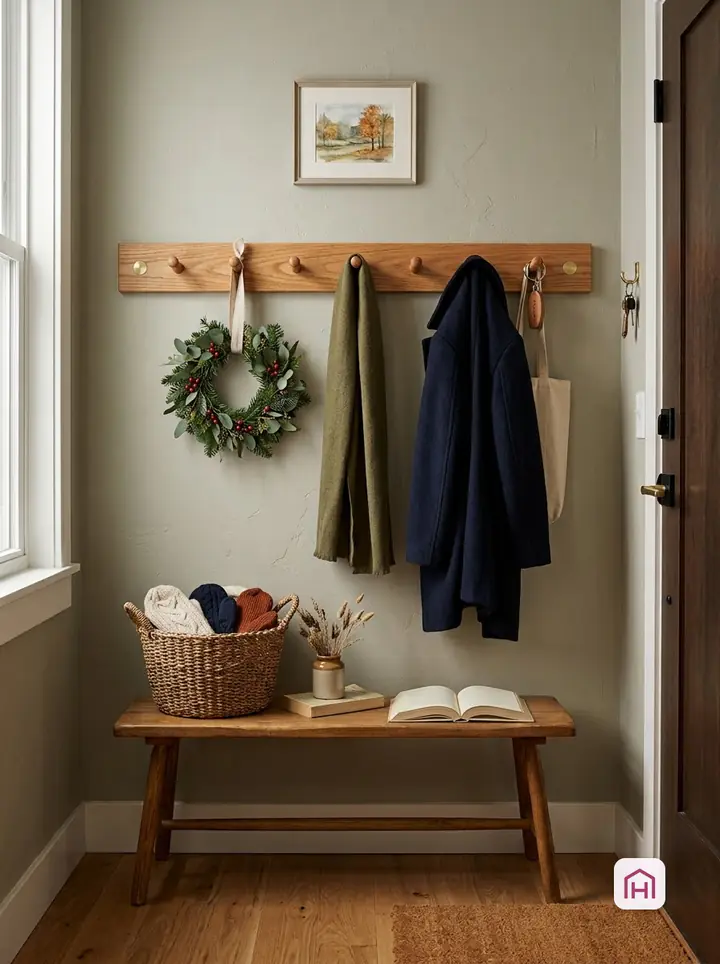
A seasonal wreath hanging from one peg
One peg becomes the seasonal decoration; the others still hold coats and bags.
Why it works
A peg rail is an easy place to change with the season: a wreath on a ribbon in winter, a dried bunch in autumn. Nothing new goes into the wall, and the coats keep their pegs.
Materials and furniture
- Small wreath
- Ribbon
- Basket for gloves and hats
Check first
- Fresh greenery drops needles and dries out; keep it away from radiators and candles.
- If you add lights, battery lights only, with no cable across the floor.
- Choose a wreath small enough to sit between coats without crushing them.
-
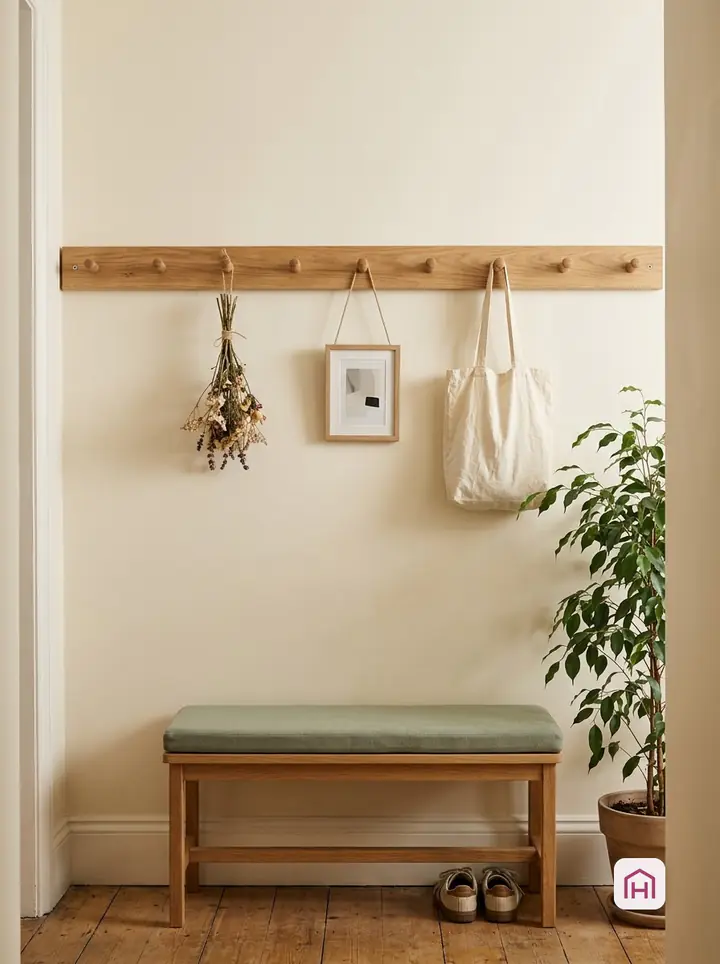
A lower rail used as display in an entry nook
At chair-back height, the rail shows a print and a dried bunch rather than coats.
Why it works
Not every peg rail has to carry coats. Fixed lower in a nook, it becomes a changing display for a small print on a cord, a dried bunch or a bag, and pictures can move without new holes.
Materials and furniture
- Peg rail
- Light framed print with a cord
- Dried flowers
- Bench with cushion
Check first
- Only light frames on cords; glass frames are better on their own picture hooks.
- Dried flowers shed and fade in sun; keep them out of direct light.
- Check that people sitting on the bench do not knock into the pegs.
-
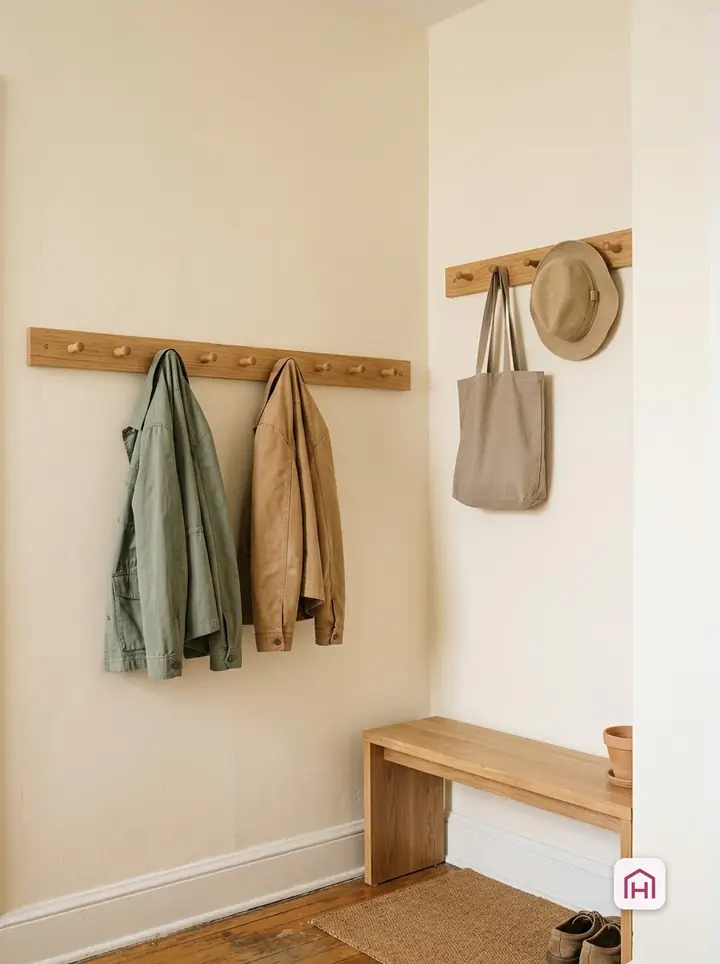
Two rails round a corner, at different heights
Coats on one wall, hats and bags on the other: the corner works twice.
Why it works
In a small entry, the corner is often the only free wall. Splitting the rail across both walls at different heights keeps long coats on one side and hats and bags on the other, so they do not crowd each other.
Materials and furniture
- Two peg rails
- Fixings for your wall
- Short bench
Check first
- Keep the rails far enough from the corner that coats on both sides do not collide.
- Check both walls separately: one may be solid, the other plasterboard.
- Make sure the higher rail is still within easy reach; the picture shows no tested passage width.
-
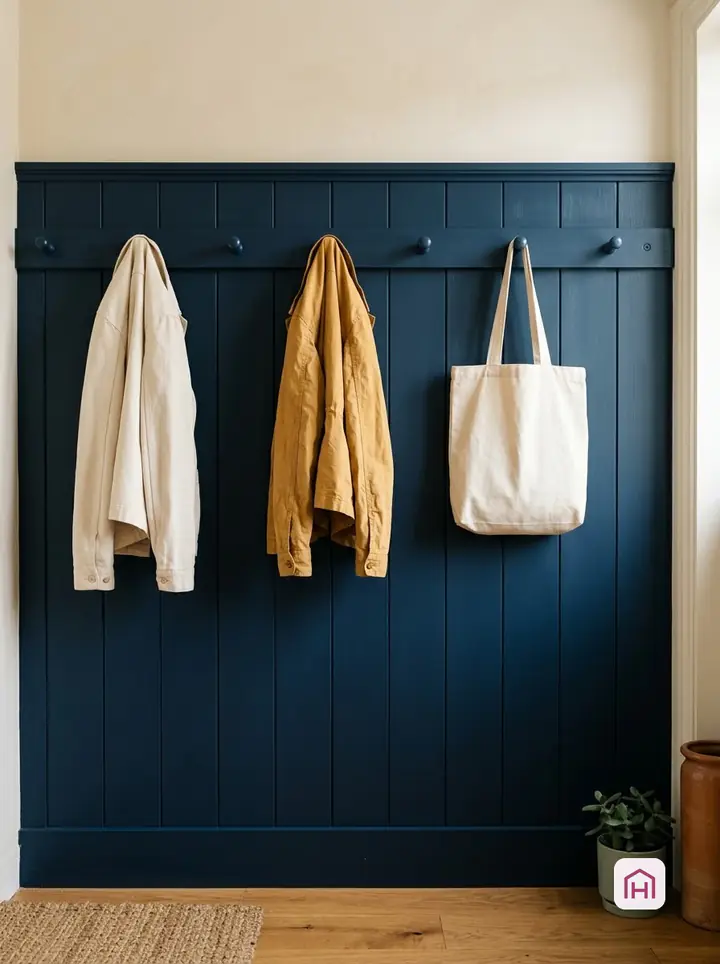
A rail painted the same colour as the panelling
When the rail disappears into the panelling, only the coats add colour.
Why it works
Painting the rail the same colour as the panelling or wall behind it makes it recede, which suits a small entry where you want fewer visible lines. The coats become the only accent.
Materials and furniture
- Unfinished or primed peg rail
- Primer and wall-matching paint suited to wood
- Fixings for your wall
Check first
- Pegs get handled every day: use a paint the maker rates for wood and wear, and let it cure before use; the picture does not show the paint or sheen used.
- Paint the rail before fitting, then touch up the screw heads.
- A painted rail in a rental may need repainting when you move out; check your lease.
They show how a peg rail can be used; what a rail holds depends on its fixings and your wall, which no picture can show.
Why peg rails work
A peg rail is one board with turned pegs, fixed flat to the wall. It takes almost no depth, works at any height and carries coats, bags, hats and lighter decor alike. Because everything hangs from the same board, you only fix the board, not every hook separately.
Heights
There is no single right height. Set an adult rail by your longest coat, so its hem clears the bench, shoe rack or floor below; set a children's rail by their reach, and move it up as they grow. A rail used for display can sit lower, around the height of a chair back.
Fixing it
The pegs only hold what the rail's fixings and your wall hold. The step-by-step guide covers finding out what your wall is, scanning for cables and pipes, choosing fixings and load-testing.