Idea gallery · 8 ideas
Slim entryway console ideas: 8 shallow surfaces for a narrow entry
Idea gallery 1 source
Start from the path, not the furniture: measure the clear width of the entry and subtract the space you want to keep for walking. What is left is the deepest console you can use. A wall-mounted shelf or a fold-down console takes the least depth (an open flap, drawer or door adds more); freestanding consoles need anchoring because shallow, tall pieces tip easily.
-
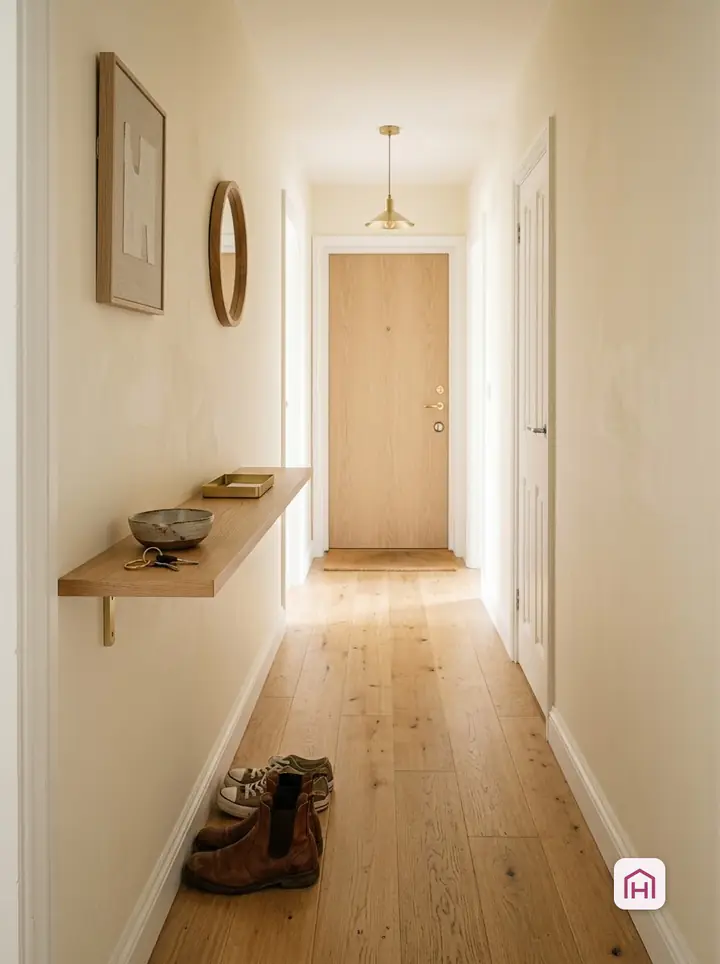
A floating shelf as a console
No legs, no footprint: the floor below stays free for a pair or two of shoes.
Why it works
A wall-mounted shelf at console height takes the least depth of any surface and needs no floor space of its own. A bowl for keys and a tray for post are all it needs.
Materials and furniture
- Wall shelf with brackets
- Fixings suitable for the wall
- Bowl or tray
Check first
- Fix into solid wall or studs with fixings for that wall; scan for cables first. The picture shows a visible bracket, not its fixings or rating.
- Keep the load light: it is a drop surface, not a bookshelf.
- Shoes left below still take floor space; keep them to the wall side of the path.
-
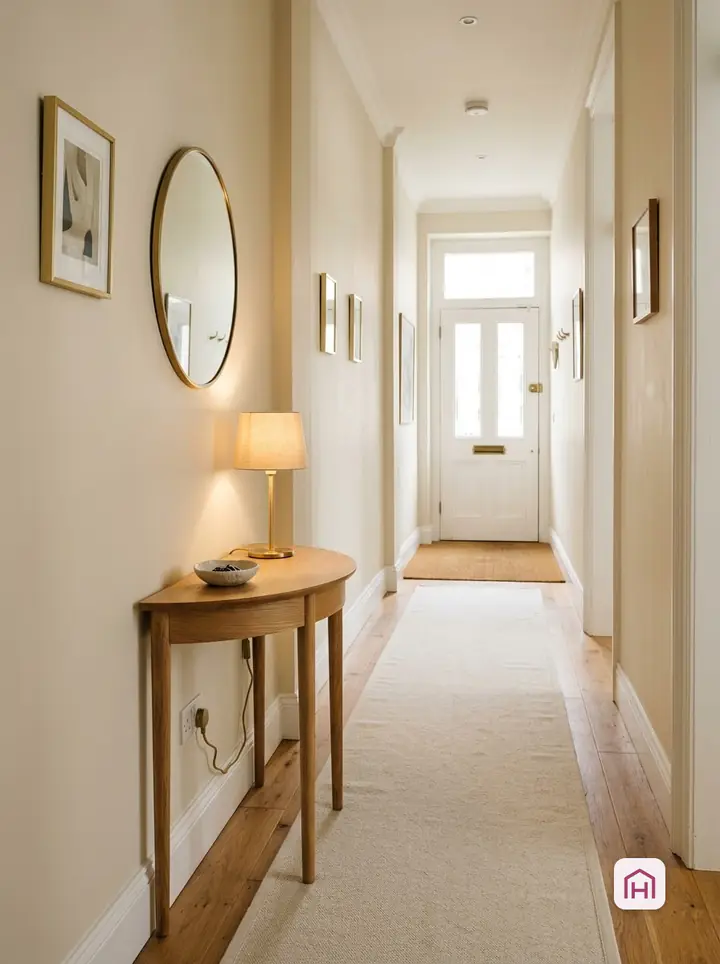
A half-moon console against the wall
Rounded front edges are kinder to hips and bags in a tight passage.
Why it works
A half-moon table has no front corners to catch on, which matters where people brush past it. It holds a lamp or a bowl and looks lighter than a rectangular console.
Materials and furniture
- Half-moon console table
- Anti-tip fixing
- Cable clips
Check first
- Freestanding consoles need anchoring to the wall.
- The curved front takes more depth in the middle than at the ends; measure at the deepest point.
- Clip the lamp cord to the wall or table leg; in the picture it hangs in loose loops near the socket.
-
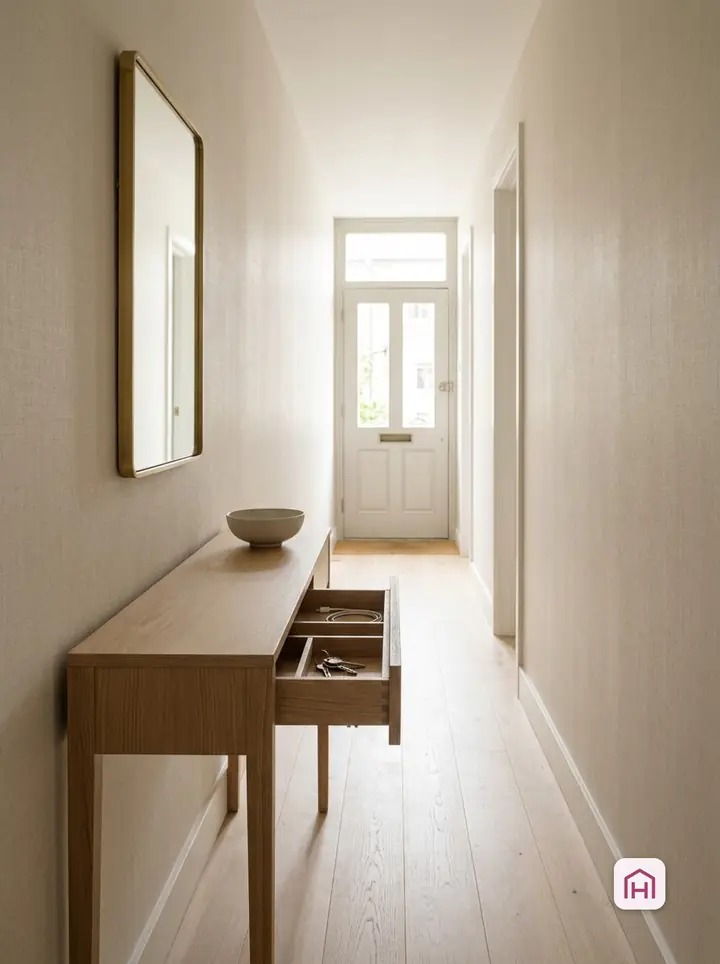
A slim console with a drawer for keys
Keys and a spare cable go into one shallow drawer; the top stays clear.
Why it works
A single shallow drawer keeps the small things that clutter a surface out of sight, so the top stays clear for a bowl and a lamp.
Materials and furniture
- Slim console with one drawer
- Drawer organiser or small trays
- Anti-tip fixing
Check first
- An open drawer adds depth, as in the picture: close it after use so it does not block the path.
- Anchor the console; a pulled drawer shifts weight forward.
- A drawer is storage, not a charging station: do not charge devices inside a closed drawer.
-
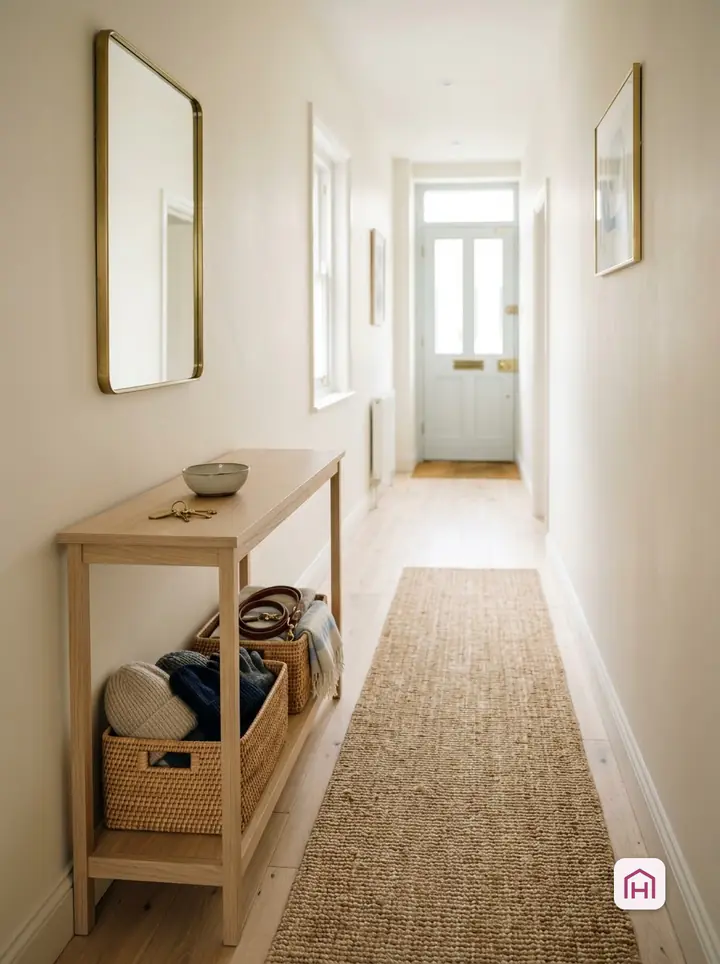
A console with a lower shelf for baskets
Baskets below take hats, gloves and a dog lead; the top stays tidy.
Why it works
A lower shelf adds a second level of storage without adding depth. Two baskets turn it into a home for the things that otherwise end up on the floor.
Materials and furniture
- Console with lower shelf
- Two baskets that fit the shelf depth
- Anti-tip fixing
Check first
- Choose baskets no deeper than the shelf and tuck in scarves; in the picture a fringe hangs over the edge.
- Heavy items low, light items on top.
- Anchor the console to the wall.
-
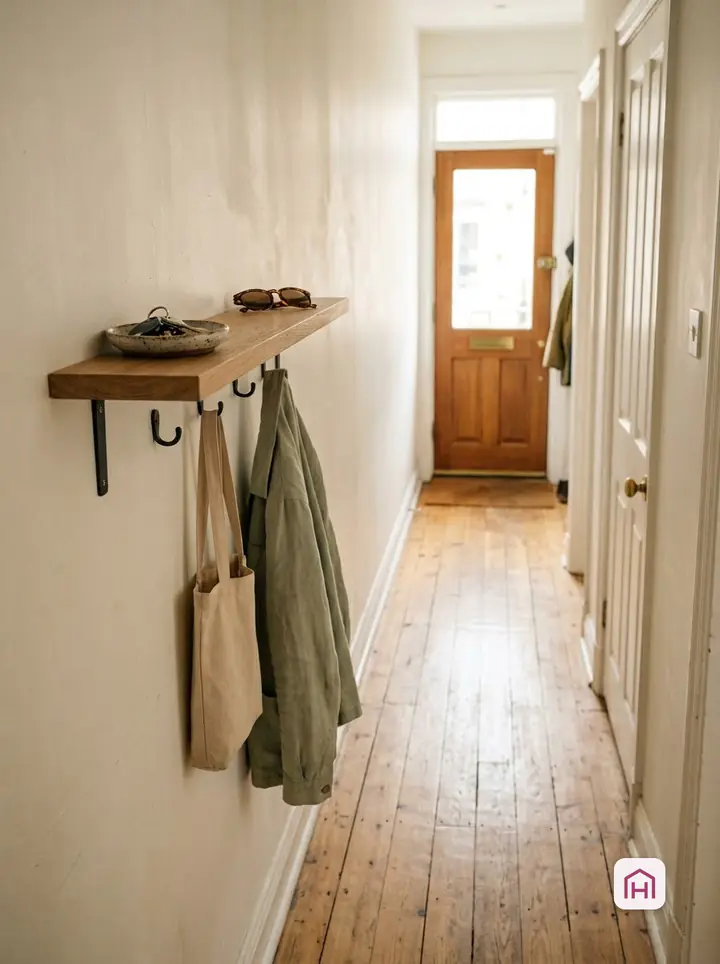
A narrow ledge with hooks underneath
A shelf for keys on top, hooks for bags below: one fixing, two jobs.
Why it works
A narrow ledge with a row of hooks underneath combines a drop surface with hanging space for bags and lighter coats, all within a few centimetres of the wall.
Materials and furniture
- Wall ledge with hooks underneath
- Fixings suitable for the wall
Check first
- Bags and coats add depth when hung: check the path with everything on the hooks.
- The hooks carry the most load; fix the ledge into solid wall or studs. The picture does not show the fixings or a load rating.
- In a rental, ask before drilling.
-
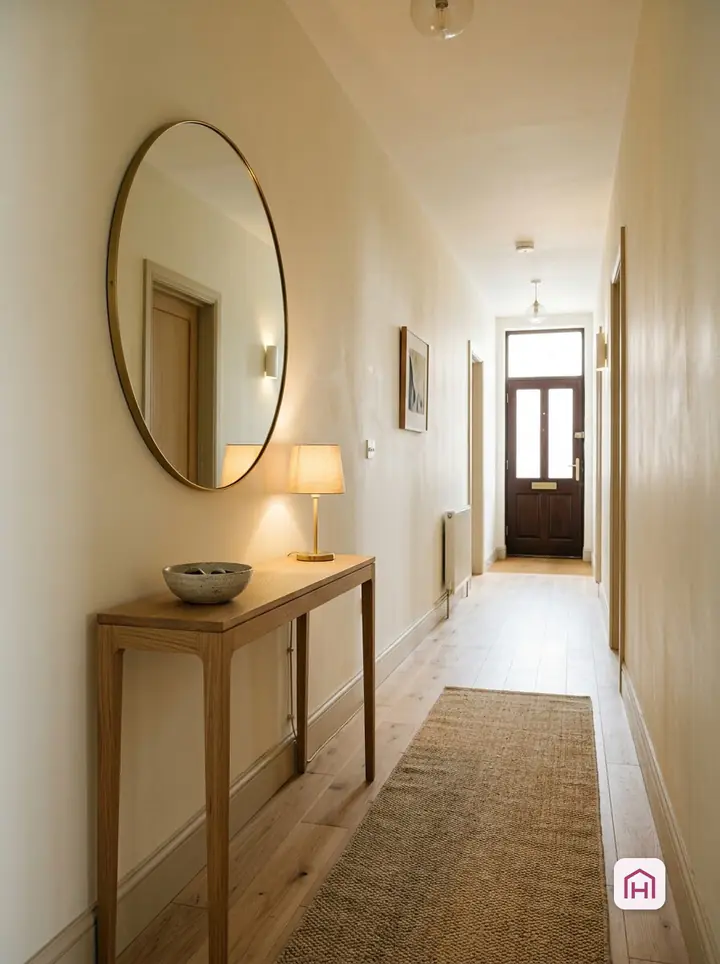
A slim console with a mirror above and a small lamp
A mirror and a lamp make a dark entry feel brighter.
Why it works
A mirror above a shallow console reflects the lamp and the hallway, and gives you a last look before you leave. The console stays shallow; the mirror adds no depth.
Materials and furniture
- Slim console
- Wall-mounted mirror
- Small lamp
- Anti-tip fixing
Check first
- Hang the mirror on the wall with its own fixing; do not just lean it on the console.
- The lamp needs a socket nearby; keep the cable along the wall and out of the path.
- Anchor the console.
-
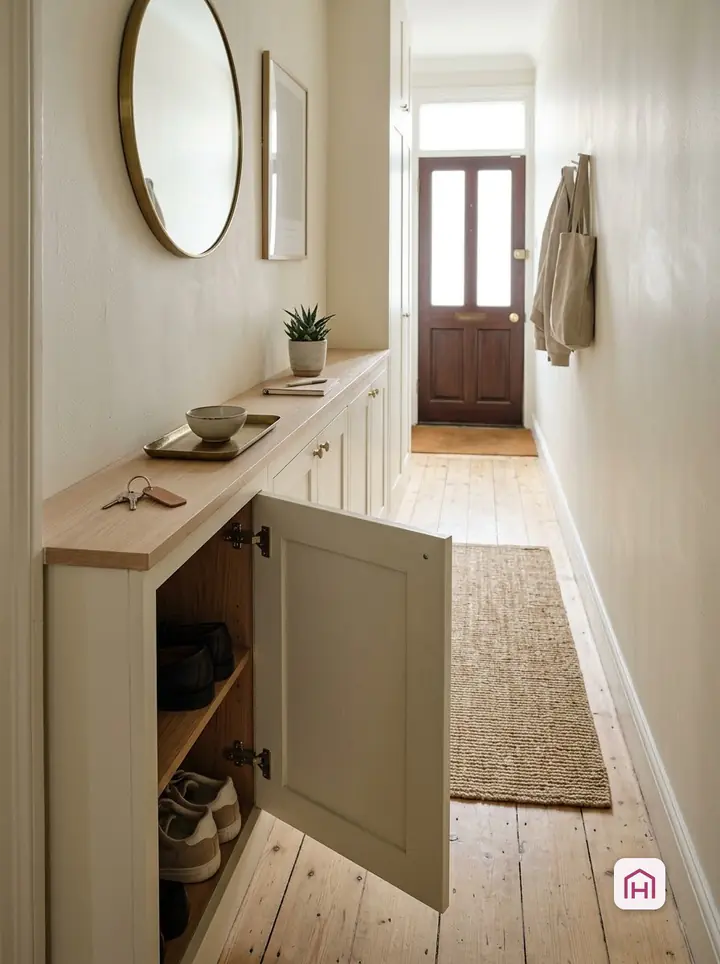
A narrow sideboard used as a console
Closed doors hide shoes; the top works as a console.
Why it works
A shallow cabinet with doors adds closed storage at console height. Behind the doors, shoes and bags disappear, and the top holds keys and post.
Materials and furniture
- Shallow sideboard or cabinet run
- Anti-tip fixing
- Tray for the top
Check first
- An open door swings well into the path, as in the picture: open it only while you take something out.
- Anchor the cabinet to the wall; the picture does not show how it is fixed.
- Wet shoes need to dry before they go behind closed doors.
-
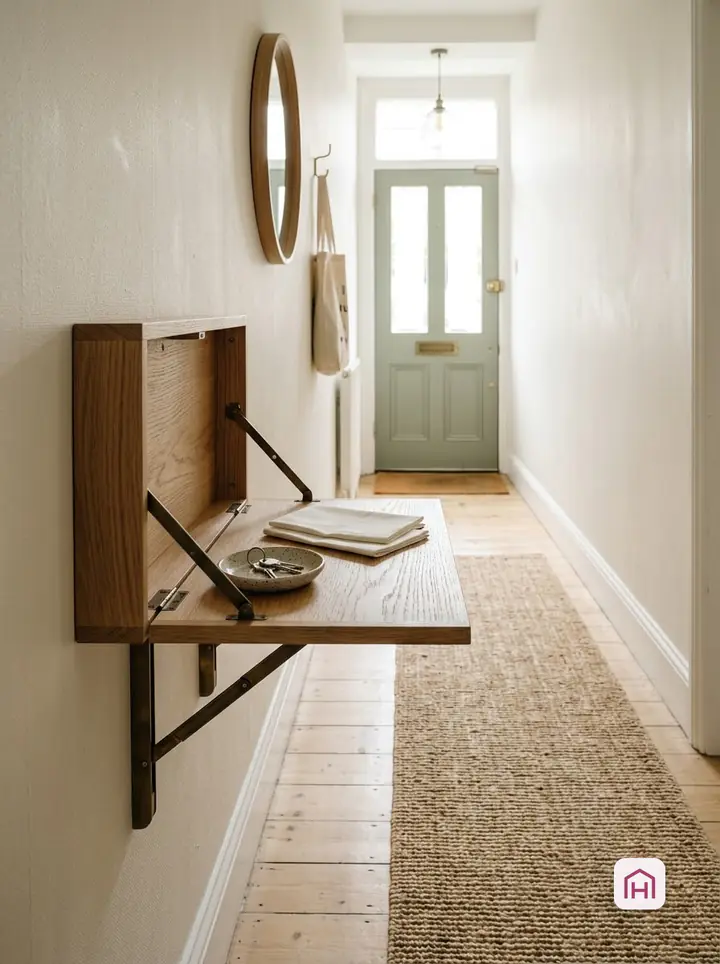
A fold-down console that closes flat
Open when you need a surface, closed and shallow when you do not.
Why it works
A fold-down console is a wall-mounted box whose flap opens into a small surface and closes when the entry has to be clear, for example when a pram or a bike comes through.
Materials and furniture
- Wall-mounted fold-down console with rated stays
- Fixings suitable for the wall
Check first
- Folded, it only holds what fits inside; anything on the flap has to go when it closes.
- The hinges and stays carry the load; use hardware made for folding tables and follow its rating. The picture cannot show that the pictured hardware folds or holds.
- In a rental, ask before drilling.
They show different example entries.
Start from the path
A console in a narrow entry is a trade: every centimetre of depth comes off the path. So work out the depth you can spare before you look at any furniture.
- Measure the clear width of the entry at the point where the console would go, wall to wall.
- Decide how much width you want to keep for walking. Our furniture spacing calculator works with 75 cm for a tight path, 90 cm for a comfortable one and 110 cm where two people pass or someone carries bags.
- Subtract. What is left is the deepest console you can use.
Example: a 110 cm wide entry, 85 cm kept for the path, leaves 25 cm for the console.
Check the door swing too: a console must not sit where the front door opens, and its own drawers and doors take extra depth while they are open. Several pictures in this gallery show that: an open drawer or cupboard door reaching into the passage.
What fits on a shallow surface
Even a narrow surface holds the things you reach for on the way in and out: keys in a bowl, post in a tray, sunglasses, a small lamp. That is the idea of a drop zone. Larger bags belong on a hook or a bench, not on a shallow console where they slide off.
Shallow and tall: anchor it
Shallow freestanding furniture has a small footprint for its height, and anything with drawers or a mirror on top gets heavier at the front and top. Anchor freestanding consoles to the wall, especially if children live with you [1]. Wall-mounted shelves and fold-down consoles are fixed by design; they need fixings suitable for your wall.
Power for a lamp
A lamp on the console needs a socket nearby. Route the cable along the wall or behind the console so nobody catches a foot in it; battery lamps avoid the cable altogether.
Filter ideas by room and fixing
Sources
- Anchor It! , US Consumer Product Safety Commission (CPSC). checked