Idea gallery · 8 ideas
Small kitchen cabinet colours: 8 looks for compact kitchens
Idea gallery 0 sources
In a compact kitchen, cabinet colour sets the mood more than anything else. Lighter colours on wall cabinets keep a small kitchen bright; darker or stronger colours on the base cabinets ground it. Choose a colour that works with the existing worktop and floor, test it in the kitchen's own light, and in a rental ask before painting cabinets.
-
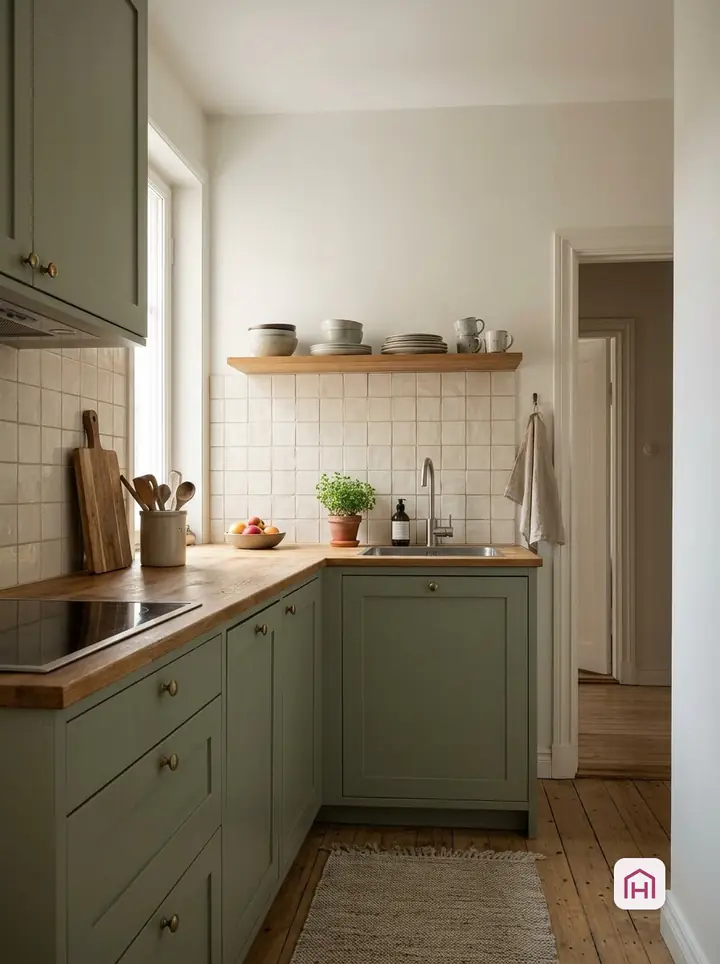
Sage cabinets with oak
Soft green and warm wood.
Why it works
Sage green cabinets with an oak worktop and shelves feel calm and natural in a small kitchen.
Materials and furniture
- Cabinet paint in sage
- Oak worktop or shelves
Check first
- Test a real paint sample on the intended surface in your own light.
- Paint made for cabinets.
- Rentals: ask first.
-
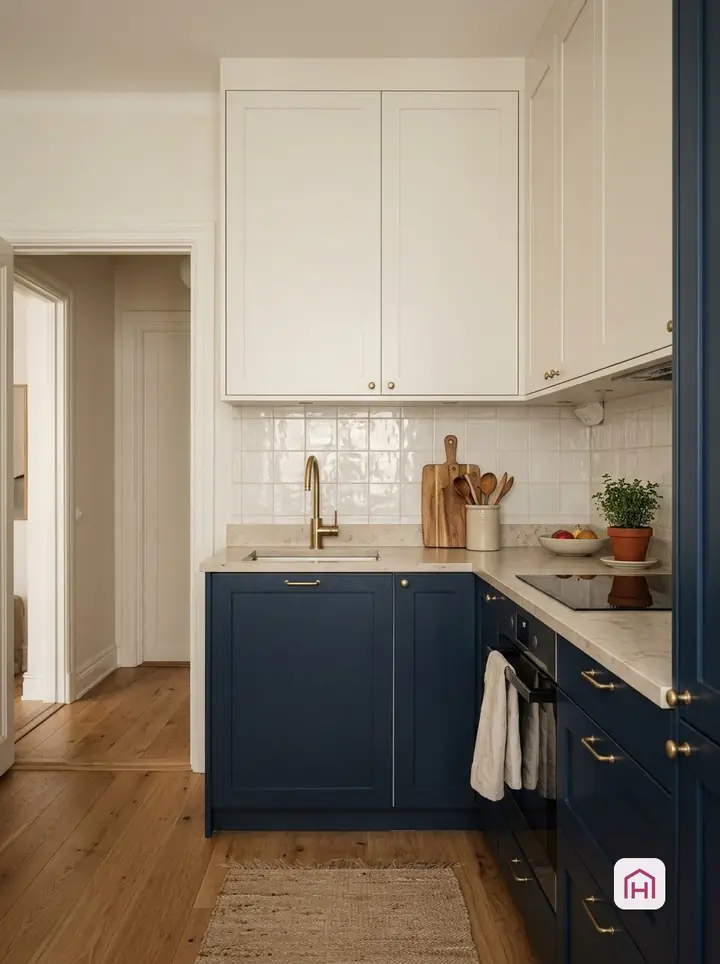
Navy lowers, white uppers
Deep below, light above.
Why it works
Navy base cabinets with white wall cabinets give depth without darkening a small kitchen.
Materials and furniture
- Navy and white cabinet paint
Check first
- Test a real paint sample on the intended surface in your own light.
- Good lighting under the uppers.
- Rentals: ask first.
-
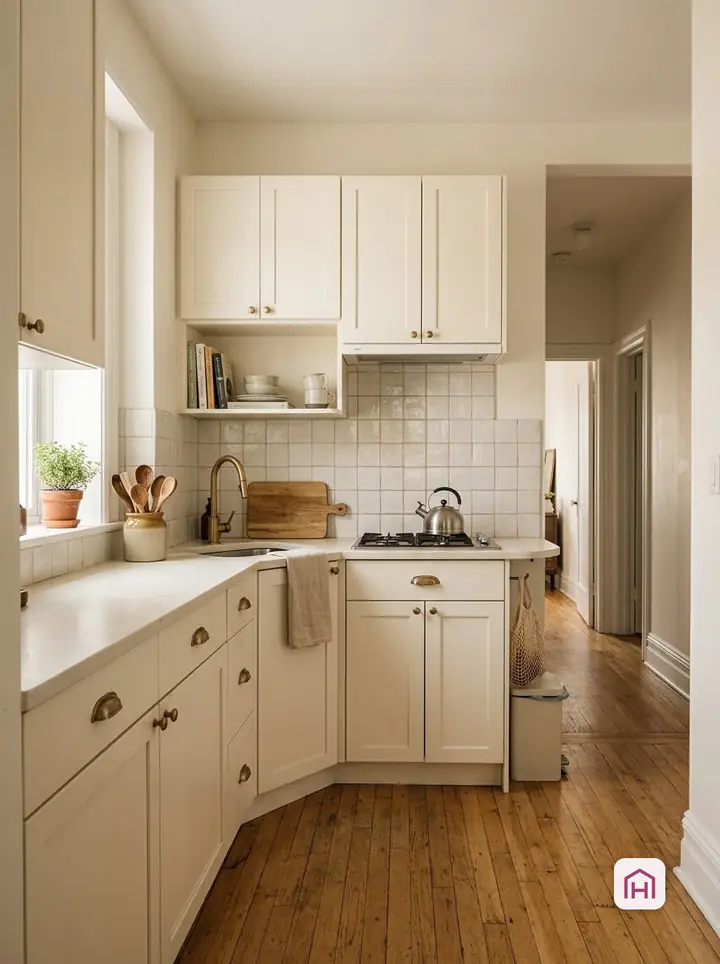
Warm white with brass
Bright, warm and timeless.
Why it works
Warm white cabinets with brass handles keep a small kitchen bright and add a little warmth.
Materials and furniture
- Warm white cabinet paint
- Brass handles
Check first
- Warm whites look different under different bulbs.
- Brass needs occasional cleaning.
- Keep the old handles.
-
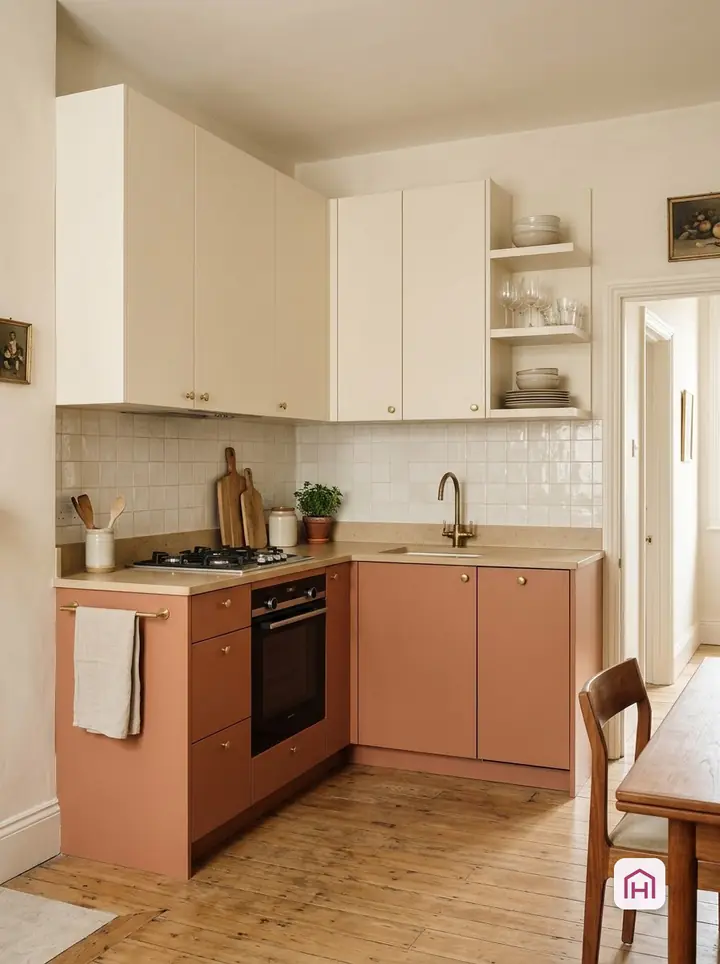
Terracotta lower cabinets
Earthy and warm at floor level.
Why it works
Terracotta base cabinets with cream uppers bring a Mediterranean warmth to a small kitchen.
Materials and furniture
- Terracotta and cream cabinet paint
Check first
- Test a real paint sample on the intended surface in your own light.
- Pair with warm worktops.
- Rentals: ask first.
-
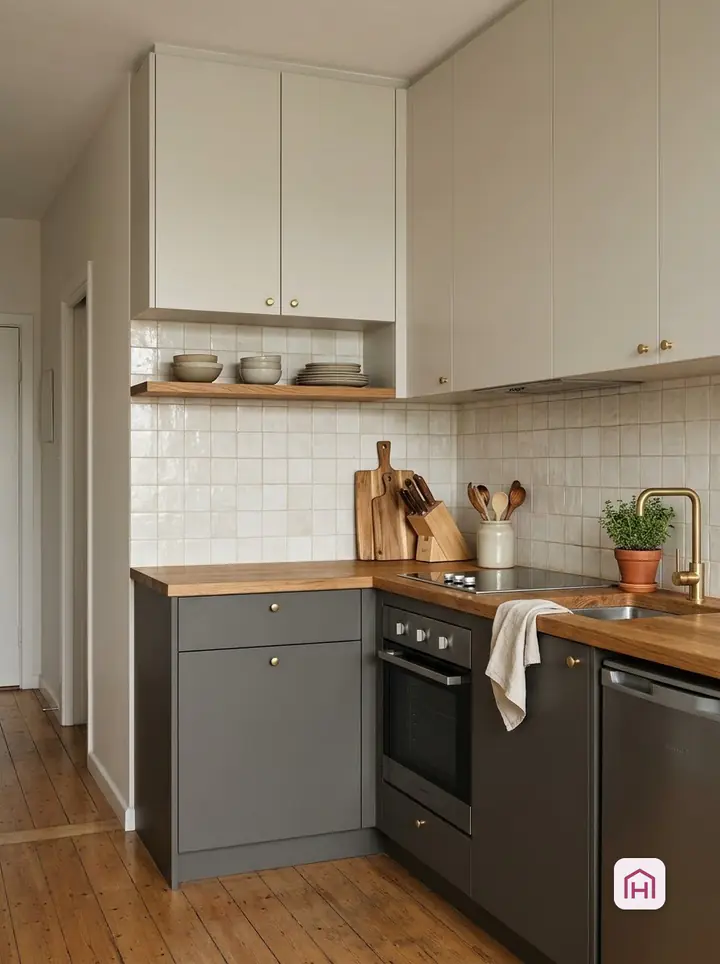
Two-tone greys
Dark grey below, light grey above.
Why it works
Two greys, darker below and lighter above, give a small kitchen structure in a quiet palette.
Materials and furniture
- Two grey cabinet paints
Check first
- Choose greys with the same undertone.
- Test a real paint sample on the intended surface in your own light.
- Warm lighting avoids a cold look.
-
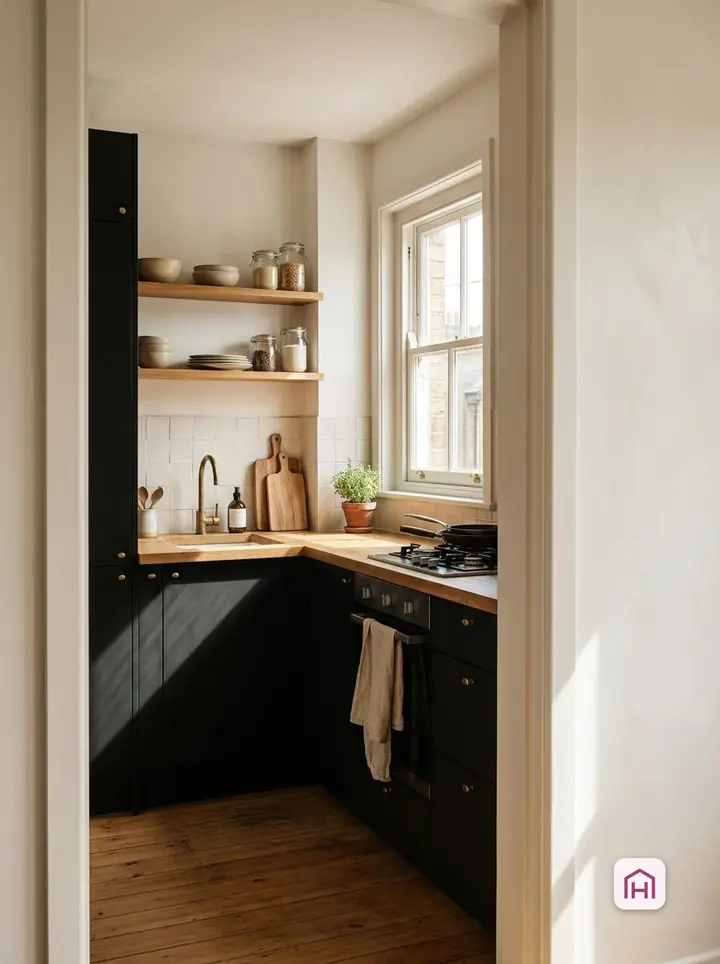
Black with a wood worktop
Dramatic, warmed by wood.
Why it works
Black cabinets with a wood worktop look dramatic but warm; they suit kitchens with good light.
Materials and furniture
- Black cabinet paint
- Wood worktop
Check first
- Compare real samples and the finish care instructions; fingerprints vary by surface.
- Test with the actual kitchen lights as well as daylight.
- Agree changes to supplied rental cabinets before proceeding.
-
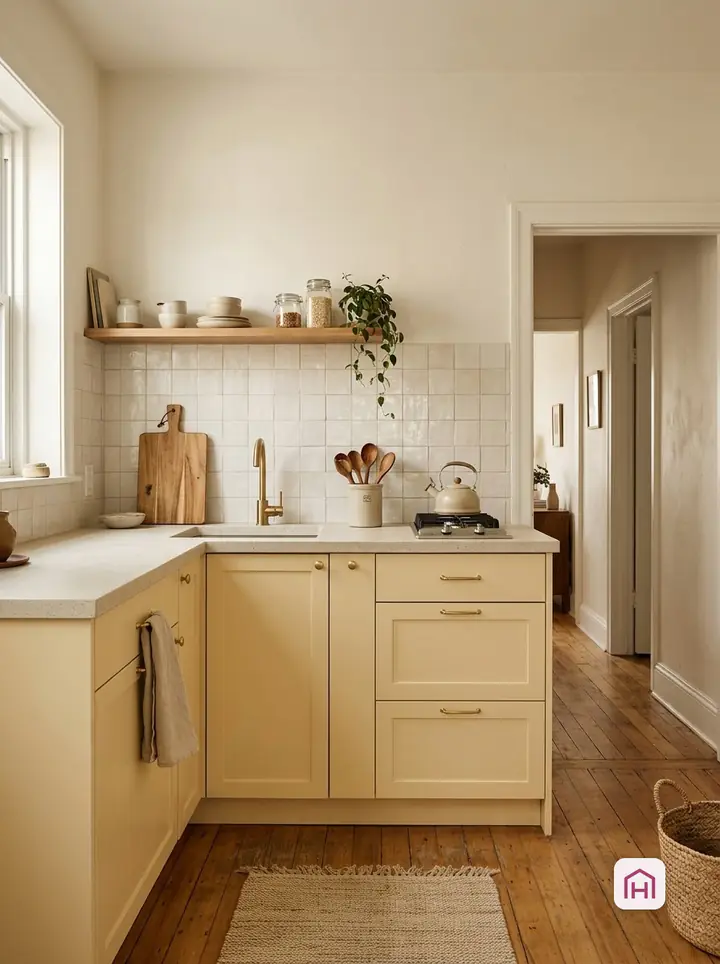
Butter yellow cabinets
Sunshine on every door.
Why it works
Soft butter yellow cabinets make a small kitchen cheerful without being loud.
Materials and furniture
- Butter yellow cabinet paint
Check first
- Test a real paint sample on the intended surface in your own light.
- Choose a soft, creamy yellow.
- Rentals: ask first.
-
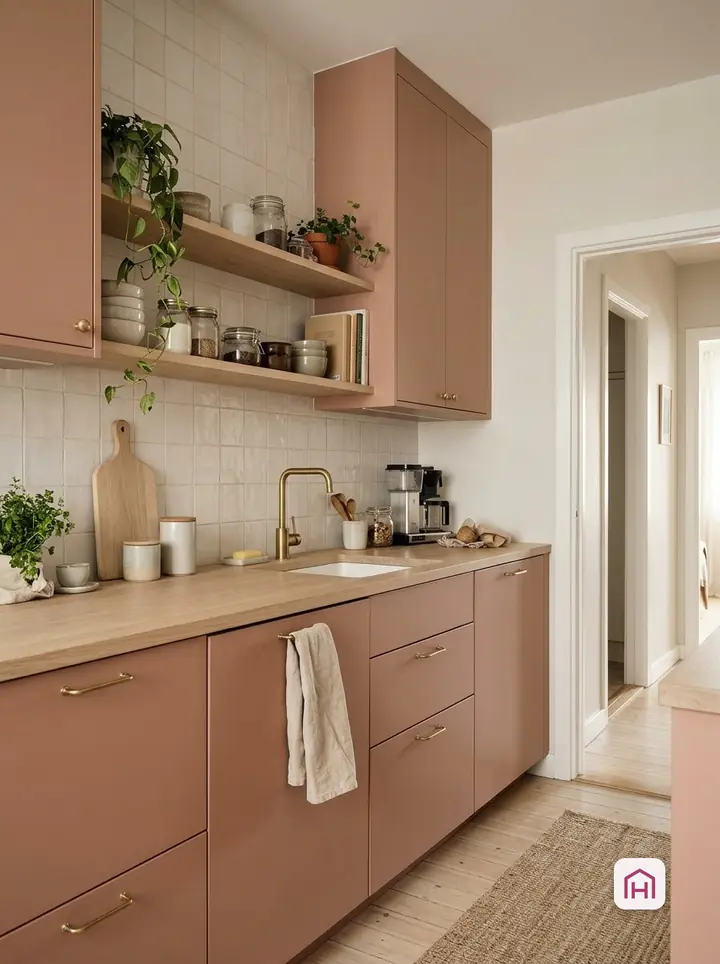
Clay pink cabinets
Pink, but earthy.
Why it works
A muted clay pink on the cabinets is warm and unusual, and pairs well with brass and pale wood.
Materials and furniture
- Clay pink cabinet paint
- Brass handles
Check first
- Test a real paint sample on the intended surface in your own light.
- Choose a muted, earthy pink.
- Rentals: ask first.
Choose cabinet colour beside the finishes that stay
The worktop, floor and splashback occupy almost as much attention as the cabinet doors. Put their colours on your decision sheet before considering new fronts. A muted pink beside pale oak and the same pink beside cold grey stone can read very differently.
| Cabinet combination | Existing finish to compare | Useful sample test |
|---|---|---|
| Sage and oak | Warm timber grain | Green beside the actual worktop edge |
| Navy below, white above | Pale upper wall and counter | Dark sample under task lighting |
| Warm white and brass | Tile grout and metal fixtures | White against existing white surfaces |
| Terracotta and cream | Warm floor or neutral tile | Strength of the lower colour at night |
| Two warm greys | Stone, floor and appliance fronts | Both greys viewed together |
| Butter yellow or clay pink | Fixed neutral finishes | Large sample rather than a tiny swatch |
Keep the comparison controlled
Change one factor at a time. First compare cabinet colours with the existing handles. Then compare handles against your preferred colour. Otherwise a new worktop, different lighting and styled countertop can make the wrong cabinet colour look convincing.
Use real samples next to a door and inspect them in daylight and with the normal kitchen lights. These eight scenes show directions, not colour codes. Record the manufacturer, finish and sample name so you can recreate the choice without guessing from a screen.
A colour scheme is not a painting specification
Determine whether the current fronts are timber, laminate, foil or another surface. The appropriate preparation and coating come from the product maker and cabinet condition. If the fronts are damaged or the proposed finish is unsuitable, replacement or a smaller change may be the better option.
For a rental, agree changes to supplied cabinets before committing. A handle swap may offer a smaller first experiment if hole spacing and fastening match; retain the originals and check the actual fittings rather than assuming every handle is interchangeable.
The final choice should survive an ordinary kitchen day
Remove excess styling from your test. Put back the kettle, dish rack and other daily objects, then look again. Choose a finish you can maintain according to its instructions and a colour you still enjoy beside those necessities. Save one preferred combination with a real sample photo and a list of fixed finishes. That makes the decision useful when comparing paint or replacement-front quotations.