Idea gallery · 8 ideas
Christmas tree in a studio: 8 placements that don't block the room
Idea gallery 1 source
Test the actual tree footprint in a corner, beside the sofa, on an existing table or against a wall. Keep routes and door openings clear, separate the tree from heating, and plan the light cable before decorating. A wall outline or tabletop tree can work when no floor position passes the test.
-
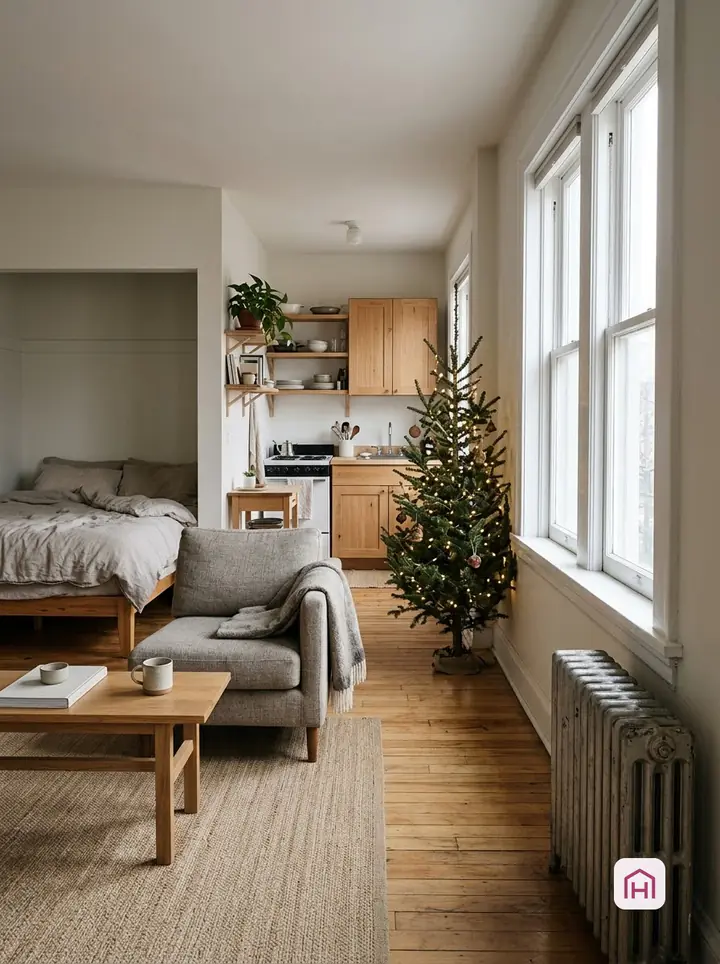
The corner by the window
A window-side position to test against heat and access.
Why it works
The corner beside a window is often the one spot in a studio that is not on a route; the tree is visible from the room and from outside.
Materials and furniture
- Tree with a stable stand
- Socket nearby
Check first
- Keep the tree clear of the radiator under the window.
- The window must still open for airing.
- Water a real tree daily.
-
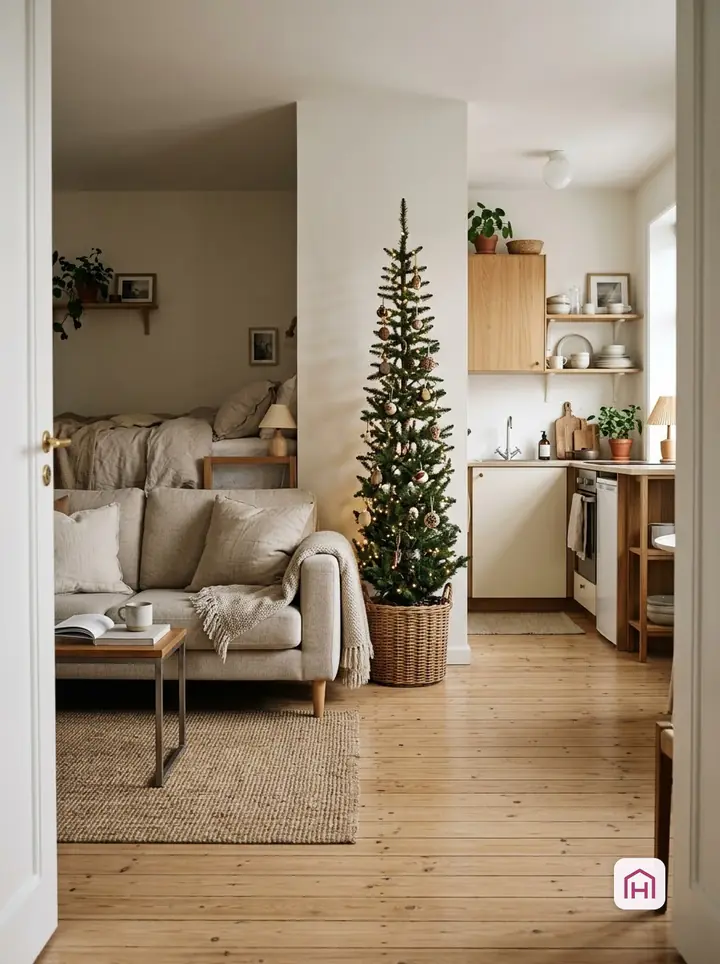
A slim tree beside the sofa
A narrow silhouette beside the sofa.
Why it works
A slim 'pencil' tree takes the footprint of a side table and stands at the end of the sofa without blocking anything.
Materials and furniture
- Slim tree
- Stable stand
Check first
- Measure the actual branch spread.
- Use a tidy wall cable route or accessible battery pack.
- Check stability and clearance from heat.
-
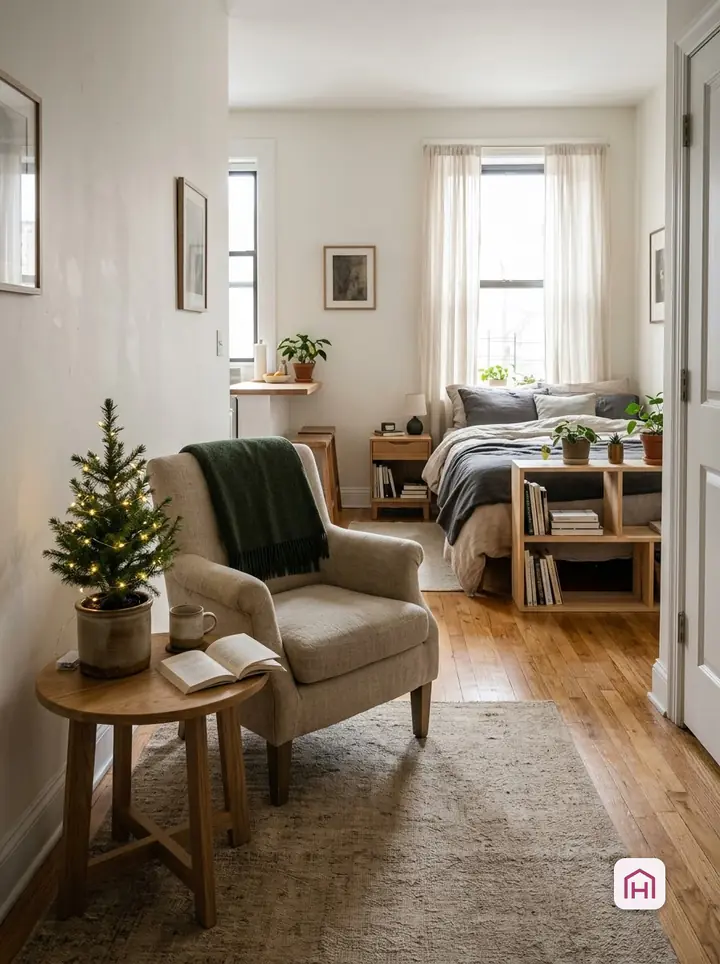
A tabletop tree on a side table
A small tree uses an existing table.
Why it works
A tabletop tree avoids adding a separate floor stand, but its table still has a footprint and needs room around it.
Materials and furniture
- Small tree
- Side table
- Battery lights
Check first
- Battery lights avoid a cord across the room.
- Keep the table stable.
- Away from the lamp on the same table.
-
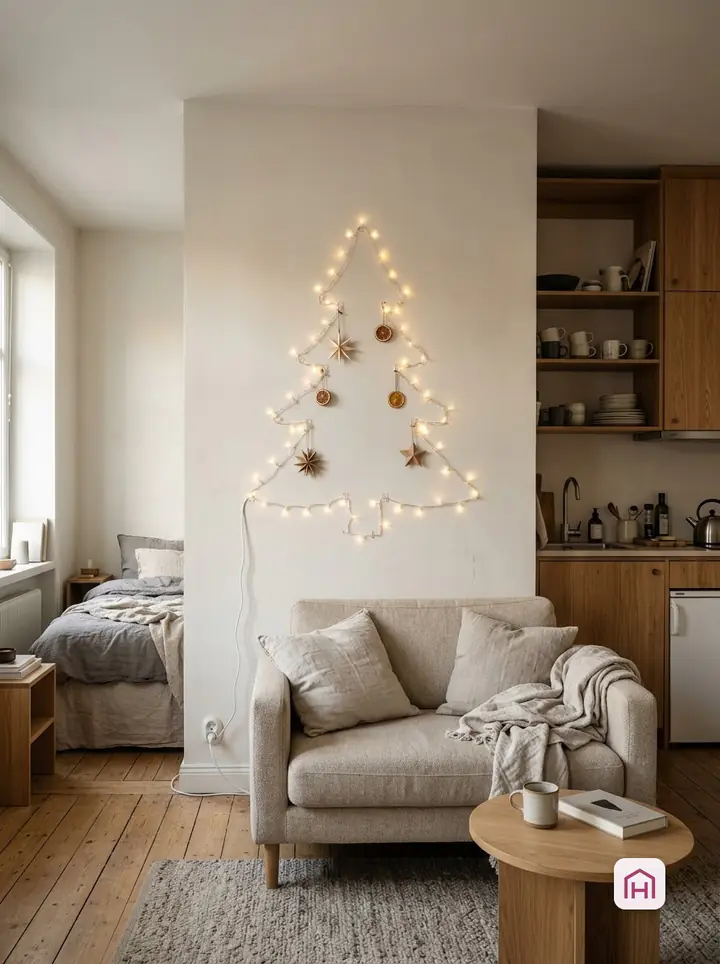
A wall tree made of lights
A tree outline with very little projection from the wall.
Why it works
A string of lights fixed to the wall in a tree outline gives the idea of a tree at zero depth, with a few ornaments hung from it.
Materials and furniture
- Light string
- Removable clips rated for the surface
Check first
- Test removable clips on a hidden spot first.
- Use lights in good condition.
- Run the cord along the skirting.
-
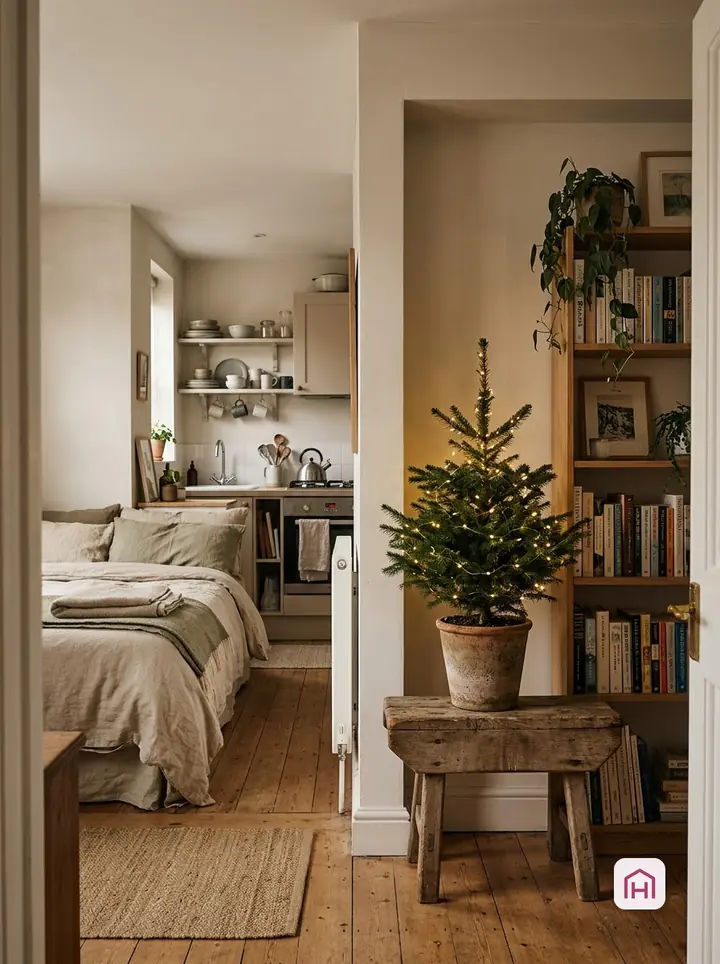
A small tree on a stool in a nook
Lifted up, it looks bigger.
Why it works
A small tree on a wooden stool in a nook gets the height of a bigger tree with the footprint of a stool.
Materials and furniture
- Small tree
- Sturdy stool
Check first
- Stool and pot must be stable together.
- Not near a heater.
- Keep it out of door swings.
-
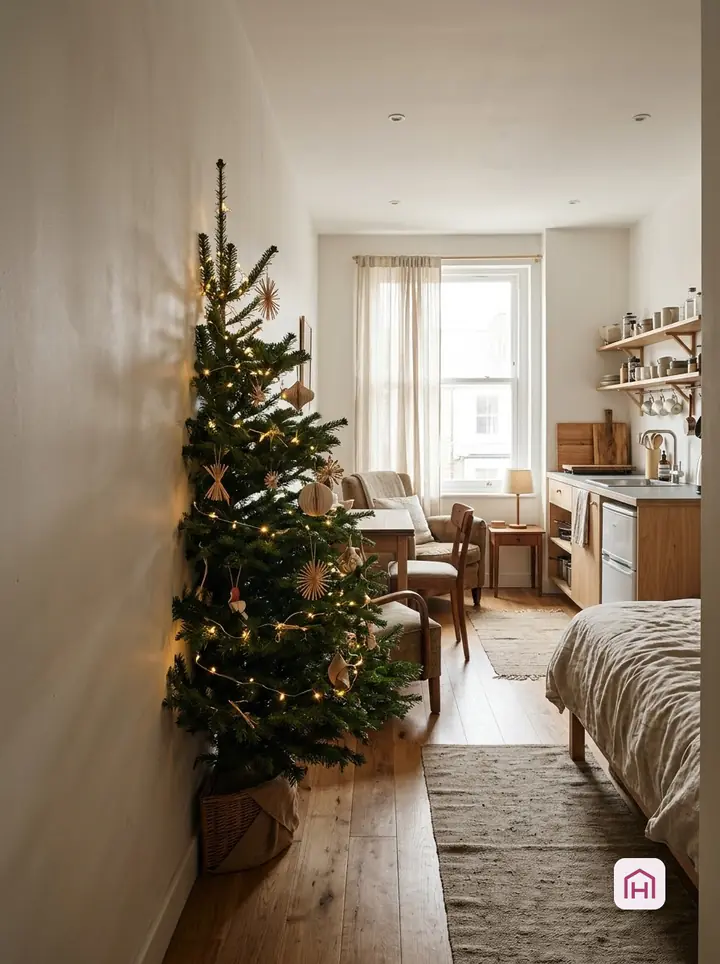
A half tree flat against the wall
Check the actual depth of a flat-backed model.
Why it works
A purpose-made flat-backed tree can reduce projection from the wall. The picture does not establish a construction method or a precise floor-space saving.
Materials and furniture
- Flat-backed artificial tree
Check first
- Choose one with a stable base.
- Lights in good condition, cord along the wall.
- Not in front of a radiator.
-
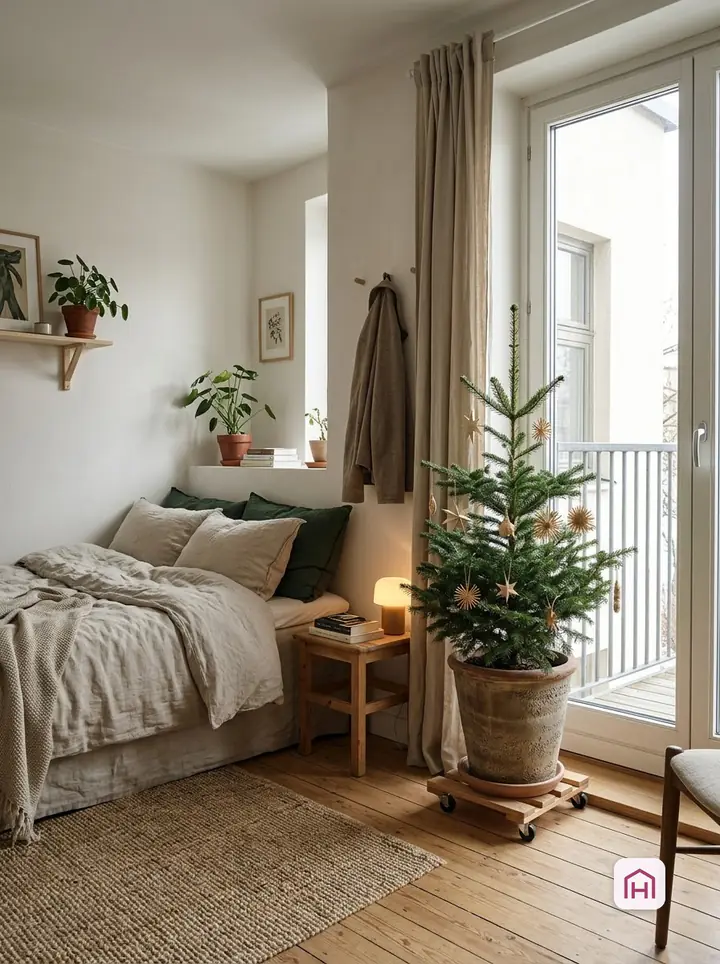
A potted tree beside the balcony door
A potted tree beside, never inside, the door opening.
Why it works
A suitable stable trolley can help position a potted tree. Plan its parking location and the full door opening; follow the plant supplier’s indoor and outdoor care guidance.
Materials and furniture
- Potted tree
- Saucer
- Plant trolley
Check first
- Keep it indoors only briefly and away from heat.
- The balcony door must still open.
- A trolley makes moving the pot easier.
-
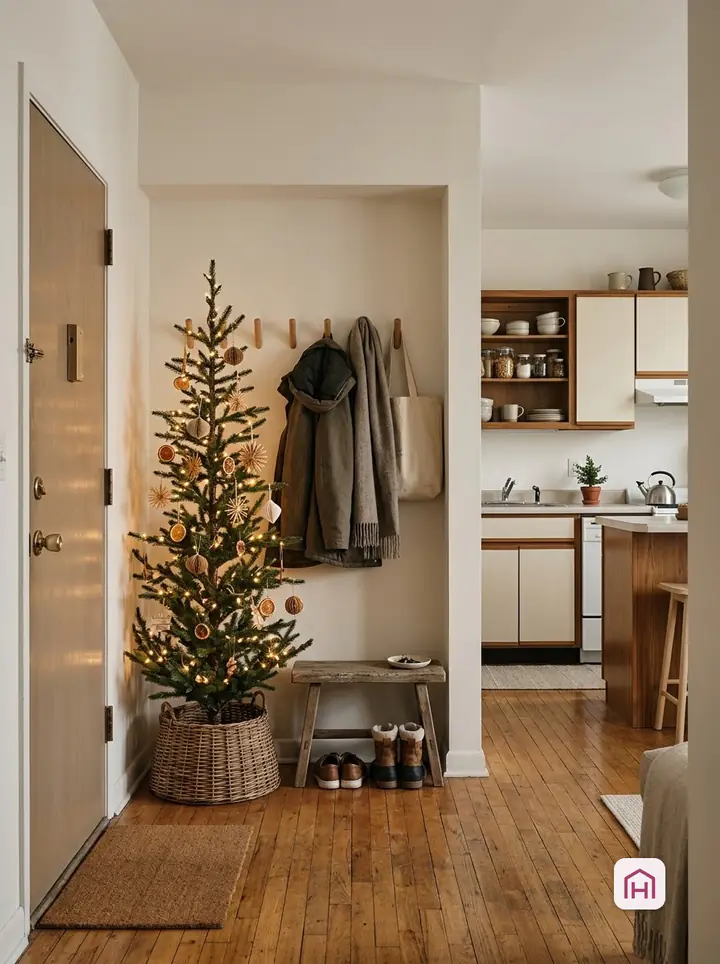
A tree in the entry corner
The first thing you see coming home.
Why it works
In studios with a small entry area, a slim tree in the corner by the door welcomes you home and stays out of the living space.
Materials and furniture
- Slim tree
- Stable stand
Check first
- Keep the front door and its swing clear.
- Not near a heater by the door.
- Cord along the wall.
Measure the branches, not just the stand
In a studio, one room provides sleeping, cooking and living space. Mark the tree's widest branch spread on the floor before choosing its position. Include the pot or stand, presents and any light cable. A narrow base is not enough if the branches extend into the route between the bed and kitchen.
| Tree option | Best starting position | What to measure |
|---|---|---|
| Slim upright tree | Unused corner beside the sofa | Widest branches and route to the kitchen |
| Tabletop tree | Stable side table | Table capacity, pot footprint and watering access |
| Wall light outline | Clear wall with suitable clips | Full outline, removable-fixing suitability and cable route |
| Flat-backed tree | Against a plain wall | Actual depth, branch spread and manufacturer instructions |
| Potted tree on trolley | A corner where it stays parked | Pot stability, wheels and the complete door opening |
Rehearse a normal morning
Walk from the bed to the bathroom, open the refrigerator and carry a tray to the sofa. Try the balcony door and the front door. If any of these tasks requires moving the tree, choose another location. Do this with the footprint marked out, before hauling a tree home. A wall outline or a small table tree is a useful fallback when no floor position passes the test.
The trolley example is a way to consider a plant pot, not a reason to park it in a doorway. Lockable wheels and a stable, suitable platform matter. The flat-backed example illustrates reduced depth; the image does not establish the tree's construction or exact dimensions.
Plan the lights after the position
Choose lighting suited to its intended use, inspect it before setting up and keep cables outside walking routes. Locate the battery pack where it remains accessible for switching off. Do not hide a tangle of excess cable beneath a rug.
CPSC advises keeping trees away from heat sources, checking water daily for a cut real tree, and leaving foot traffic and doors unobstructed [1]. A living potted tree has different care needs; follow its supplier's guidance rather than watering it as if it were a cut tree.
Keep one undecorated route
Presents and baskets tend to arrive after the tree. Recheck the route when they do, and remove them if they reduce the clear floor you measured. Keep decorations light and within the chosen footprint.
Filter ideas by room and fixing
Sources
- Put Safety at the Top of Your List When Decorating this Holiday Season (December 6, 2017) , U.S. Consumer Product Safety Commission. checked