Idea gallery · 8 ideas
Tea station ideas: 8 calm setups for a small kitchen
Idea gallery 1 source
Group daily tea supplies on a tray, shelf, in a drawer or in a cupboard, and keep the kettle at a suitable open brewing spot according to its instructions. Use a trolley or desk tray for serving, keep liquids away from electronics and check the layout in your daily routine.
-
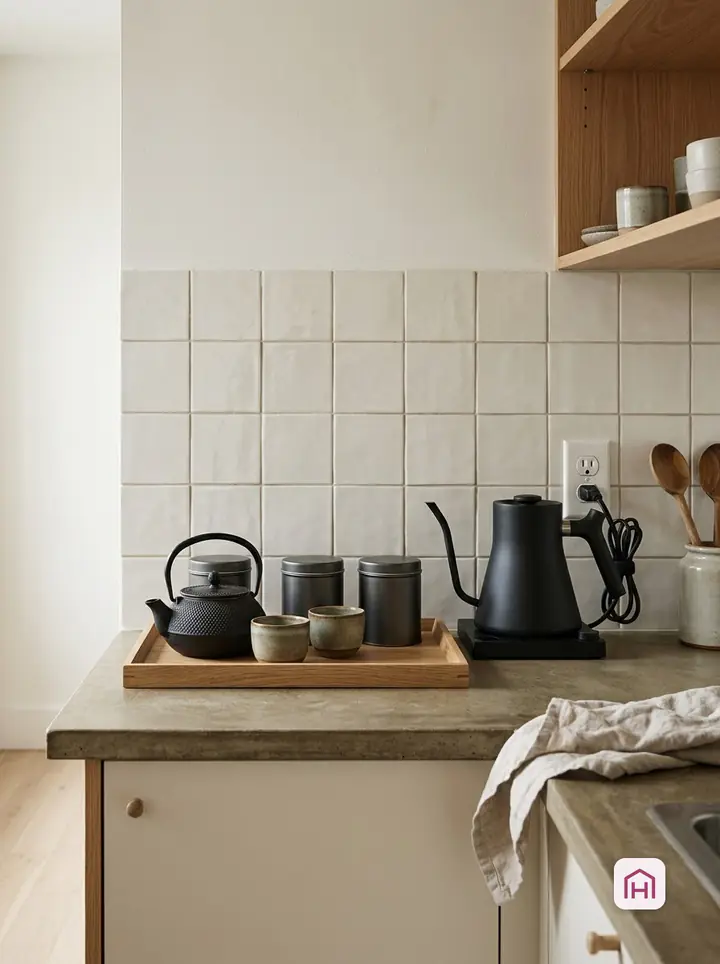
A tray with caddies and a teapot
A whole tea station you can lift and move.
Why it works
A tray groups the daily teapot, cups and tea supplies. Keep the electric kettle on a suitable counter rather than moving it while hot.
Materials and furniture
- Wooden tray
- Teapot
- Tea caddies
Check first
- Keep the tray away from the hob.
- Wipe drips quickly from wood.
- Not under a cabinet where the kettle boils.
-
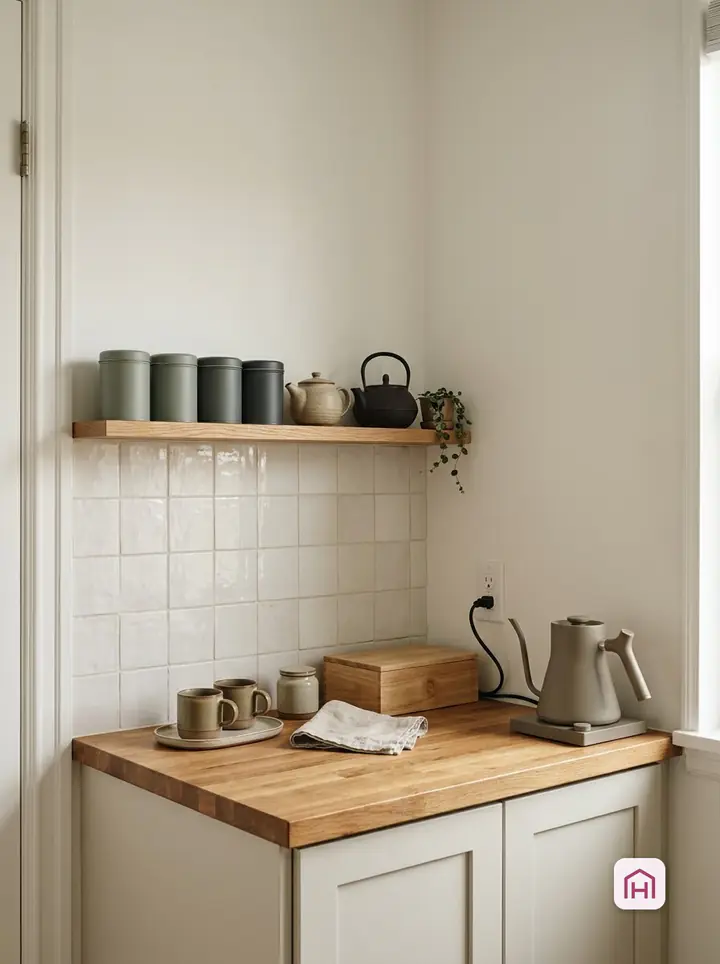
A wall shelf of tea tins
Teas on show, counter free.
Why it works
A narrow shelf groups tea tins and teapots while leaving the counter available for brewing. Keep the kettle in a suitable open location away from the shelf.
Materials and furniture
- Narrow wall shelf
- Matching tins
- Fixings for the wall
Check first
- Shelf not directly above the boiling kettle.
- Check for cables and pipes before drilling.
- Tins closed against moisture.
-
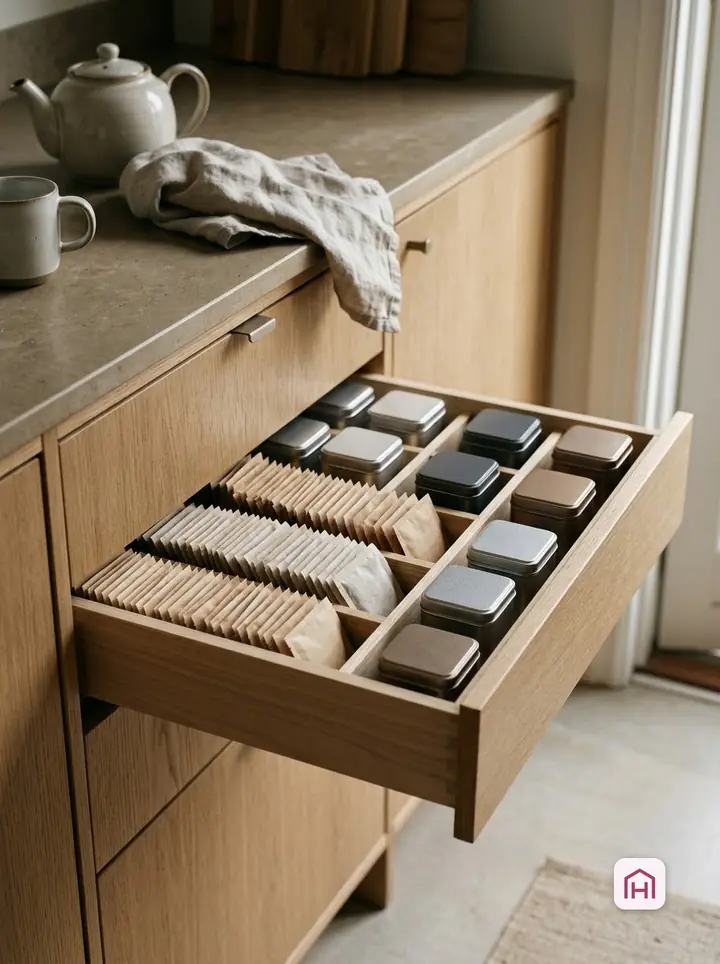
A drawer of teas
Open the drawer, choose the tea.
Why it works
A shallow drawer with dividers holds tea bags and loose-leaf tins upright so every tea is visible at a glance.
Materials and furniture
- Drawer dividers or small boxes
Check first
- Not the drawer right next to the oven.
- Loose tea in closed tins.
- Keep it to teas you actually drink.
-
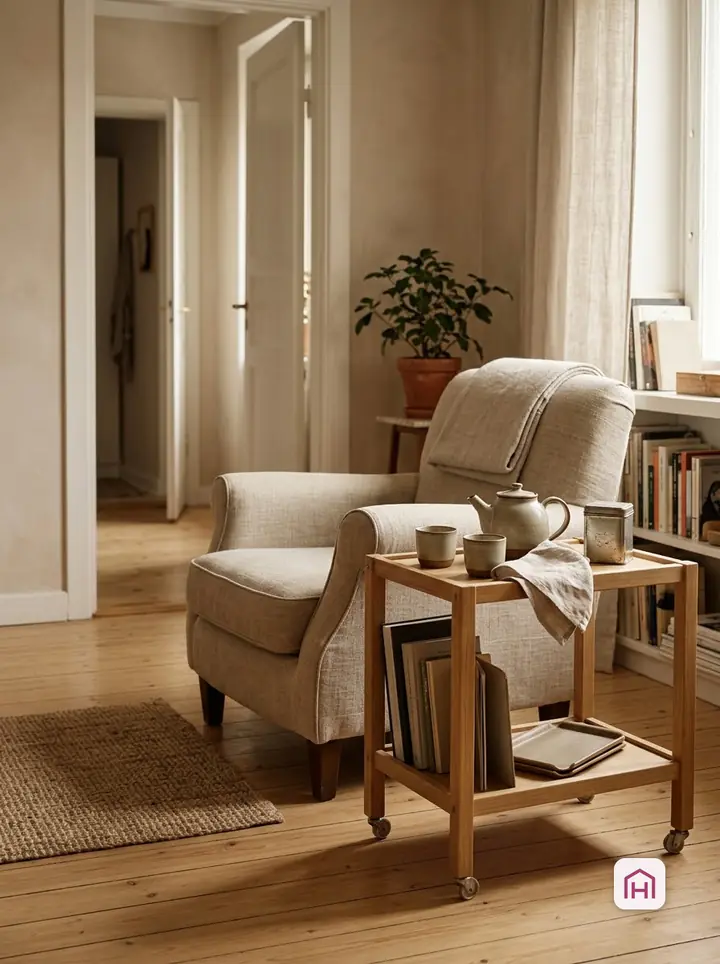
A tea cart in the living room
Tea time without going to the kitchen.
Why it works
A small cart beside the armchair holds a teapot, cups and a tin; the kettle stays in the kitchen.
Materials and furniture
- Small cart
- Teapot
- Cups
Check first
- Bring boiled water in a teapot, not the kettle, if there is no safe socket.
- Lock the wheels.
- Out of the walkway.
-
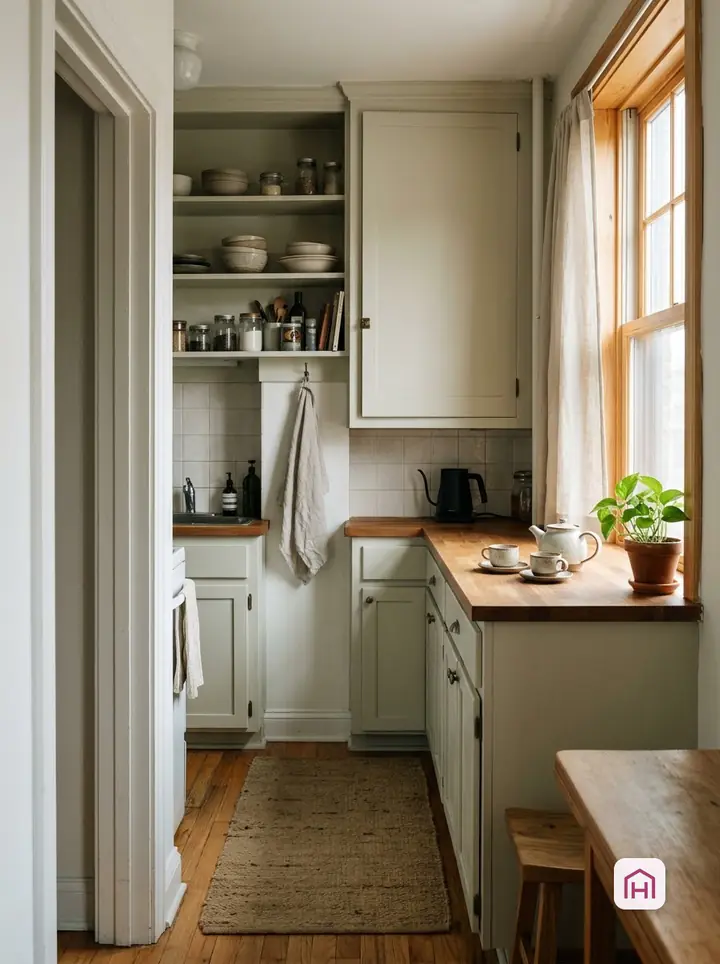
A window-side tea corner
The best place to wait for the kettle.
Why it works
The end of the counter by the window gets daylight and a view; a teapot, cups and a plant make it the tea corner.
Materials and furniture
- Teapot
- Cups
- A plant
Check first
- Keep tea tins out of direct sun.
- The window must still open.
- Cord away from the sink.
-
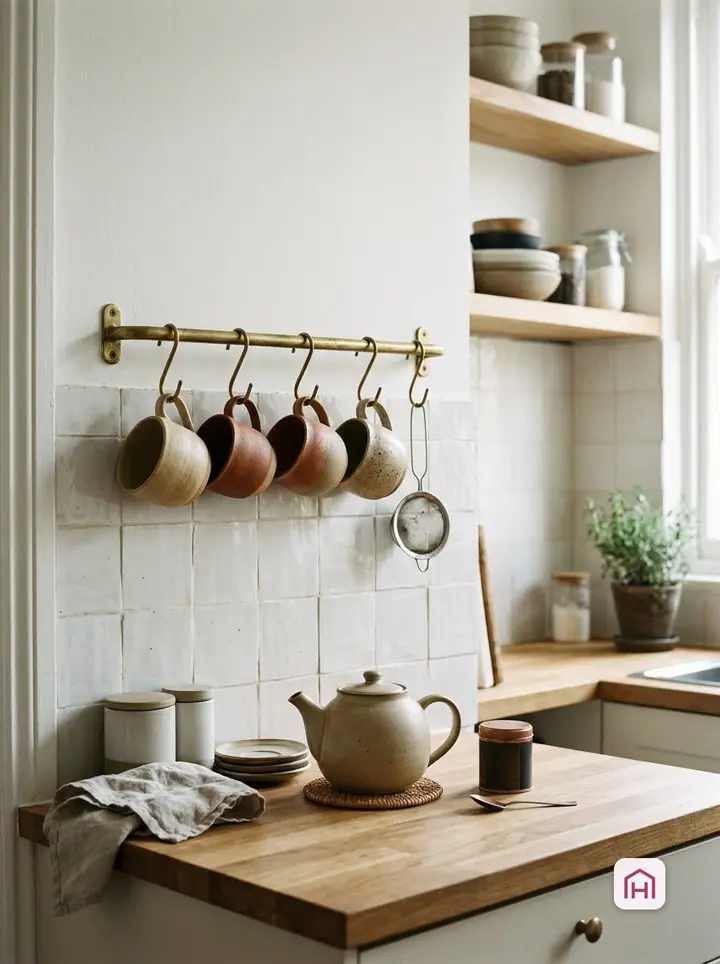
Teapot and cups on a rail
Cups hang, the shelf stays free.
Why it works
A short rail with hooks holds cups and a tea strainer above the counter; the teapot sits below.
Materials and furniture
- Rail with hooks
- Fixings for the wall
Check first
- Hooks must hold the actual cup handles securely.
- Choose fixings suitable for the wall, checking concealed services first.
- Keep cups away from heat and the hob.
-
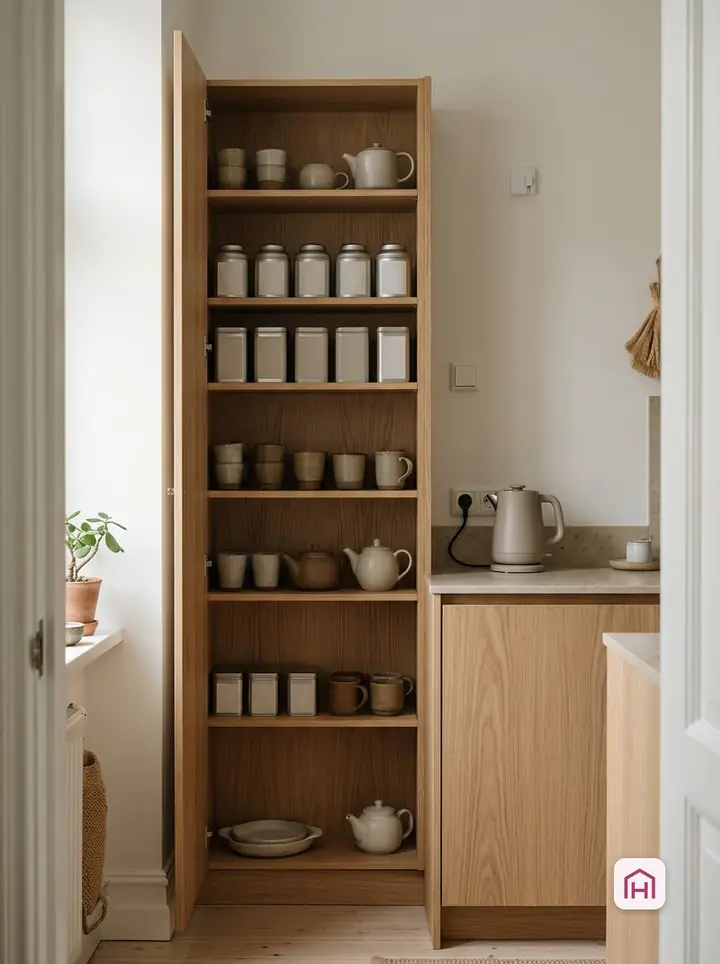
Cupboard storage with the kettle outside
Close away the supplies, leave brewing in an open spot.
Why it works
A cupboard groups tins, cups and teapots behind doors. The kettle stays on the adjacent open counter rather than operating inside the cupboard.
Materials and furniture
- Cupboard for tea supplies
- Suitable open brewing counter
Check first
- Use the kettle outside the cupboard according to its instructions.
- Check clearance, cord route and socket location.
- Keep stored supplies away from steam.
-
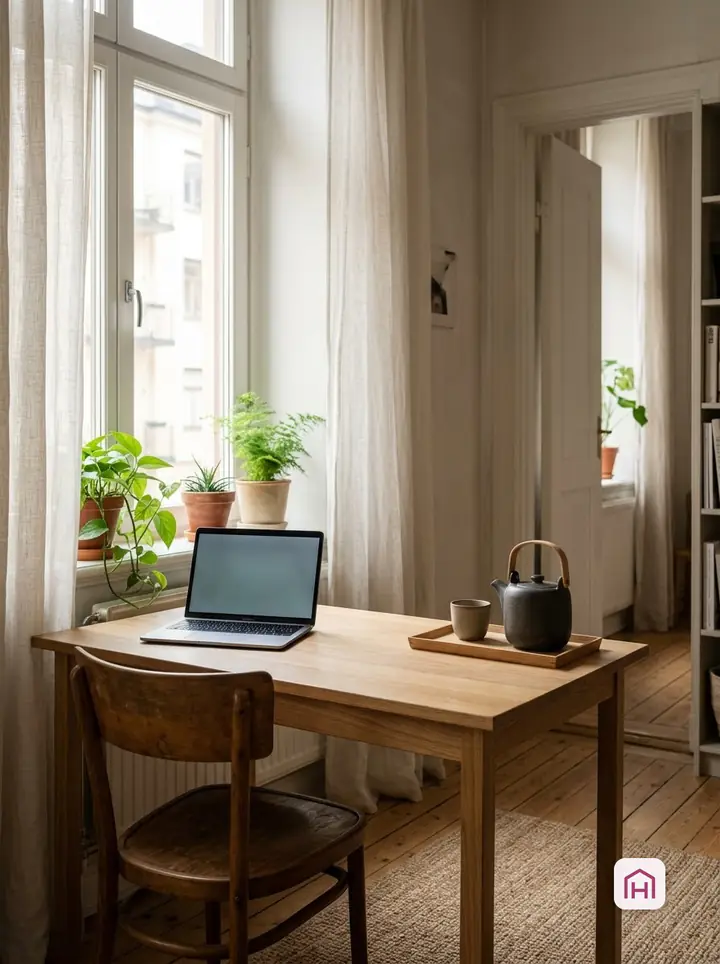
A tea set on the desk
A small pot and cup beside the working area.
Why it works
A teapot or insulated pot on a tray keeps a cup nearby. Choose the size you can comfortably lift and keep liquids away from electronics.
Materials and furniture
- Insulated teapot or small pot
- Coaster or tray
Check first
- Keep the tray away from the laptop and cables.
- Use a stable tray to contain drips.
- Avoid an open-flame warmer at the desk.
Build around the tea you actually drink
A useful tea station keeps the daily essentials together without becoming another crowded countertop. Start with the kettle, one teapot, your usual cups and the few teas you use each week. Keep occasional supplies elsewhere. A tray makes this group easy to move, while a drawer protects small packets and a cupboard can hold spare cups.
| Setup | Works well for | Check before arranging |
|---|---|---|
| Counter tray | A short daily brewing routine | Space to lift the kettle and wipe the counter |
| Tin shelf | Supplies that otherwise fill the worktop | Shelf capacity and reach from the brewing spot |
| Divided drawer | Sachets and smaller packets | Internal height and full drawer opening |
| Living-room trolley | Serving tea after brewing in the kitchen | Stable wheels and enough surface for cups |
| Cupboard storage | A collection of cups and tins | Store supplies inside; use the kettle in a suitable open location |
| Desk tray | An occasional quiet cup | Distance from the keyboard and an easy path for removing the tray |
Separate brewing from serving
The living-room trolley and desk setup carry a teapot rather than requiring an electric kettle in every room. Brew at a suitable kitchen spot, then carry a small tray to where you sit. Keep an ordinary cup available if lifting a heavy teapot is uncomfortable. A full trolley is not something to roll quickly over a rug while carrying hot liquid.
For the kettle, follow its instructions on placement and required clearance. Keep rising steam away from cabinet surfaces and the cord away from the edge. Do not overload or chain power strips [1]. The cupboard example keeps tea supplies behind doors and the kettle outside, rather than treating an unverified pull-out shelf as an appliance station.
Make the storage easy to understand
Matching tins look calm, but you still need to know what each contains. Keep identifying information where it is useful to you; the blank containers in these pictures are a styling choice. Store tea according to its packaging, away from heat and moisture. Choose a drawer divider that fits your actual packet sizes before buying a complete matching set.
The one-week test
- Set up only the daily essentials.
- Brew tea and clean the area in your normal routine.
- Note anything you reach across or move repeatedly.
- Adjust the layout before adding more storage.
- Keep the smallest setup that works comfortably.
Filter ideas by room and fixing
Sources
- Electrical appliances in everyday life (04.07.2024) , VDE Verbraucherschutz. checked